DHL, FedEx, UPS warn EU parcel tax risks disruption at borders
DHL, FedEx, and UPS have written to European Union finance ministers calling for a phased ...


DHL: DATE CENTRE PUSH IN APACMAERSK: HAVE A LOOKTSLA: TAILWINDS FDX: PAYOUT ADJUSTMENT UPDATEKNIN: AIR FREIGHT NETWORK EXPANSIONMAERSK: NEARING ONE-YEAR HIGHFDX: FEDEX FREIGHT UPSIDEBA: TIME TO DELIVERFDX: EARNINGS RISKDSV: UPSIDEKNX: TIME TO SAY GOODBYEODFL: SET THE BAR HIGHBA: PIPELINE
DHL: DATE CENTRE PUSH IN APACMAERSK: HAVE A LOOKTSLA: TAILWINDS FDX: PAYOUT ADJUSTMENT UPDATEKNIN: AIR FREIGHT NETWORK EXPANSIONMAERSK: NEARING ONE-YEAR HIGHFDX: FEDEX FREIGHT UPSIDEBA: TIME TO DELIVERFDX: EARNINGS RISKDSV: UPSIDEKNX: TIME TO SAY GOODBYEODFL: SET THE BAR HIGHBA: PIPELINE
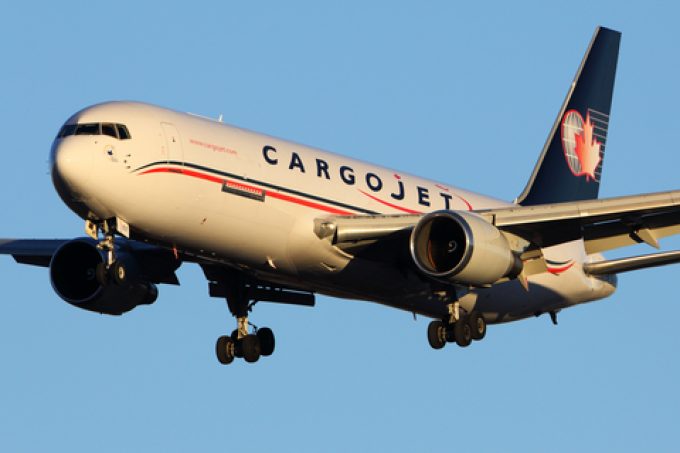
Risk-averse Canadian carrier Cargojet believes it is insulated from the souring trade relations with its neighbour – but that there could be opportunities as shippers try to avoid US tariffs.
Cargojet, founded 23 years ago this week, has created a solid niche in the air cargo business, explained one local airfreight executive.
“It is actually 99% ACMI for integrators, and it takes very few risks.”
Cargojet, together with logistics legend Jim Crane, has a joint-venture in 21 Air, the Miami carrier which recently hired veteran executive Tim Strauss as CEO and began operating 767Fs on behalf of Amazon after Atlas lost the contract.
“With these two AOCs, Cargojet is pretty ensconced in integrator and ACMI work, in both domestic markets. It has two independent domestic and possible trans-border possibilities, so it is pretty bullet proof,” said the executive.
The carrier announced record revenue for Q4, of C$251m (US$176.6m), up 32%, bringing full-year income to C$1bn. Net earnings for the full year were C$108.4m, compared with C$37.3m a year earlier.
However, there could be some risk on the horizon.
“What Cargojet is not immune to is the change towards domestic cost-cutting by the integrators and USPS – which could spread to one of Cargojet’s biggest clients, Purolator, 91%-owned by Canada Post,” said the source.
This month, Purolator acquired Livingston International, Canada’s largest customs brokerage, in a bid to create a vertically integrated company for cross-border trade. It said at the time that the acquisition was “timely”, given the “growing importance of tariffs and trade”.
Last year, just three customers accounted for 55.5% of Cargojet’s total revenue, down from 59.2% in 2023, and broken down into 27.8%, 14.7% and 13%, respectively.
Alongside Purolator, another major customer is Amazon, which recently pulled out of its distribution fulfilment centre in Quebec – a potential opportunity, said Cargojet co-CEO Jamie Porteous in an earnings call.
“Amazon is going to have to source more product from other fulfilment centres and warehouses across Canada. And we’re uniquely positioned with our agreement with them …because …they’re not lessening the service delivery. In fact, they’re enhancing delivery all across the country… and we continue to see strong significantly strong double-digit growth from Amazon in Canada next year and beyond.”
Another major customer, DHL, has however slightly pulled back from its Q4 capacity with the carrier, going from 18 aircraft to 16 in 2025.
CargoJet said it had done well, owing to its agility. Mr Porteous explained: “In the fast-changing landscape of supply chains, we have been successful in identifying and then executing on new market opportunities that are yielding strong results. During the quarter, we continued to opportunistically allocate capacity to high-demand areas, including ACMI and charters, and it is certainly paying off.”
High demand led the carrier to expand its fleet, with four 767-300Fs awaiting delivery this year. While it will return an aircraft on lease in April, the fleet will increase by three, in part to satisfy charter demand. Last year, it had to turn customers away because of lack of capacity – one wanted more frequencies to China.
“We have become global leaders in the air charter industry and are methodically managing our fleet to create capacity for new ad hoc charters, while increasing the frequency of scheduled charters to China,” said co-CEO Pauline Dillon. “This strategy resulted in 136% growth in all charter revenues in Q4, versus the prior year.”
As well as growing the fleet, Cargojet has also boosted utilisation with a 16% increase in block hours flown in 2024.
But Mr Porteous noted: “There’s a lot of concern and anxiety in Canada about potential tariffs and the related dislocations in the supply chains and the potential impact on our business.”
He said Cargojet operated domestic ecommerce flights overnight, its ACMI routes are global, and also had ad hoc and scheduled charters, adding: “Consumer products arriving from Asia and entering Canada, much of that tonnage moves on ocean freight from Asia to Canada. These products then get shipped to domestic customers in small packages from Canadian warehouses, benefiting our domestic overnight network.
“Our scheduled charter services from China to Canada were specifically and deliberately targeted to serve the Canadian market, leveraging our domestic network, avoiding the US market and any potential tariff restrictions.
“As manufacturers across the globe plan shipments directly into Canada to avoid potential US tariffs, versus routing them through Mexico and the US, it may present new opportunities for Cargojet, although this remains a very fluid situation that we are continuing to monitor closely.”
Ms Dillon added: “Our direct exposure to US tariffs is very limited and we remain optimistic about our future.”
She added: “I think Cargojet is ok, concerning US tariff issues. The only possible issue is cost-cutting by integrators, and obviously neither Air Canada or Westjet is any competition to them.”
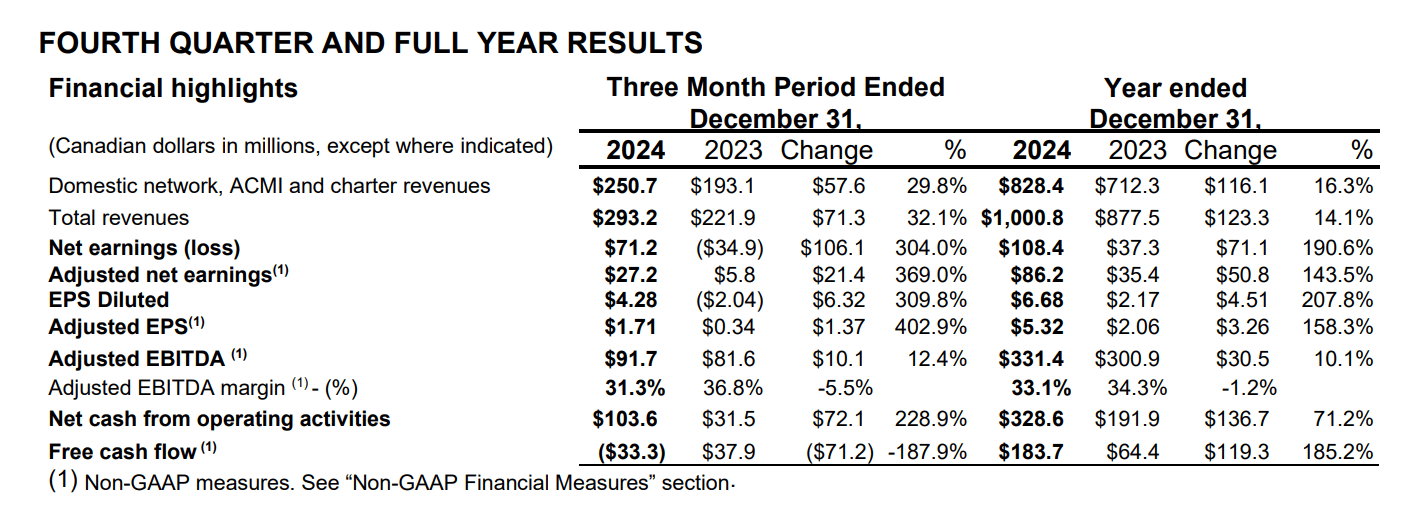
Source: Cargojet
Check out this clip of Amazon Air Cargo’s Tom Bradley on the carrier’s ambition growth targets for 2025

For uninterrupted access, sign in or sign up to The Daily News, Premium or The Loadstar Enterprise Plan.

Comment on this article