A wave of container spot rate rises amid peak season and tight capacity
Peak season is now fully under way, after a week in which spot rates on ...


GXO: NEW WINAMZN: LTL SERVICE UPDATEGM: ENERGY PROVIDER MODELEXPD: LAYOFFS CONFIRMED DHL: DOWNSIDE RISKDHL: OVERVIEWDHL: DATE CENTRE PUSH IN APACMAERSK: HAVE A LOOKTSLA: TAILWINDS FDX: PAYOUT ADJUSTMENT UPDATEKNIN: AIR FREIGHT NETWORK EXPANSION
GXO: NEW WINAMZN: LTL SERVICE UPDATEGM: ENERGY PROVIDER MODELEXPD: LAYOFFS CONFIRMED DHL: DOWNSIDE RISKDHL: OVERVIEWDHL: DATE CENTRE PUSH IN APACMAERSK: HAVE A LOOKTSLA: TAILWINDS FDX: PAYOUT ADJUSTMENT UPDATEKNIN: AIR FREIGHT NETWORK EXPANSION
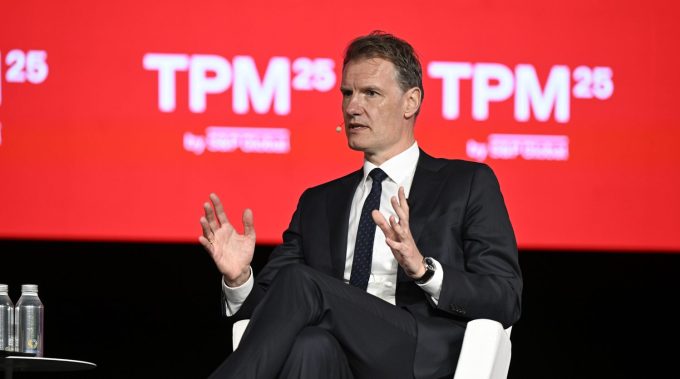
The transatlantic container trade could be the most severely impacted if the US goes ahead with the proposed imposition of US fees on Chinese-built ships, MSC CEO Soren Toft said this week.
Speaking at the S&P Global TPM conference in Long Beach, Mr Toft said the impact of the plan, by the US Trade Representative’s 301 action, possibly amounting to $1m per call at each US port by each ship built in China, irrespective of the nationality of the operator, would be “significant”.
“Take the Asia-US east coast services – most of the vessels that operate this route are in the 8,000teu to 15,000teu range and typically call at four US ports. In that instance, the cost is an extra $4m per service, equating to around $800 per 40ft.
“The rates on that route are currently around $3,500 per 40ft, so you are looking at a 25% increase.
“But on the transatlantic, it gets even worse,” he added.
“On that trade we are deploying 4,000-5,000teu ships also typically calling at four ports, and the fee would lead to an increase of around $1,000 per teu, which, more or less, basically eliminates the freight rate.
“So, either we pass the costs on to the consumer or we review our network and withdraw some coverage of ports to limit that cost increase – certainly all the marginal ports will have to be looked at.”
“Here in California, we call at LA/Long Beach and then move up to Oakland – but we won’t continue to do that if it is going to cost a further $1m per call,” he said, predicting that carriers would unload as much cargo as possible in one port to reduce the fees.
Mr Toft, also currently chairman of liner lobby group the World Shipping Council, said the organisation had calculated that those fees could cost the industry around $20bn.
He told delegates: “The liner shipping companies all have ships built in China; we all have ships on order in China; and I really hope that if this does come through that it will at least be forward-looking and not penalise us for mistakes made in the past when we didn’t even realise they were mistakes.
“And if we can’t pass on the costs, we will have to withdraw tonnage and that will inevitably mean we will serve fewer ports,” he said, adding that this would mean smaller US east coast ports would see services and throughput cancelled, with the larger ports far more prone to chronic congestion.
“Congestion could come very fast at the major hubs if we have to reshuffle our network in this way and redeploy vessels,” he said.
Meanwhile CMA CGM appears undeterred by the USTR threat: it has been revealed as the buyer behind a 12 LNG dual-fuel 18,000teu ship order at China’s CSSC Jiangnan Shipyard, a deal worth around $2.55bn, for delivery in 2028 and 2029.
For uninterrupted access, sign in or sign up to The Daily News, Premium or The Loadstar Enterprise Plan.

Comment on this article
lincoln lin
March 05, 2025 at 1:01 amThis is really terrible.
Dwight Campbell
March 06, 2025 at 9:23 pmI marvel how this is all going to be paid for by US consumers.
At a time when they want to twist everybody’s arms to buy overpriced and probably reduced quality ships, they also tariff steel and aluminum imports. The current 6x price of American built box ships is only going higher. They are years away from turning this into reality, and Trump’s term is up in Nov. 2028. Not much is going to change before Trump is done. I think the US consumers by then will vote to chuck this as far away as possible, because they will be paying for it in the increased costs of almost everything.
This organization is calling buying Chinese ships a “mistake”. Even 4 full years of this looks like it would cost 80 billion dollars that would demand to be paid by US consumers, as it should be.
Once again, the US is expecting everyone else to chip in to subsidize their over priced products. I may be on the wrong end of this affair by stating some of the obvious things, but we need to start evaluating this stuff pragmatically.
Even the WSJ sums this up with:
“The U.S. shipyards aren’t competitive with foreign rivals in terms of the size of ships they produce, how long they take to build or how much they cost. ”
Credit: WSJ article: “In Shipbuilding, the U.S. Is Tiny and Rusty”, March 2, 2025