Maintenance work and weather threatens to boost Panama Canal congestion
There may be claims that the Panama Canal is operating “normally”, but anxiety is increasing ...


DHL: NEW HIGH TARGET ON THE STREET DSV: EXPECTATIONS RUN HIGH KNIN: DHL GUIDANCE UPGRADE READ-ACROSSKNIN: NEW OPENINGGM: TECH UPSIDEAMZN: BIG DEBT FUNDING ON ITS WAYDHL: 'STELLAR EXPRESS'DHL: UPDATEDHL: STRONG PRELIMINARY UPDATE CHRW: STILL VERY BEARISH PLD: 'MOST PREFERRED'ZIM: DEAL OR NO DEALWTC: MOMENTUMDAC: PAYOUTMAERSK: RETURN TO SUEZ
DHL: NEW HIGH TARGET ON THE STREET DSV: EXPECTATIONS RUN HIGH KNIN: DHL GUIDANCE UPGRADE READ-ACROSSKNIN: NEW OPENINGGM: TECH UPSIDEAMZN: BIG DEBT FUNDING ON ITS WAYDHL: 'STELLAR EXPRESS'DHL: UPDATEDHL: STRONG PRELIMINARY UPDATE CHRW: STILL VERY BEARISH PLD: 'MOST PREFERRED'ZIM: DEAL OR NO DEALWTC: MOMENTUMDAC: PAYOUTMAERSK: RETURN TO SUEZ
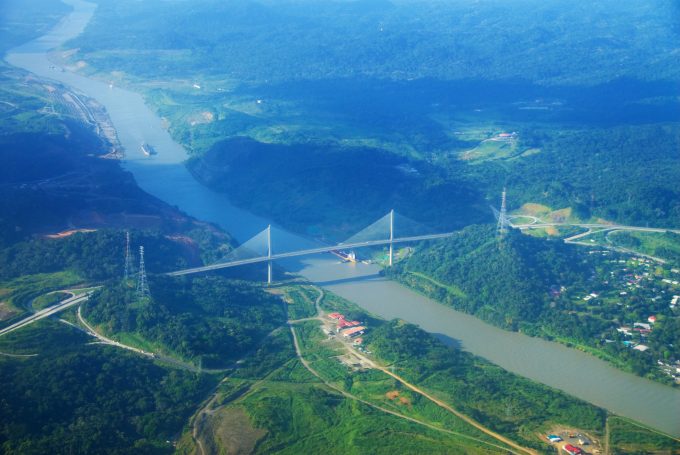
Healthy rainfall in recent months has restored the Panama Canal to near-full operating depth, after severe drought last year.
Water levels in the Gatun Lake reached 84.4ft today, allowing some 36 vessels to transit the canal a day from September and equivalent to a surcharge fee of just 0.38%.
The expectation is that the water level will return to 86.1ft by October.
Last year, the El Niño phenomenon brought a lack of rainfall which saw the canal depth hit a nadir of 79.24ft in late July last year, resulting in restrictions ever since.
The restoration of normal canal use is likely to undermine the business case for a handful of projects aimed at carrying cargo across the isthmus by land.
Last year, Maersk considered using Panama Canal Railway Company networks to cross. Since the railway was revitalised in 2011, its capacity is said to be as much as 2m teu a year, or around a daily 2,740 teu each way.
Meanwhile, a new Mexican railway system, the Corredor Interoceánico project, completed in December, is pitching itself as a potential competitor to the canal and “could be very useful”, according to Lars Østergaard Nielsen, Maersk’s VP of operations, Americas, in a recent interview.
In the meantime, the Panama Canal Authority, mindful of the effect of climate change in exacerbating El Niño effects, has taken recent events as a warning that further investment is required, and looks set to move ahead with a $1.6bn plan to construct a second reservoir on the nearby Río Indio river, west of the canal and Gatun Lake.
“Aspects such as climate change and reduced rainfall, as well as the increase in population, have put the country in an urgent position to make decisions to ensure the future availability of the resource,” explained canal administrator Ricaurte Vásquez Morales recently.
“This is a fact that cannot be ignored, since it is a primary responsibility of the country and a mandate for the canal.”
This article is © The Loadstar. Reproduction, rewriting, or derivative use requires a license. Contact [email protected] for licensing enquiries.

For uninterrupted access, sign in or sign up to The Daily News, Premium or The Loadstar Enterprise Plan.
Comment on this article