India unveils ambitious plan to become a leading global shipbuilder
India is aiming to transform itself into one of the world’s leading shipbuilding nations with ...

KNIN: QUESTION TIMEKNIN: 'COST REDUCTION PROGRAMME IS ON TRACK'KNIN: CFO REMARKSKNIN: MONETARY IMPACT FROM AI KNIN: AI UPSIDEKNIN: STRONG ROAD UNIT DELIVERY KNIN: AIR LOGISTICS SHINESKNIN: SEA LOGISTICS PERFORMANCE KNIN: CEO REMARKSKNIN: CONF CALL F: NEW PARTNERSHIP DISCLOSEDDSV: LITTLE CHANGE DHL: GREEN PUSHKNX: EARNINGS BEATPLD: PROPOSAL DETAILSPLD: FINAL OFFERDSV: ROAD CEO MATTERS
KNIN: QUESTION TIMEKNIN: 'COST REDUCTION PROGRAMME IS ON TRACK'KNIN: CFO REMARKSKNIN: MONETARY IMPACT FROM AI KNIN: AI UPSIDEKNIN: STRONG ROAD UNIT DELIVERY KNIN: AIR LOGISTICS SHINESKNIN: SEA LOGISTICS PERFORMANCE KNIN: CEO REMARKSKNIN: CONF CALL F: NEW PARTNERSHIP DISCLOSEDDSV: LITTLE CHANGE DHL: GREEN PUSHKNX: EARNINGS BEATPLD: PROPOSAL DETAILSPLD: FINAL OFFERDSV: ROAD CEO MATTERS
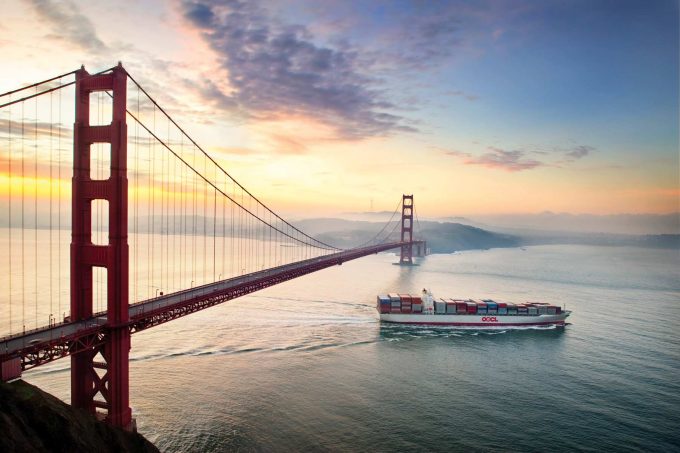
The October implementation of the US Trade Representative port fees will mean a “forced concentration” of non-Chinese carriers onto US services that will reduce options for shippers, and could see Chinese carriers “effectively priced out of US trades”, warned maritime consultants at Drewry this week.
And, ultimately, this “could run into antitrust competition issues”, they added.
“Fundamentally, tariffs plus the USTR proposal are going to make container shipping to and from the US much more expensive, certainly from October,” said Simon Heaney, Drewry’s senior manager of container research.
He noted that the fees from by the tax on China-built vessels calling at US ports would be “impactful”, despite being a watered-down version of the original proposal.
Fees will no longer be charged on a per US port call basis, but by string; the original concept of charging operators based on percentages of China-built ships in their active fleet and on order, has been scrapped.
“That last point is very significant, because currently only a very small proportion of ships on the biggest US trade were built in China,” said Mr Heaney. “So, I think that really means there’s little basis for carriers to introduce any sort of related surcharges for this.”
However, Drewry’s latest cost impact assessment of the Asia to North America west coast trade found that if carriers were to pass on the full cost of the fees from October, shippers would be charged some $180 more per 40ft container on China-built ships, by non-Chinese carriers.
Chinese operators, however, face further fees from October.
According to Drewry’s World Container Index (WCI) reading of the current head-haul Shanghai to Los Angeles spot rate, this would equate to around 7%.
However, these fees are also set to rise over successive years and Mr Heaney warned that by 2028, the additional cost for non-Chinese carriers would be some $338 per 40ft, or 13% of the current WCI rate.
However, he noted that for shippers using Cosco, OOCL or other, smaller, Chinese carriers, the situation would be much worse.
“China-based carriers are effectively going to be priced out of US trades, unless they are prepared to swallow the much higher taxes,” Mr Heaney explained.
According to Drewry, if Chinese carriers were to pass on the full cost of the USTR fees, shippers would be charged more than $511 per 40ft from October – equivalent to 19% of the current WCI rate. And by April 2028, “that cost will surge” to around $1,400 per 40ft, or just over half the WCI rate today.
“So, this really shows just how disadvantaged Chinese operators will be,” said Mr Heaney.
Jonathan Roach, container market analyst at Braemar, added: “While it may be manageable for non-Chinese operators using Chinese-built vessels, the fees for Chinese companies are likely unsustainable in the long term.”
The Loadstar reported yesterday that this disadvantage could cause a “complete destabilisation” of the alliances as the carriers with box ships exempt from the penalties attempt to insulate themselves.
Mr Heaney highlighted the Ocean Alliance, comprising OOCL, Cosco, Evergreen and CMA CGM.
“How are they going to share the fees that will, of course, be mainly incurred by the Chinese lines? One solution will be to divide the ships within the alliance across different trades, so the Chinese carriers focus on non-US routes, such as fee-exempt Asia-Europe, while other Ocean carriers look after the transpacific and transatlantic.”
However, Drewry notes that the “forced concentration” of carriers into US lanes will reduce options for shippers, and “could run into antitrust competition issues if just one or two carriers become very dominant”.
“Carriers with fewer Chinese ships will clearly have a marketing advantage,” explained Mr Heaney.
According to Braemar’s container market development report today, the Ocean Alliance fleet comprises 319 vessels, with 169 currently deployed on services with US port calls.
Meanwhile, Braemar estimates that the Gemini Cooperation of Hapag-Lloyd and Maersk operates 337 vessels, with 131 on services with US port calls, while the Premier Alliance of HMM, ONE and Yang Ming operates 203 vessels, with 92 on services with US port calls.
For uninterrupted access, sign in or sign up to The Daily News, Premium or The Loadstar Enterprise Plan.
Comment on this article