Transpacific trades in unchartered water, with tariff uncertainty at the helm
A declining sales-to-inventory ratio in the US has been one of the key reasons behind ...

TSLA: JUST AS VW STRUGGLESBA: NEW BIG ORDERBA: THE ORDERBOOK GROWSPLD: PUSHING FOR A DEAL PLD: TIME TO DEALEXPD: ANOTHER ALL-TIME HIGH CHRW: NEW RECORD DSV: AHEAD OF EARNINGS RELEASE JBHT: NEW HIGHS EVERYWHEREPLD: STRONG DELIVERYJBHT: FAIR-VALUE CONSENSUS ESTIMATE AT ALL-TIME HIGH KNIN: AI TECH ADVANTAGEPLD: TRADING UPDATE ON THE WAY KNIN: UPSIDE
TSLA: JUST AS VW STRUGGLESBA: NEW BIG ORDERBA: THE ORDERBOOK GROWSPLD: PUSHING FOR A DEAL PLD: TIME TO DEALEXPD: ANOTHER ALL-TIME HIGH CHRW: NEW RECORD DSV: AHEAD OF EARNINGS RELEASE JBHT: NEW HIGHS EVERYWHEREPLD: STRONG DELIVERYJBHT: FAIR-VALUE CONSENSUS ESTIMATE AT ALL-TIME HIGH KNIN: AI TECH ADVANTAGEPLD: TRADING UPDATE ON THE WAY KNIN: UPSIDE
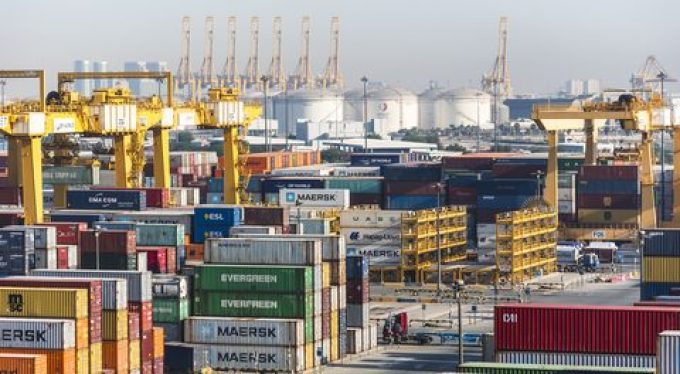
While freight forwarders and shippers on the transpacific and Asia-Europe trades struggle with soaring spot rates and tight capacity amid an early peak season, new data from Container Trades Statistics (CTS) shows all-in freight costs began to rise significantly in April.
The Global Price Index rose sharply, to 89 points, in April, an increase of more than 12% compared with March, when the index stood at 79 points – a month-on-month rise not seen for two years.
Critically, the CTS price index also includes bunker surcharges and fuel cost recovery mechanisms.
“It is within pricing data that the true impact of the Gulf Crisis becomes most apparent,” CTS said.
“The last time the Global Price Index experienced a month-on-month increase of this magnitude was in June 2024, during the height of the Red Sea diversions, when vessel rerouting effectively removed capacity from the market.
“This latest surge highlights the significant pressure the Strait of Hormuz closures are placing on global freight rates,” the analysts added.

Source: Container Trades Statistics
On the Far East-Asia trade, the CTS price index rose to 89, a 6% increase on both March and April 2025, showing how geopolitical disruptions had already begun to affect the trade before the early peak season even began.
Far East-Europe volumes were also strong in April; with 1.84m teu shipped, the month was up 12.3% on April 2025, clearly setting the conditions for the strong spot rate hikes and peak season surcharges carriers have rolled out recent weeks.
Globally, 16.2m teu was shipped in April, which CTS described as “remarkably resilient”, and represented a 4% increase compared with April 2025, and a 1.6% month-on-month uptick.
“More importantly,” CTS said, “year-to-date volumes remain strong, standing 5% above 2025 levels. This reinforces a long-standing maxim of global trade: cargo behaves much like water, finding alternative routes when traditional pathways become restricted.”
But it also indicates how elongated container supply chains havebecome, both in terms sailings distance and time – one forwarder told The Loadstar today that, with schedule reliability remaining under pressure, many shippers preferred to ship early simply to make sure their freight was on the water.
“On Far East-Europe westbound, about the best reliability you can get is 60%, and most shippers we deal with have already built buffers into their supply chains to take account of that, because it’s been bad for a long time,” he said.
However, the volume growth CTS noted was not uniform: imports into the Middle East/India region were down 19% year on year, to just over 1.4m teu, with “the largest reductions from cargo originating in Europe and the region’s own intra-regional trade.
“Given the timing and scale of these declines, it is reasonable to conclude that they are directly linked to the ongoing geopolitical tensions in the Middle East,” said CTS.
In terms of the first four months of the year, North America joined Middle East/India as the two regions to show year-on-year declines, -2% and -4% respectively, on the first four months of 2025 – ie, still before the “Liberation Day” tariff effects were fully felt.
“For North America, the decline was primarily driven by reduced cargo volumes originating from Europe, the Indian Subcontinent and Middle East, and South and Central America,” CTS noted.
North American import volumes in April stood at 2.85m teu, around 150,000 teu more than March., while the Far East-North America price index increased 6.7%, both year on year and month on month to 94.
Check out this week’s News in Brief podcast, featuring exclusive content from Glyn Hughes, DG of TIACA, and The Loadstar‘s Gavin van Marle
For uninterrupted access, sign in or sign up to The Daily News, Premium or The Loadstar Enterprise Plan.
Comment on this article