Spot freight rates preview: the Fortnight Brace suggests a flat week
Acid test: 15 July


VW: THE LAST CUT IS THE DEEPESTJBHT: GEARING UP VW: BUYING TIMER: BIG VOTE OF CONFIDENCEAAPL: BEARISH HEDGEYE AAPL: THE BEAR CASEFDX: LIFE SCIENCES ORG UNVEILEDWTC: UPS AND DOWNSWTC: ASX ANNOUNCEMENT REGARDING DSV PARTNERSHIP VW: D-DAYPLD: KEEP PUSHINGDHL: NEW AIR SERVICEDHL: GUIDANCE UPGRADE REACTION
VW: THE LAST CUT IS THE DEEPESTJBHT: GEARING UP VW: BUYING TIMER: BIG VOTE OF CONFIDENCEAAPL: BEARISH HEDGEYE AAPL: THE BEAR CASEFDX: LIFE SCIENCES ORG UNVEILEDWTC: UPS AND DOWNSWTC: ASX ANNOUNCEMENT REGARDING DSV PARTNERSHIP VW: D-DAYPLD: KEEP PUSHINGDHL: NEW AIR SERVICEDHL: GUIDANCE UPGRADE REACTION
Container freight spot rates on the transpacific and Asia-Europe trades showed moderate gains this week, in the absence of carrier-led price hikes, while demand remained firm.
This week’s World Container Index (WCI) from Drewry saw its Shanghai-Rotterdam leg gain 5% on the previous week, to end a shade under the $5,000 mark, at $4,933 per 40ft, while the Shanghai-Genoa route was up 2%, to $6,463 per 40ft.
Next week is likely to be an acid test of the Asia-Europe peak season and how much longer it will remain – a series of new FAK price hikes are due to implemented to both North Europe and the Mediterranean.
At the top end, MSC is aiming for $7,700 per 40ft to both regions; while CMA CGM is targeting $7,000 to North Europe, and $7,900–$8,500 to the Mediterranean.
However, with just four Asia-Europe blanked sailings next week, forwarders on the trade remained skeptical that the new price levels will stick – several reporting that carriers have already begun offering discounts and that space on vessels loading in Asia was “readily available”.
“Carriers have started to roll-back their rates to North Europe, with spot rates for first-half July sailings failing to breach $6,000 per 40ft,” consultant Linerlytica said this week.
“Asia-Europe carriers are still pushing for another rate hike in mid-July, but the ground looks increasingly shaky, with a wide range of rates being offered in the spot market.
“The Gemini partners remain at the bottom of the range, with rates as low as $4,800 per 40ft on offer against rivals’ rates of $6,000-$6,500 per 40ft,” it added.
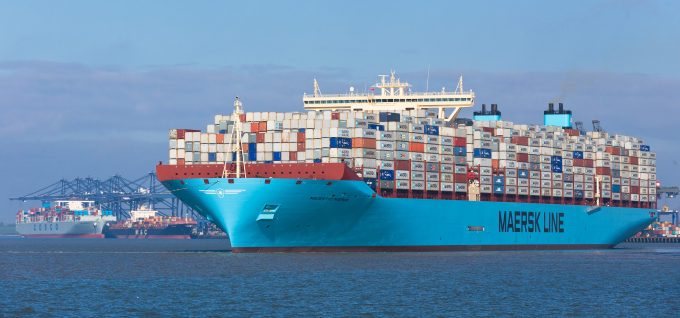
On the supply side, an important milestone passed this week when the 18,300 teu Majestic Maersk successfully passed through the Bab Al Mandeb straits at the southern entrance of the Red Sea, en route to the Suez Canal.
The vessel, deployed on Gemini’s Asia-Med Loop 3, is due to reach the Egyptian waterway on 12 July for a northbound transit – the key aspect here is that the vessel is sailing on the headhaul leg of the rotation and the carriers indicated that it would resume Suez transits on both directions on the service.
“This joint decision with Hapag-Lloyd comes following thorough assessments of the security situation in the Red Sea area and marks a step towards a gradual return to the trans-Suez corridor,” said Maersk earlier this week.
The Asia-Med Loop 3 (Maersk AE15 / Hapag-Lloyd SE3) will have the following port rotation: Qingdao-Kwangyang-Ningbo-Tanjung Pelepas-Port Said-Damietta-Colombo-Singapore, with its shuttles connecting Mediterranean gateway ports with Gemini’s Egyptian transhipment hubs.
The move back to Suez is expected free-up at least two vessels from the string to be redeployed elsewhere.
In addition, Maersk announced today that its US East Coast-Middle East MECL services – operated by its US subsidiary outside the Gemini Cooperation – would also fully return to Suez transits this month.
Meanwhile, on the transpacific trades, WCI’s Shanghai-Los Angeles route edged 2% over the previous week, to end at $6,482 per 40ft, while the Shanghai-New York leg was flat, at $7,904 per 40ft.
Here too, a series of general rate increases (GRIs) and peak season surcharges (PSSs) due to be applied on 15 July will test how much peak season demand remains.
US west coast forwarder Freight Right reported that “some carriers are beginning to offer small reductions of around $100–$200 week on week”, which suggested that another round of GRIs and PSSs “could risk stopping demand altogether”.
“The near-term outlook points to a market that is likely to hold steady or gradually decline, rather than move higher. The recent peak appears to have been reached, and without a rebound in volume, carriers may have limited room to defend current rate levels for long,” Freight Right noted.
“That said, a sharp collapse is not guaranteed,” it added. “Carriers are expected to manage the decline carefully and may avoid aggressive reductions unless booking activity weakens further.
“The next one-to-two weeks will be important for determining whether August brings a meaningful peak season or whether the market settles into a softer summer pattern.”

For uninterrupted access, sign in or sign up to The Daily News, Premium or The Loadstar Enterprise Plan.
Comment on this article