Ocean capacity is rising, demand is cooling, and 'the market is starting to turn'
Container spot freight rates on the main east-west ocean trades showed their first decline since ...


JBHT: NEW HIGHS EVERYWHEREPLD: STRONG DELIVERYJBHT: FAIR-VALUE CONSENSUS ESTIMATE AT ALL-TIME HIGH KNIN: AI TECH ADVANTAGEPLD: TRADING UPDATE ON THE WAY KNIN: UPSIDEJBHT: STRONG TRADING UPDATE DSV: EVERY LITTLE HELPSJBHT: CEO REMARKS WMT: VERTICAL INTEGRATION IN LOGISTICS
JBHT: NEW HIGHS EVERYWHEREPLD: STRONG DELIVERYJBHT: FAIR-VALUE CONSENSUS ESTIMATE AT ALL-TIME HIGH KNIN: AI TECH ADVANTAGEPLD: TRADING UPDATE ON THE WAY KNIN: UPSIDEJBHT: STRONG TRADING UPDATE DSV: EVERY LITTLE HELPSJBHT: CEO REMARKS WMT: VERTICAL INTEGRATION IN LOGISTICS
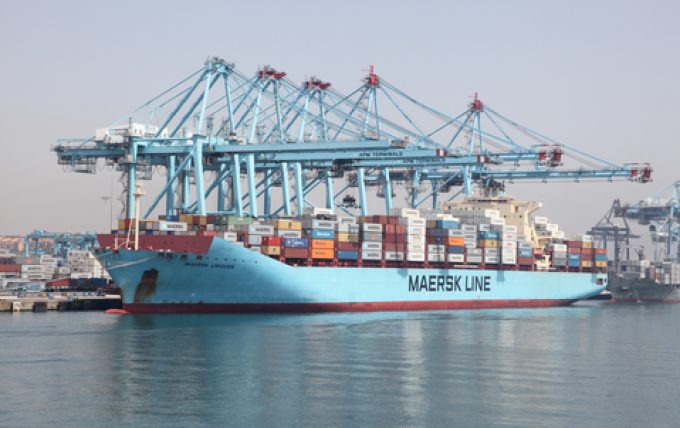
The Gemini Cooperation appears to be preparing to make a sustained grab for market share on the Asia-Mediterranean trade.
According to new analysis from Sea-Intelligence, partners Hapag-Lloyd and Maersk have gradually been withdrawing capacity from the Asia-North America west coast, Asia-North America east coast and Asia-North Europe trades, and diverting it to the Asia-Mediterranean routes.
“While tradelane capacity market share data suggests Gemini is losing ground across major east-west trades, volume variance analysis reveals a deliberate reallocation,” the analyst writes this week.
“Gemini is actively sacrificing market share on the transpacific and Asia-North Europe tradelanes, to fund a massive, highly targeted capacity offensive, designed to dominate the Asia‑Mediterranean tradelane,” it adds.
Taking June 2025 as a starting point – when the roll-out of the Gemini network is considered to have been completed – and using the alliance’s proforma schedules with assigned vessels to measure offered capacity as a way of gauging market share, Sea-Intelligence discovered that its market share on the transpacific to the USWC had declined from 16% then to 12.7% currently.

Source: Sea-Intelligence Consulting
On the Asia-North America east coast trade, its market share measured by capacity had declined from 20.7% a year ago to 17.9% today, while on the Asia-North Europe trade, its market share peaked at 27.8% last year, but currently stands at 22.5%.
This is largely as a result of a vessel-cascading programme which saw the average ship size on its AE3 Asia-North Europe string reduced from 18,900 teu to 17,100 teu at the beginning of this year, and then down again in late May, to 13,200 teu.
“This fleet swap trimmed Gemini’s weekly capacity by roughly 5,500 teu, right as the broader market expanded for the summer peak, effectively reducing their lower 22.5% capacity market share,” Sea-Intelligence writes.
However, it also noted that the vessels pulled from North Europe are heading for the Asia-Mediterranean trade, where its market share is due to expand from 23.5% in June 2025, to 29.7% next month.
Gemini’s AE15 Asia-Mediterranean string is being upgraded from “an average vessel size of 13,100 teu to an average of 18,400 teu, and in April it launched its fourth Asia-Mediterranean string, in the shape of the AE19 service, which also includes a call at the Saudi port of Jeddah, accessed via a southbound passage through the Suez Canal”.
“By physically cascading 18,000 teu vessels away from Asia-North Europe into Asia-Mediterranean, while also launching a new service on the latter, Gemini’s net capacity additions on the tradelane vastly outpaced what was needed to maintain their baseline capacity market share.
“Ultimately, this indicates that Gemini is approaching network design differently than its competitors – while [the] Ocean Alliance is spreading massive capacity across all major east-west lanes, Gemini is rapidly consolidating, hedging its bets that a more dense, higher-frequency Asia-Mediterranean network will ultimately prove more valuable than the market share willingly surrendered everywhere else,” the analyst added.
For uninterrupted access, sign in or sign up to The Daily News, Premium or The Loadstar Enterprise Plan.

Comment on this article