Spot rates: the Fortnight Brace principle holds – for now
Push me, pull me

PLD: PROPOSAL DETAILSPLD: FINAL OFFERDSV: ROAD CEO MATTERSDSV: VOLUME PROGRESSION IN SEA FREIGHT DSV: TIME TO INCREASE THE VOLUMES IN SEA FREIGHTDSV: HEADCOUNT DISCREPANCIESDSV: TRASHEDDSV: IT IS A MATTER OF TRUSTDSV: FREE CASH FLOW QUESTIONEDDSV: QUESTION TIMEDSV: CEO ON SCHENKER INTEGRATIONDSV: CFO PREPARED REMARKSDSV: CEO PREPARED REMARKSDSV: CONF CALL FWRD: SHOOTING UPKNX: TRADING UPDATE ON THE WAY GM: TRADING UPDATE OUTUPS: REMEMBER THE TAILWINDS
PLD: PROPOSAL DETAILSPLD: FINAL OFFERDSV: ROAD CEO MATTERSDSV: VOLUME PROGRESSION IN SEA FREIGHT DSV: TIME TO INCREASE THE VOLUMES IN SEA FREIGHTDSV: HEADCOUNT DISCREPANCIESDSV: TRASHEDDSV: IT IS A MATTER OF TRUSTDSV: FREE CASH FLOW QUESTIONEDDSV: QUESTION TIMEDSV: CEO ON SCHENKER INTEGRATIONDSV: CFO PREPARED REMARKSDSV: CEO PREPARED REMARKSDSV: CONF CALL FWRD: SHOOTING UPKNX: TRADING UPDATE ON THE WAY GM: TRADING UPDATE OUTUPS: REMEMBER THE TAILWINDS
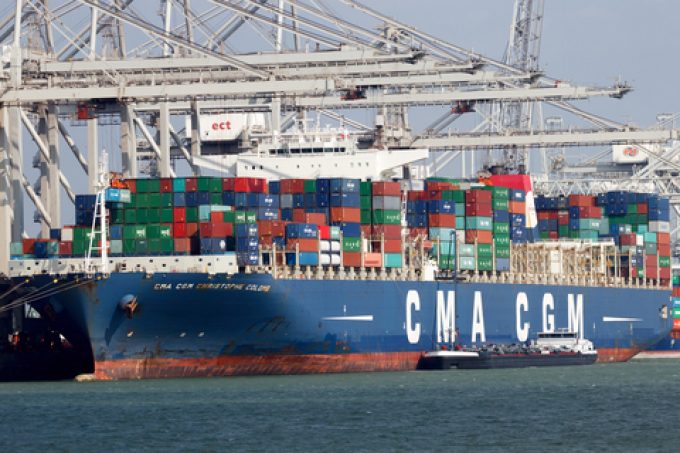
With ocean carriers finally able to apply emergency fuel surcharges to shipments into the US this week, spot rates on the transpacific and transatlantic trades leapt.
This week’s World Container Index (WCI) from Drewry saw its Shanghai-Los Angeles leg gain 9% on the previous week, to end at $2,910 per 40ft, while its Shanghai-New York route was up 7%, to $3,671 per 40ft.
However, the most dramatic movement was seen on the westbound transatlantic, where the WCI’s Rotterdam-New York leg grew jumped 25% week on week, to end at $1,968 per 40ft, returning the trade’s prices to a level last seen shortly before President Trump’s tariff ‘Liberation Day’.
US west coast freight forwarder Freight Right said the spot rate increases seen on the transpacific trades were driven “primarily by fuel surcharges rather than base rate adjustments”.
It explained that base rates on the Asia-US west coast trade remained steady this week, while “all-in pricing has increased to approximately $2,700 per 40ft, up from roughly $2,400–$2,500 last week due to a newly introduced $300 fuel surcharge per container”, with the Asia-US east coast trade experiencing similar dynamics.
Next week could be critical for the transpacific market, with new fuel surcharge levels expected to be introduced on 15 April.
“Another rate increase is planned as carriers seek to recover part of the bunker cost increases through emergency bunker surcharges, with rates set to rise by another $400 per 40ft,” Linerlytica noted.
However, the severity of the gain on the transatlantic came as something of a shock, one veteran forwarder on the trade told The Loadstar.
“It was an unexpected rise; in my opinion this is related to Ocean Alliance dropping a loop at the start of the month and reducing capacity, and other carriers taking advantage,” he said.
Drewy also claimed it was question of capacity: “The primary catalyst for this increase is a 13% month-on-month contraction in available ocean capacity for April.”
According to Xeneta’s eeSea liner database, total available monthly capacity on the westbound transatlantic will be 745,000 teu this month, as per carriers’ current pro forma schedules, which is down from the 804,000 teu scheduled in March.
And it appears carriers are gearing up for higher transatlantic rates in the coming weeks – today CMA CGM announced a peak season surcharge (PSS) of $2,100 per 40ft on east Mediterranean-US shipments from 1 May.
Meanwhile, it was a completely different picture on the Europe-Asia trades, the week’s WCI following the declines seen last week on the SCFI.
The WCI’s Shanghai-Rotterdam leg lost 9% week on week, to end at $2,308 per 40ft, which brought to an end four consecutive weeks of strengthening prices that began with the attacks on Iran, and showed relatively healthy demand being outweighed by offered capacity.
The WCI’s Shanghai-Genoa leg dropped 3% on the previous week, to finish at $3,420 per 40ft, and Linerlytica noted that quoted rates to both the Mediterranean and North Europe were being discounted by carriers in order to fill space.
“Spot rate quotations continue to show a downward bias, with capacity availability on both routes still being boosted while port congestion, and box availability remains largely under control,” it said.
Drewry said capacity was “stable” into North Europe, with just one sailing – the Ocean Alliance’s NEU1 string – due to be blanked next week, while not a single Asia-Mediterranean service will be blanked.
For uninterrupted access, sign in or sign up to The Daily News, Premium or The Loadstar Enterprise Plan.
Comment on this article