Delayed 'Fortnight Brace' effect – spot rate decline coming
How sticky can it get?


PLD: TRADING UPDATE ON THE WAY KNIN: UPSIDEJBHT: STRONG TRADING UPDATE DSV: EVERY LITTLE HELPSJBHT: CEO REMARKS WMT: VERTICAL INTEGRATION IN LOGISTICSJBHT: HERE WE GOPG: STEADYEXPD: NEW RECORD BA: DELIVERIESMAERSK: BEAR CAMP MUSINGSCHRW: HIGHER HIGHS ON THE RADAR
PLD: TRADING UPDATE ON THE WAY KNIN: UPSIDEJBHT: STRONG TRADING UPDATE DSV: EVERY LITTLE HELPSJBHT: CEO REMARKS WMT: VERTICAL INTEGRATION IN LOGISTICSJBHT: HERE WE GOPG: STEADYEXPD: NEW RECORD BA: DELIVERIESMAERSK: BEAR CAMP MUSINGSCHRW: HIGHER HIGHS ON THE RADAR
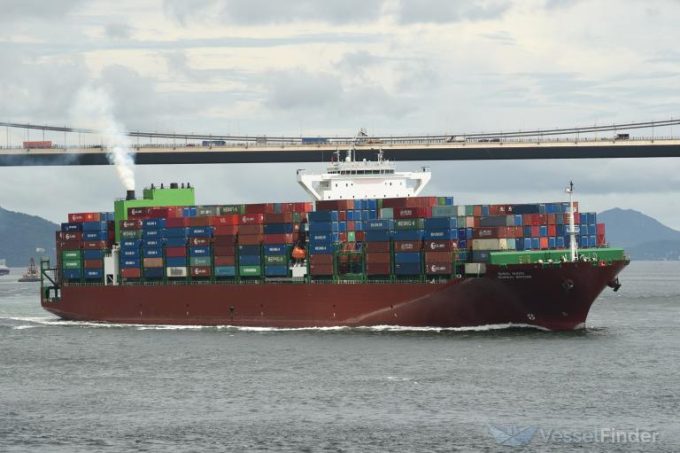
Intra-Asia freight rates have been declining in what appears to be the end of an early peak season, with congestion in South-east Asian ports beginning to ease.
On 10 July, the Shanghai Containerised Freight Index registered a third consecutive weekly drop in the Shanghai-South-east Asia rate, which fell 6% from 3 July, to $628 per teu.
On 9 July, Drewry’s Intra-Asia Container Index showed rates on tradelanes connecting China with South and South-east Asia softened again that week; the spot rate from Shanghai to Jawaharlal Nehru Port falling for a third consecutive week, declining 13% to $1,883 per 40ft.
Meanwhile, rates from Shanghai to Manila dropped 10%, to $497 per 40ft, extending the decline seen over the previous two weeks. Rates from Shanghai to Ho Chi Minh City decreased 6%, to $858 per 40ft.
“The early peak-season volume surge is nearing its end and upward pressure on freight rates is easing. Congestion at Manila Port eased, with average vessel waiting times falling by 7.8 hours in Week 27 from the previous week,” Drewry said.
It added that trade tensions between the US and China continued to drive supply chain diversification and manufacturers were expanding production capacity right across Asia.
Capacity additions continue to ease supply constraints, with China United Lines (CULines) expanding its Far East–West India/Pakistan network with the launch of its South Korea–China–India (KCI) service, the first sailing scheduled for tomorrow.
CULines is joining an existing service jointly run by Global Feeder Shipping, Sinokor Merchant Marine, TS Lines, and Regional Container Lines.
The new service complements CULines’ existing Western India offerings, while introducing direct South Korea–West India/Pakistan connections, further strengthening regional connectivity.
The KCI will commence with the 8,000 teu Mumbai Bridge departing from Busan, while CULines will deploy a chartered vessel, the 6,758 teu Racine, in August.
Drewry emphasised that, overall, the intra-Asia container freight market had remained resilient this year, with the index up 41% year on year, supported by early peak season demand and higher shipping costs driven by geopolitical disruptions.
“However, the market has started to soften as the peak season draws to a close,” the consultancy added.
For uninterrupted access, sign in or sign up to The Daily News, Premium or The Loadstar Enterprise Plan.

Comment on this article