Delayed 'Fortnight Brace' effect – spot rate decline coming
How sticky can it get?


PLD: TRADING UPDATE ON THE WAY KNIN: UPSIDEJBHT: STRONG TRADING UPDATE DSV: EVERY LITTLE HELPSJBHT: CEO REMARKS WMT: VERTICAL INTEGRATION IN LOGISTICSJBHT: HERE WE GOPG: STEADYEXPD: NEW RECORD BA: DELIVERIESMAERSK: BEAR CAMP MUSINGS
PLD: TRADING UPDATE ON THE WAY KNIN: UPSIDEJBHT: STRONG TRADING UPDATE DSV: EVERY LITTLE HELPSJBHT: CEO REMARKS WMT: VERTICAL INTEGRATION IN LOGISTICSJBHT: HERE WE GOPG: STEADYEXPD: NEW RECORD BA: DELIVERIESMAERSK: BEAR CAMP MUSINGS
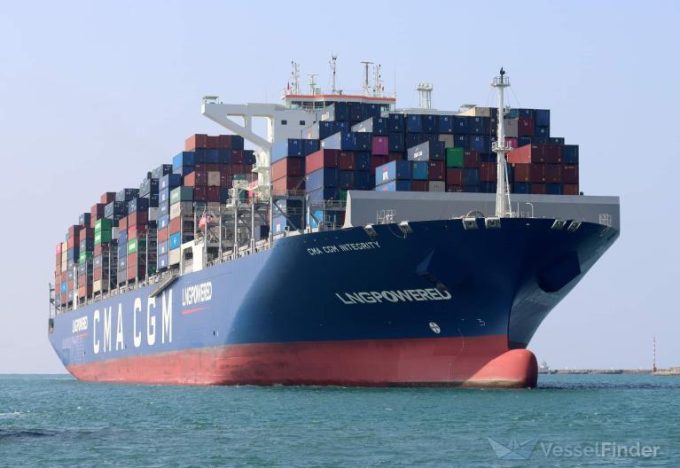
Carriers on the Asia-west coast South America trade appear to be on the verge of ripping up vessel-sharing agreements (VSAs) in preference to operating standalone services, as forwarders fear the recent injection of large amounts of capacity could force battered rate levels further downwards.
A local Latin America forwarder told The Loadstar: “We see some carriers are stopping shared services and starting standalone ones between Asia and west coast South America, to Peru, Ecuador, and Colombia.
“Demand is a bit better since the pandemic, but still not very stable, because many clients are adjusting inventory and currencies are changing a lot,” he added.
While not marketed under the Ocean Alliance portfolio, the main OA carriers – CMA GCM, Cosco, OOCL and Evergreen – have largely offered their Asia-west coast South America services jointly.
However, according to new analysis from the eeSea liner database, that appears set to change with carriers preparing for life independent of each other.
eeSea has established that both CMA CGM and OOCL have exited Evergreen’s WSA service, leaving the Taiwanese carrier as the sole tonnage provider, with Cosco, Wan Han and PIL continuing to charter slots.
The service deploys 11 ships of 8,500 teu and connects China and Taiwan with ports in Mexico, Panama, Colombia, Peru, and Chile.
At the same time, Evergreen is set to exit CMA CGM’s M2X service, connecting China with Lazzaro Cardenas and Manzanillo in Mexico and featuring an additional call at the Colombian port of Buenaventura. The service only deploys CMA CGM vessels with an average capacity of 14,300 teu – some of the largest on the trade – and Evergreen’s exit as a slot charterer will render it a standalone CMA CGM service.
Lastly, Evergreen is also leaving CMA CGM’s ACSA1 service, which bypasses Mexico and features South America west coast port rotation of San Antonio-Chancay-Callao-Posorja. This is also an all-CMA CGM vessel offering, with 11 ships of 7,700 teu capacity, with OOCL and Cosco as slot charterers.
“When we look at the numbers, we understand why many in the market are concerned,” a source said.
“Capacity from Asia to Latin America has more than doubled in just three years, and Q1 25 alone saw more than 2m teu offered.
“Some ships are now 50% larger, and this increase is very aggressive – on paper, it’s impressive, but the risk is that too many slots will not be filled if demand stays weak,” he added.
Freight rate data supports this view – the Freightos Terminal shows how rates from Shanghai-Callao have crashed over the course of this year. In January, Freightos recorded the average spot rate on the route at $4,291 per 40ft, compared with $1,720 per 40ft in January 2024.
By July, however, the situation had reversed – the average spot rate in July 2024 had leaped to $8,540 per 40ft, while at the beginning of this month it had fallen to $3,551 per 40ft.

Source: Freightos Terminal (click to expand)
A similar picture is seen in Container Trades Statistics (CTS) data, which runs up to May, which show Far East-South & Central America rates – both contract and spot – during the month were some 40% down year on year.
“From our side, the supply is growing faster than the demand, and this can bring problems with prices,” the forwarder said. “We are watching especially electronics, pharma and perishable products – they have better movement now, but not enough to fill all this new space.
“There is activity, yes, but not a real boom like some expected. We think carriers are being careful, but the situation still needs balance,” he added.
Nonetheless, volumes have been relatively healthy this year, according to CTS figures (although it’s important to note that the data includes both the east and west coasts of South America). Year-to-date volumes on its Far East-South & Central America leg amounted to 2.13m teu to the end of May, a 7.1% increase over the 1.99m teu in the first five months of 2024, indicating that the rate drop is largely due to excess tonnage.

Source: Container Trades Statistics (click to expand)
However, another factor is carriers seeking to increase space for South American perishable exports to Asia, which are expected to grow above average as Chinese food importers seek alternatives to US products, for obvious reasons.
“We see carriers adding more reefer space, especially for meat, fish and fruit going into Peru, Colombia and Ecuador. This is positive for exporters, but again, if the volumes don’t grow, the rates will drop or services will be cancelled. And schedule reliability is already falling, so more capacity doesn’t always mean better service,” the forwarder explained.
“We tell our customers to book earlier, but also to stay flexible and to look for other possible markets too.
“The standalone services are helping with reliability, but if the demand goes down, maybe we will see blanked sailings again – the risk of too much capacity is real now,” he added.
Meanwhile, Singapore-headquartered carrier PIL is set to introduce two new weekly South America west coast feeder services later this summer, as it seeks to expand its coverage in the region. CA1 will offer a port rotation of Buenaventura-Corinto-Puerto Caldera; while CA2 will operate a Lazaro Cardenas-Acajutla shuttle service.
PIL is a tonnage provider in the Asia-west coast South America WS6 service operated in cooperation with Wan Hia and Yang Ming.
For uninterrupted access, sign in or sign up to The Daily News, Premium or The Loadstar Enterprise Plan.

Comment on this article