Carriers aim for schedule reliability on core trades at the expense of regional services
Global liner schedule reliability improved modestly during the second quarter, but is becoming increasingly fragmented ...

TFII: EARNINGS BEATCHRW: PUMMELED DSV: LACK OF TRUST WEIGHSDHL: NEW HIGH DHL: E-COMM DEAL SIGNEDF: NEW PROFIT STREAMCHRW: HEALTHY CORRECTIONDSV: TIME TO BUY INWTC: NO LUCKCHRW: 'NUCLEAR VERDICT'DSV: DEEP CUTKNIN: UPGRADEDKNIN: AI BENEFITSKNIN: NOT WORTH IT
TFII: EARNINGS BEATCHRW: PUMMELED DSV: LACK OF TRUST WEIGHSDHL: NEW HIGH DHL: E-COMM DEAL SIGNEDF: NEW PROFIT STREAMCHRW: HEALTHY CORRECTIONDSV: TIME TO BUY INWTC: NO LUCKCHRW: 'NUCLEAR VERDICT'DSV: DEEP CUTKNIN: UPGRADEDKNIN: AI BENEFITSKNIN: NOT WORTH IT
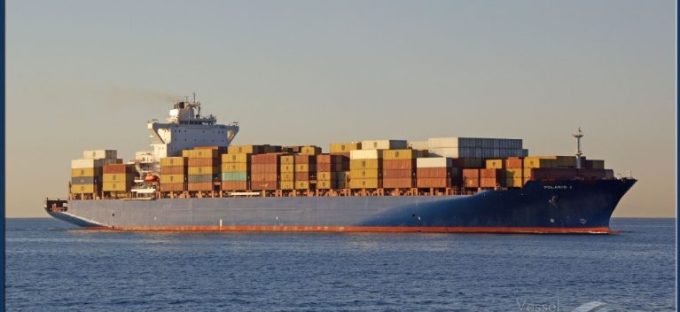
The Gemini Cooperation has introduced an additional transpacific service as a rush of demand and rising rates tempt carriers to bolster east-west capacity.
Yesterday, Maersk and Hapag-Lloyd announced the new TP9/WC6 service, covering East China and North-east Asia to Long Beach, adding to Gemini’s existing transpacific service portfolio.
Its rotation of Xiamen-Busan-Long Beach-Xiamen will connect the ports in China and South Korea with the US west coast in 18 and 14 days, respectively.
The first sailing of the TP9/WC6 will see the 4,600 teu Rhone Maersk depart Xiamen on 24 June and Busan on 28 June. Westbound, the Rhone Maersk will depart Long Beach on 15 July.
Maersk told The Loadstar the service would deploy six 3,000-4,000 teu vessels on a weekly call rotation. Hapag-Lloyd added that the new service was a direct response to “current very high demand”.
Meanwhile, state-controlled operator China United Lines (CULines) is returning its truncated China-Long Beach service to the transpacific after exiting the trade in 2023.
The Transpacific West Coast 1 (TP1) service has a Shekou-Ningbo-Qingdao-Long Beach-Shekou rotation, with a 38-day turnaround.
According to Linerlytica, five to six 2,400-2,800 teu ships will be assigned, beginning with CUL Manila departing Shekou on 7 June, with an expected arrival at Long Beach on 29 June.
CULines was one of several opportunistic mid-tier carriers that ventured into long-haul routes during the Covid-induced boom. It ran a China-US west coast service with fellow state-run carrier Shanghai Jin Jiang Shipping between November 2021 and July 2023, when substantially corrected rates forced them out of the market.
But with Linerlytica now expecting rates to surge to $6,000/ per 40ft to the US west coast and $7,000 to the east coast, shipping lines have been re-incentivised to inject capacity to the transpacific.
“Additional capacity is still being added as carriers capitalise on rising demand and soaring transpacific freight rates. CULines is the latest carrier to join the bandwagon, while incumbent carriers have added extra loaders and resumed suspended services,” it said.
On Friday, the Shanghai Containerised Freight Index showed the Shanghai-US west coast gained 6%m to $3,275 per 40ft, while the Shanghai-US east coast rate went up 5%, to $4,284 per 40ft.
Maritime analyst eeSea reported that Ocean Alliance carriers CMA CGM, Cosco, Evergreen and OOCL were showing early indicators of reinstating announced blanked sailings on their PSW1 service. According to its data, four vessels are scheduled for deployment, with the APL Miami slated to depart from Hai Phong on 31 May.
“This represents only the initial phase of a broader reinstatement pattern,” said eeSea. “Additional blanked sailings are likely to be filled, particularly given the uncertainty surrounding market conditions following the conclusion of the 90-day trade tension moratorium between the US and China.”
In this week’s Sunday Spotlight, Sea-Intelligence reported that, compared with the previous week, this week will see an 11% injection of capacity from Asia to North America west coast, and predicted an even larger spike in the second week of June, for when carriers have increased planned capacity by 18%.
“We might expect the capacity injection to continue in the coming weeks, as demand is likely to continue to surge – in turn driving up spot rates and incentivising the injection of yet more capacity,” it said.
“The question is whether this will lead to an increase in blank sailings elsewhere, in order to use the vessels on the transpacific.”
Listen to this week’s News in Brief Podcast to get up to date on the latest supply chain news!

For uninterrupted access, sign in or sign up to The Daily News, Premium or The Loadstar Enterprise Plan.
Comment on this article