Container spot rates still falling, but gently, thanks to capacity discipline
Container spot freight rates on the main east-west trades all declined over the past week, ...

WTC: NO LUCKCHRW: 'NUCLEAR VERDICT'DSV: DEEP CUTKNIN: UPGRADEDKNIN: AI BENEFITSKNIN: NOT WORTH ITPLD: DEAL TIMEKNIN: CONF CALL CLOSING KNIN: PRICING POWER KNIN: MARKET SHARE GAINS IN ROAD KNIN: AI-RELATED COST INFLATION OUTLOOKKNIN: APEX LOGISTICS IPO UPDATEKNIN: QUESTION TIMEKNIN: 'COST REDUCTION PROGRAMME IS ON TRACK'KNIN: CFO REMARKSKNIN: MONETARY IMPACT FROM AI KNIN: AI UPSIDEKNIN: STRONG ROAD UNIT DELIVERY KNIN: AIR LOGISTICS SHINES
WTC: NO LUCKCHRW: 'NUCLEAR VERDICT'DSV: DEEP CUTKNIN: UPGRADEDKNIN: AI BENEFITSKNIN: NOT WORTH ITPLD: DEAL TIMEKNIN: CONF CALL CLOSING KNIN: PRICING POWER KNIN: MARKET SHARE GAINS IN ROAD KNIN: AI-RELATED COST INFLATION OUTLOOKKNIN: APEX LOGISTICS IPO UPDATEKNIN: QUESTION TIMEKNIN: 'COST REDUCTION PROGRAMME IS ON TRACK'KNIN: CFO REMARKSKNIN: MONETARY IMPACT FROM AI KNIN: AI UPSIDEKNIN: STRONG ROAD UNIT DELIVERY KNIN: AIR LOGISTICS SHINES
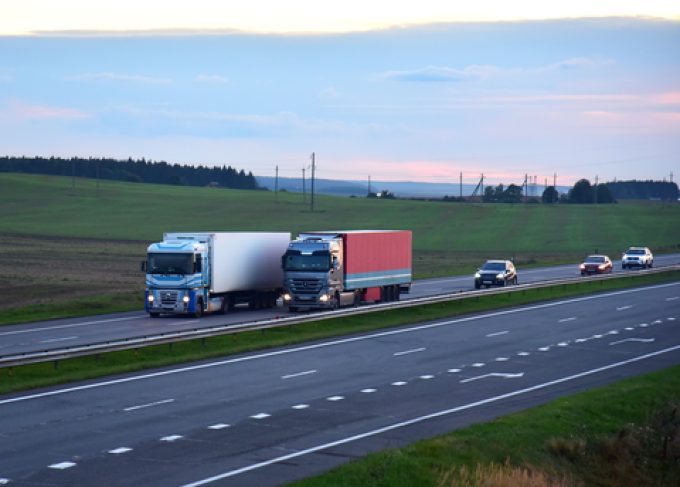
Europe’s road freight market has showed signs of “cautious recovery” this month, but weak demand and uneven capacity means the road ahead remains uncertain.
According to recent data and analysis from Transport Intelligence (Ti) and Upply, while consumer demand across Europe has remained “quite soft”, Ti’s head of commercial development Michael Clover noted that on the manufacturing side, demand appeared to be “recovering”.
The Upply-Ti-IRU benchmark shows contract and spot indices both converging around 132 in Q2, which, according to Upply CEO Thomas Larrieu, demonstrated “the fragile balance” in the European road-freight market.
He explained: “Despite the first signs of recovery, demand remains moderate and pressure on the spot market is therefore low.”
Ti projected that for the final quarter of 2025, market sentiment was “cautiously steady”, as consumers in several key European economies curtailed spending on non-essential items because of inflationary pressure, higher energy costs and economic uncertainty.
“Manufacturers’ restocking is supporting some lanes, but consumer goods flows are still below pre-2023 levels,” said Ti analyst Shruti Sasidharan.
This fragile outlook could spell trouble for DSV, with its Q3 results due on Thursday, after its acquisition of DB Schenker created one of the most prominent players in the European road freight market. In its last quarterly results, at the beginning of August, CEO Jens Lund described the European road freight market as the “worst he could remember”.
Meanwhile, Ti highlighted other forwarders that had identified road freight as a pain point, such as Germany’s Dachser, with CEO Burkhard Eling complaining of broader economic pressures, high costs, weak industrial production and a decline in personal consumption hitting the business.
Danish forwarder Scan Global Logistics said that Q1 revenue from its road division had decreased by 12%, year on year, and profitability in the sector continued to face “challenges” as surplus capacity dragged down utilisation, squeezing earnings.
Downward movement from 2024 was also noted at last week’s Aviation Connect Conference in Copenhagen, by Wallenborn CEO Jason Breakwell, who told delegates that, despite reports of increased cross-border imports into Europe, demand for road feeder services “seems calmer” than last year.
“I think one reason is because the shippers are getting smarter; they’re doing their diligence, and they’re managing to fly the freight closer to the markets than they did last year. Then, it was all over the place,” he explained.
On the supply side, Ti reported that the number of registered HGVs across the EU had increased “only modestly”, and the chronic driver shortage remained a persistent strain. The IRU has estimated more than 420,000 vacancies.
David Smorenburg, sales manager at Jan de Rijk Transport, said at Aviation Connect: “The shortage of drivers is not going to go away, the drivers are not there.”
He urged that, from a long-term perspective, the industry must explore alternatives for recruitment, such as “looking outside of the European Union to see if we can get drivers from other places.”
For uninterrupted access, sign in or sign up to The Daily News, Premium or The Loadstar Enterprise Plan.
Comment on this article