EXCLUSIVE: DSV Air & Sea shakes up France and SW Europe cluster
The DSV way – nada más

PLD: TRADING UPDATE ON THE WAY KNIN: UPSIDEJBHT: STRONG TRADING UPDATE DSV: EVERY LITTLE HELPSJBHT: CEO REMARKS WMT: VERTICAL INTEGRATION IN LOGISTICSJBHT: HERE WE GOPG: STEADYEXPD: NEW RECORD BA: DELIVERIESMAERSK: BEAR CAMP MUSINGS
PLD: TRADING UPDATE ON THE WAY KNIN: UPSIDEJBHT: STRONG TRADING UPDATE DSV: EVERY LITTLE HELPSJBHT: CEO REMARKS WMT: VERTICAL INTEGRATION IN LOGISTICSJBHT: HERE WE GOPG: STEADYEXPD: NEW RECORD BA: DELIVERIESMAERSK: BEAR CAMP MUSINGS
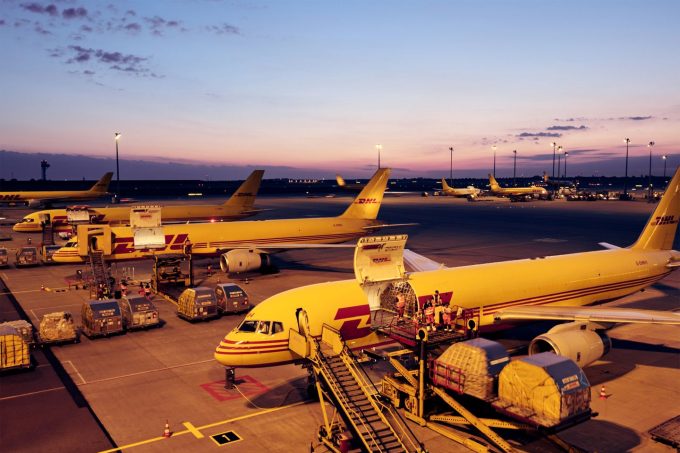
Large freight forwarders could need to pivot next year, with low airfreight rates expected to dampen their results.
Predicting air cargo demand growth of just 2% to 3% in 2026, Niall van de Wouw, chief airfreight officer for Xeneta, explained: “We expect supply to grow more than demand in 2026, and that will have an impact on rates.
“I also do not think low, single-digit demand growth will satisfy the appetite and ambition of freight forwarders, especially the listed ones that need to grow much faster in the market. So, the only way to do that is to grab market share, which would place further downward pressure on rates in favour of shippers.”
Major forwarders this year which have seen airfreight declines attributed it to cutting out lower-yielding business, and pointed out that they were below market average because they don’t handle ecommerce charters.
DHL Global Forwarding saw both airfreight revenue and volumes down (2.4% and 0.7%, respectively) in the nine-month period, although in Q3, air freight revenue fell 7% year on year, while gross profit rose 5.9%. Over at DSV, organic tonnage – ie, without the Schenker volumes – fell 1.6% in Q3.
However, it seems unlikely that either would ‘grab market share’ by lowering rates.
DHL GF CEO Oscar de Bok told The Loadstar: “Buying markets – we’ve all seen that in the forwarding market over the years. And anybody that has done that has an expiry date.”
Both DHL and DSV have an eye on high-yielding verticals, while DHL GF is also looking to attract a new segment of customer.
“We want to combine traditional forwarding with using data and AI in a way that you can be both competitive but also agile,” said Mr de Bok. “Then it’s also easier to pick up, for instance, the mid-sized and the smaller customers. There’s a whole growth segment there.
“Our strategy is to look at growth in middle-sized customers, because there’s a bigger value-add that we provide to those.”
And then there are the high-yielding verticals.
“There is huge growth in the logistics of data centres,” added Mr de Bok. “Trillions in investments have been made for the coming three years. And if you translate that to air freight capacity, there’s a huge opportunity there. So that’s good news.
“And the nice thing of it, it’s not simply just getting capacity, there’s also an element of quality and expertise that comes with it, which makes it interesting.”
Healthcare is another key vertical for DHL.
“It is one of the big investments we’re making. In our case it’s unique, because we can build an air corridor that’s completely yellow. Because we can use the yellow plane, we can use the Express and DGF terminals, and wherever required, we can use the Supply Chain warehouses, and the last-mile. So we have a unique product there. The volumes are there, the customers are there, so it would obviously be not very clever not to invest in that.”
Other listed forwarders have done better in air freight this year: Expeditors, for example, saw a 6% increase in tonnage and 10% increase in revenues in the nine-month period. Kuehne + Nagel, which is undergoing a heavy cost reduction programme via management reorganisation, saw a 3% rise in air turnover, with both ebit and margin improvements. It emphasised market share gains in perishables and hyperscalers.
The other key advantage for forwarders is the increased complexity, particularly in compliance, in the market.
“We thrive on complexity; anybody who’s in logistics knows how to manage it. The biggest value you can add to your customers is when there’s complexity,” said Mr de Bok.
And with the US Department of Justice recently making clear that trade fraud and tariff evasion is on the priority list for white-collar crime, shippers will want to ensure absolute compliance.
Some observers are more optimistic for next year’s results, pointing out that, despite all the major changes this year, the market is healthy.
“So far, the evidence suggests that this year’s turbulent geopolitical developments and severe trade tensions do not appear to have hit overall volumes or rates much, although the patterns of trade may have shifted significantly,” noted TAC Index editor Neil Wilson.
And Rotate CEO Ryan Keyrouse added: “The air cargo market has seen 28 months of consecutive growth – and while the industry is generally muted on 2026, there are reasons to be optimistic that growth can continue.
“Some key air cargo indicators are good, such as the US inventory:sales ratio – higher sales than expected despite front-loading – and airlines are flying freighters with near-record utilisation. Some perceive uncertainty on tariffs as a risk, but seeing the growth of 2026 I think tariffs are an opportunity as supply chains adapt and shift, which is good for air cargo.”
For uninterrupted access, sign in or sign up to The Daily News, Premium or The Loadstar Enterprise Plan.

Comment on this article