Logistics and resilience are key as Saadé warns supply chain disruption is 'new normal'
CMA CGM chairman and CEO Rodolphe Saadé has outlined how the French shipping giant is ...


DHL: NEW HIGH TARGET ON THE STREET DSV: EXPECTATIONS RUN HIGH KNIN: DHL GUIDANCE UPGRADE READ-ACROSSKNIN: NEW OPENINGGM: TECH UPSIDEAMZN: BIG DEBT FUNDING ON ITS WAYDHL: 'STELLAR EXPRESS'DHL: UPDATEDHL: STRONG PRELIMINARY UPDATE CHRW: STILL VERY BEARISH PLD: 'MOST PREFERRED'ZIM: DEAL OR NO DEALWTC: MOMENTUMDAC: PAYOUTMAERSK: RETURN TO SUEZ
DHL: NEW HIGH TARGET ON THE STREET DSV: EXPECTATIONS RUN HIGH KNIN: DHL GUIDANCE UPGRADE READ-ACROSSKNIN: NEW OPENINGGM: TECH UPSIDEAMZN: BIG DEBT FUNDING ON ITS WAYDHL: 'STELLAR EXPRESS'DHL: UPDATEDHL: STRONG PRELIMINARY UPDATE CHRW: STILL VERY BEARISH PLD: 'MOST PREFERRED'ZIM: DEAL OR NO DEALWTC: MOMENTUMDAC: PAYOUTMAERSK: RETURN TO SUEZ
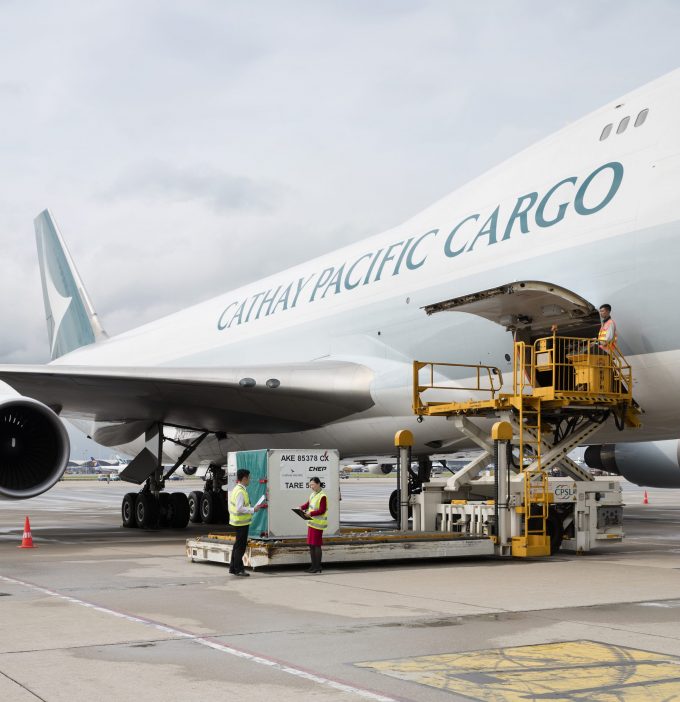
Cathay Pacific has extended its suspension of passenger and cargo flights to key Middle East hubs until the end of April, underlining a growing split in the air freight market as regional carriers rebuild capacity while international airlines step back.
The Hong Kong carrier said flights to Dubai and Riyadh would remain cancelled through 30 April, citing the “volatile situation” and the need to give customers greater planning certainty.
The move comes as Gulf airlines begin to restore operations following widespread disruption caused by the conflict and airspace closures.
Emirates said it had “progressively ramped up” passenger and freighter services after the partial reopening of regional airspace, while Etihad has also resumed some flights. In contrast, Qatar Airways remains heavily constrained: the closure of Qatari airspace has cut its schedule to around a dozen daily flights, removing roughly 5% of global air cargo capacity.
Despite repeated attacks, key infrastructure remains operational. Dubai International Airport was forced to halt flights this week following a strike on a fuel storage area, but has since resumed services.
Meanwhile, Saudi Arabia’s King Fahd International Airport in Dammam has emerged as a key alternative hub, with airlines shifting operations from more exposed locations.
The disruption has driven a sharp rise in rates on major east-west lanes. Freightos data shows South Asia–Europe prices up 84% since the conflict began, with South-east Asia–Europe rates up 26% and Middle East–Europe rising 57%, partly reflecting capacity shortages and fuel surcharges.
However, prices have begun to level in recent days, suggesting some capacity is returning via Gulf carriers and through the addition of direct Asia–Europe services by other airlines.
The impact is also beginning to ripple beyond the region. Vietnam’s aviation regulator reportedly warned carriers to prepare for possible flight reductions from April after China and Thailand halted jet fuel exports, tightening supply in key Asian markets and raising the prospect of further capacity constraints.
Even so, with Qatar Airways largely grounded and carriers such as Cathay opting to suspend services altogether, the market remains fragmented, with tight capacity – as airlines adopt markedly different strategies in response to the crisis.
This article is © The Loadstar. Reproduction, rewriting, or derivative use requires a license. Contact [email protected] for licensing enquiries.

For uninterrupted access, sign in or sign up to The Daily News, Premium or The Loadstar Enterprise Plan.
Comment on this article