Photo - Airbus
Photo - Airbus

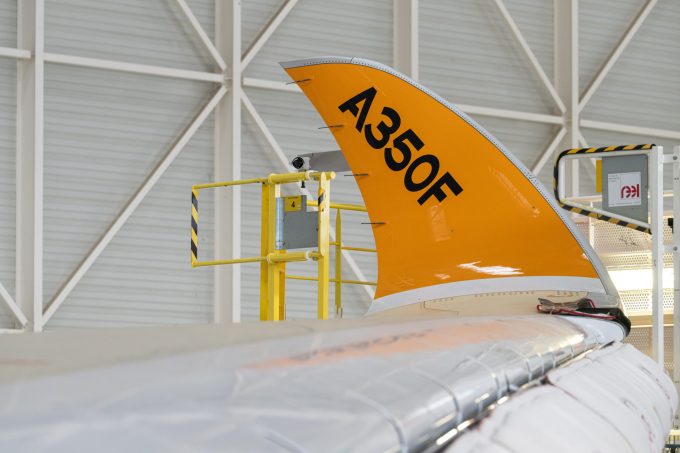
The A350F programme is progressing on plan, backed by strong global demand for next-generation freighters, according to Airbus this week.

It claims to have seized a majority share in the large-freighter market with its A350F, announcing 82 firm orders from 13 customers and a 58% market share just a few years after launch.

The Toulouse manufacturer is betting on long‑term cargo growth and shifting trade flows to support demand for its first purpose‑built widebody freighter, which is scheduled to enter service in the second half of 2027.

Although it avoided making short-term market predictions, Airbus stressed that sustained air-freight growth, particularly in Asia, the Middle East, Latin America and emerging African markets, continued to justify interest in the new aircraft type.

Cargo airlines, including those that fly both passengers and freight, are pressing for aircraft that can carry heavier and more varied loads, while staying flexible for changing trade routes and modern digital operations.

Much of that airline demand is payload. Airbus confirmed that customers will have a choice between 109-tonne and 111-tonne variants at entry into service, but the manufacturer noted that this was only the starting point for the freighter’s structural capability.

“The aircraft is capable of more, and we will give more in the years to come,” confirmed Airbus officials.

Cargo space is one of the A350F’s main selling points, according to Airbus. The aircraft can take 30 pallets on the main deck and 12 more below, giving it 717 cubic metres of usable volume – about the same as a 747‑400 freighter. It also has a new powered cargo door, 175 inches wide, so airlines can load even the largest modern engines. The floor has been strengthened to handle heavier loads, with 18 of the pallet positions able to take the highest running weights, giving operators more choice in how they arrange freight.

Cargo operations were a major focus, with airlines pushing for faster turnarounds, less downtime and better protection for sensitive goods. Airbus said the A350F can keep all decks temperature‑controlled, with independent settings between 4°C and 26°C. This feature was requested by carriers moving pharmaceuticals, perishables and high‑value products. Combined with the aircraft’s larger internal space, the system is aimed at meeting rising demand for temperature‑sensitive cargo, especially in Asia‑Pacific and Latin America where air freight is growing quickly.

Airlines also had a major say in shaping the A350F’s features. The aircraft allows the main and lower decks to be loaded independently, removing the usual constraints between them. All decks can be kept at precise temperatures between 4°C and 26°C, which is vital for carrying goods like pharma or live animals.

Airbus has also added a watertight floor with heated drainage so the main deck can be properly cleaned, helping to prevent corrosion that has long been a problem for freighters. Additionally, the aircraft comes with upgraded connectivity to support the growing push for digital cargo operations.

For freighter operators, who routinely deal with spills from perishables, chemicals and live animals, this was described as a chronic maintenance problem on existing types. Airbus told media that operators had repeatedly asked for a solution, and that the ability to water-wash the deck would materially reduce long-term maintenance costs.

Although the A350F was shaped by airline feedback, Airbus also tied its development to wider market trends. During the briefing, Latin America and Africa were highlighted as regions where cargo airlines are upgrading fleets and looking to replace older aircraft such as tri‑jets and 747‑400Fs.

Airbus declined to comment on individual campaigns, specifically on the absence of Ethiopian Airlines on its order book but it acknowledged rising engagement globally, noting the A350 platform’s large installed base among passenger carriers and its appeal to combination operators.

Airbus also clarified its position on media assumptions on delays to installing the cargo door. Officials explained that the main cargo door was always scheduled to be fitted later in the assembly process, allowing time to finalise its design. The company said the door would be ready at the start of 2026 and installed on the aircraft in line with the planned programme.

Comment on this article


You must be logged in to post a comment.