Middle East premium fades – but AI boom keeps air freight rates aloft
Air freight markets appear to be settling, with capacity largely returned to the Gulf, fuel ...

VW: THE IMPACT VW: MASSIVE JOB CUTS CONFIRMEDEXPD: BULLISHCHRW: POSITIONING AHEAD OF EARNINGSAMZN: IN THE NUMBERSAMZN: PEOPLE MATTER UNTILVW: THE LAST CUT IS THE DEEPESTJBHT: GEARING UP VW: BUYING TIMER: BIG VOTE OF CONFIDENCEAAPL: BEARISH HEDGEYE AAPL: THE BEAR CASEFDX: LIFE SCIENCES ORG UNVEILEDWTC: UPS AND DOWNSWTC: ASX ANNOUNCEMENT REGARDING DSV PARTNERSHIP VW: D-DAY
VW: THE IMPACT VW: MASSIVE JOB CUTS CONFIRMEDEXPD: BULLISHCHRW: POSITIONING AHEAD OF EARNINGSAMZN: IN THE NUMBERSAMZN: PEOPLE MATTER UNTILVW: THE LAST CUT IS THE DEEPESTJBHT: GEARING UP VW: BUYING TIMER: BIG VOTE OF CONFIDENCEAAPL: BEARISH HEDGEYE AAPL: THE BEAR CASEFDX: LIFE SCIENCES ORG UNVEILEDWTC: UPS AND DOWNSWTC: ASX ANNOUNCEMENT REGARDING DSV PARTNERSHIP VW: D-DAY
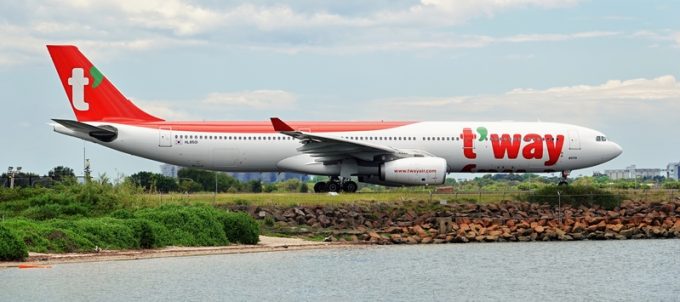
South Korean low-cost carrier T’way Air’s cargo business is recording rapid growth, driven by the expansion of long-haul routes, including to Europe, and the attraction of high-value cargo.
T’way, which last week released its 2025 financials, stated that cargo volumes nearly doubled from 2024, to 34,000 tonnes.
T’way’s business structure, which was previously passenger-centric, is rapidly expanding into the cargo sector, after Asiana Airlines was required to cede its services to Paris, Frankfurt, Rome and Barcelona to the LCC, in order to win antitrust approval for its takeover by Korean Air Lines.
Last July, T’way, which already operated an Incheon-Sydney service, started its first North American route, with four weekly flights to Vancouver. The airline has no freighters and carries only belly cargo.
T’way’s cargo volume is expected to grow. Estimates are that for Q1 26, 9,000 tonnes will be carried, more than doubling from the 4,000 tonnes flown a year ago.
South Korean LCCs are however, finding it hard to stay in the black, as competition for passengers intensifies, especially on short-haul routes.
T’way’s net loss widened to $234m in 2025, from $44.8m in 2024. Despite revenue growing 17% from 2024 to $1.24bn, this was exceeded by costs. Freight accounted for 10% of revenue, compared with 8% in 2024.
T’way said it is working on its cargo capabilities to attract more high-value goods, including semiconductor components, fresh food, and pharmaceuticals and bio-products. Accordingly, T’way has strengthened its cold chain transportation capabilities.
Later this year, T’way Air plans to introduce the A330-900NEO to further enhance its cargo competitiveness. This aircraft model is expected to reduce fuel consumption and carbon emissions by approximately 25% compared to existing aircraft.
Middle East hostilities are also boosting demand for air freight. As maritime transportation is disrupted due to unrest on the Red Sea route, some volumes are moving by air.
IATA, which had forecast some 2% growth this year, noted: “Air freight demand will continue to grow as demand for AI data centres, semiconductors, and high-value products expands.”
For uninterrupted access, sign in or sign up to The Daily News, Premium or The Loadstar Enterprise Plan.

Comment on this article