Battle for freighter capacity intensifies as airlines reshape networks
A cluster of shocks is forcing freighter operators to finely balance their global capacity – ...

EXPD: BULLISHCHRW: POSITIONING AHEAD OF EARNINGSAMZN: PEOPLE MATTER UNTILVW: THE LAST CUT IS THE DEEPESTJBHT: GEARING UP VW: BUYING TIMER: BIG VOTE OF CONFIDENCEAAPL: BEARISH HEDGEYE AAPL: THE BEAR CASEFDX: LIFE SCIENCES ORG UNVEILEDWTC: UPS AND DOWNSWTC: ASX ANNOUNCEMENT REGARDING DSV PARTNERSHIP VW: D-DAYPLD: KEEP PUSHING
EXPD: BULLISHCHRW: POSITIONING AHEAD OF EARNINGSAMZN: PEOPLE MATTER UNTILVW: THE LAST CUT IS THE DEEPESTJBHT: GEARING UP VW: BUYING TIMER: BIG VOTE OF CONFIDENCEAAPL: BEARISH HEDGEYE AAPL: THE BEAR CASEFDX: LIFE SCIENCES ORG UNVEILEDWTC: UPS AND DOWNSWTC: ASX ANNOUNCEMENT REGARDING DSV PARTNERSHIP VW: D-DAYPLD: KEEP PUSHING
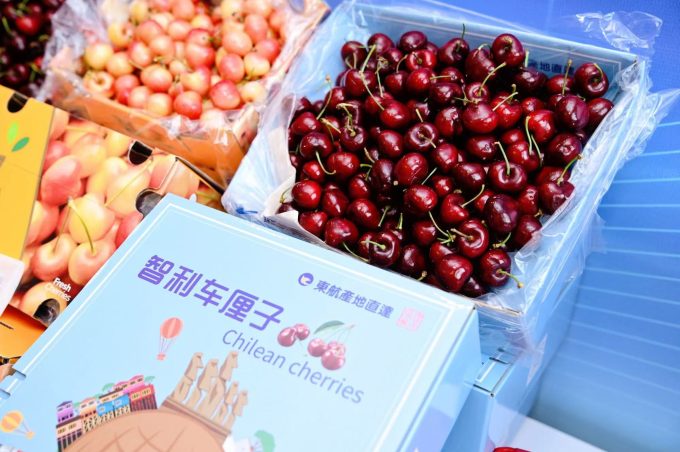
There is a shift in the way airlines are looking at the perishables market. Recent news points to a structural change in the way carriers work with exporters – and each other – to ensure seamless fresh transport.
Today, China Eastern Air Logistics explained its high-frequency, high-density “flight wave system” for transporting cherries from Chile to China.
Via its China Eastern Cold Chain subsidiary, it deployed both its own aircraft and chartered freighters from “nine leading global airlines” to multiple destinations in China, including fresh produce hubs in Chengdu, Ezhou, and Ningbo.
“Together, these efforts form a fully integrated fresh express system, spanning intercontinental direct flights, port-of-entry processing, and warehouse distribution. The system delivers on the promise of “fresh within 48 hours”, ensuring Chilean cherries “travel seamlessly from orchards abroad straight to Chinese consumers’ tables”, said the company.
The carrier added that technology had helped boost the trade.
“China Eastern Cold Chain is leveraging digital tools, such as the Dongdongce temperature monitoring system and Feilaixian intelligent dispatch platform. These technologies jointly enabled end-to-end, transparent management of Chilean cherries. Thanks to this integrated approach, consumers across China can enjoy fresher, higher-quality imported cherries at more affordable prices,” it said.
Chile has been one of the leading sources of cherries for China for more than a decade – and the flight wave system is helping spread the fruit to South-east Asia.
“By offering diversified logistics solutions, including sea-air intermodal transport, full-plane air-to-air transport, whole-aircraft air-to-air transhipment and transhipment via European hubs, China Eastern Air Logistics has further expanded its reach,” it said.
The news follows that from IAG Cargo, which yesterday pointed to its partnership with Cooke España to show how carriers and producers can integrate their services.
Spain, Europe’s largest aquaculture producer and a €5.5bn seafood exporter, needs to ship its perishables in less than 48 hours: seafood exports to Latin America, reflected in a 38.5% increase in cargo volumes to the region in 2024, points to the emergence of Madrid as a southern European perishables hub. IAG Cargo is matching this rise in demand with investment of some €1.5m, expanding its Madrid perishables handling facility by 45% and lifting processed tonnage by 10% in just the first half of 2025.
“The success story of Cooke España is a great example of how logistics can unlock global opportunity for regional producers, securing jobs, strengthening local communities, and creating new trade routes for Spain’s world-class produce,” said Idoia Martinez, regional commercial manager for Spain and Portugal at IAG Cargo.
Cooke España is a leading marine aquaculture company, headquartered in Aguilas, Murcia, part of Cooke Inc, one of the world’s largest producers of aquatic protein.
Manolo Nicolas, export & business development manager at Cooke España, said: “IAG Cargo is integral to our growth. Its reach, speed, and flexibility allow us to offer fresh, high-quality fish to our customers. The IAG Cargo team in Madrid acts as an extension of our own, ensuring seamless exports, compliant documentation, and reliable delivery, every time.
Meanwhile, in the South Pacific, Air New Zealand Cargo is preparing for a seasonal uplift of nearly 6,000 tonnes of freight across December and January, including hundreds of tonnes of capsicums, cherries, and salmon.
But in line with many other countries, New Zealand has been looking for alternative markets for some of its fruit, including apples, following the decision by the US to impose a 15% tariff. While some tariffs were lifted last month including for kiwifruit, the tariff on apples remains.
One grower told Radio New Zealand the 15% tariff essentially cancelled out his margins.
“Fruit we shipped to the US this year returned probably a dollar less than the costs, so regrettably we have no plans to ship to the US this season,” he said. “Until the tariffs are gone it will be difficult to make a dollar.”
New Zealand has exported over 40,000 tonnes of apples to Tawain this year, as it looks to Asia instead.
US tariff volatility has contributed to exporters looking for new markets, which increases the strategic value of air cargo, enabling exporters to reallocate supply rapidly in response to political or economic shocks. Airlines with diversified global networks, like IAG Cargo with its Europe-Latin America coverage and China Eastern with its South America-Asia corridor, stand to benefit from this growing need for flexibility.
For uninterrupted access, sign in or sign up to The Daily News, Premium or The Loadstar Enterprise Plan.

Comment on this article