Air cargo in new balancing act as rates ease and fuel costs climb
Air cargo carriers are facing an increasingly challenging market, with spot rates beginning to cool, ...

TFII: EARNINGS BEATCHRW: PUMMELED DSV: LACK OF TRUST WEIGHSDHL: NEW HIGH DHL: E-COMM DEAL SIGNEDF: NEW PROFIT STREAMCHRW: HEALTHY CORRECTIONDSV: TIME TO BUY INWTC: NO LUCKCHRW: 'NUCLEAR VERDICT'DSV: DEEP CUTKNIN: UPGRADEDKNIN: AI BENEFITS
TFII: EARNINGS BEATCHRW: PUMMELED DSV: LACK OF TRUST WEIGHSDHL: NEW HIGH DHL: E-COMM DEAL SIGNEDF: NEW PROFIT STREAMCHRW: HEALTHY CORRECTIONDSV: TIME TO BUY INWTC: NO LUCKCHRW: 'NUCLEAR VERDICT'DSV: DEEP CUTKNIN: UPGRADEDKNIN: AI BENEFITS
Air cargo backlogs are beginning to build across global supply chains as Middle East airspace closures strip capacity from the market and force widespread network disruption, with forwarders warning the impact could last weeks even if the conflict ends.
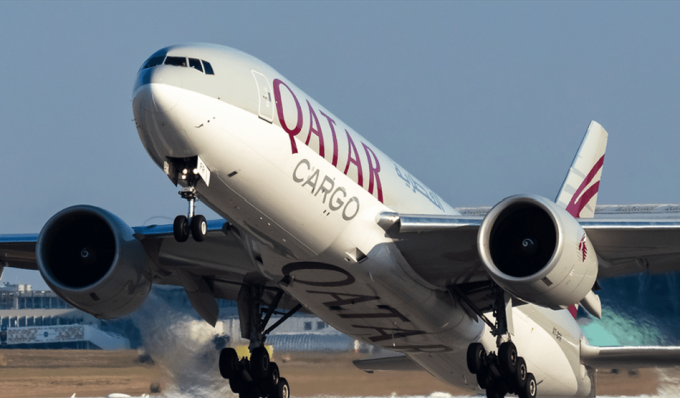
Qatar Airways Cargo this week confirmed it had resumed selected freighter services to and from Doha under “temporary authorisation” and “limited operating corridors”, highlighting how operations remain tightly constrained. The carrier is running a reduced schedule focused on key trade lanes, while continuing parts of its network outside Doha, underscoring the limited restoration of hub functionality.

Elsewhere in the region, carriers are being forced to restructure operations entirely. Gulf Air has relocated aircraft to Dammam to maintain an interim network while Bahrain remains closed, and Iraqi Airways has the majority of its fleet grounded and unable to operate due to ongoing airspace restrictions.
The result is a significant loss of effective capacity. Industry data indicates global airfreight capacity has fallen sharply since the onset of the crisis, with up to 20% withdrawn from the market and more than 500,000 tonnes of capacity lost, as aircraft are grounded, rerouted or operating less efficiently.
Operational disruption is already feeding through into congestion. DHL Global Forwarding said it was seeing “cargo congestion at terminals” across origin, destination and transit points, with efforts under way to clear “these congestions and these backlogs as we speak”.
Forwarders say the squeeze on capacity is being felt across both air and ocean freight markets. Carlos Magalhaes, president of Portugal-headquartered forwarder JTM Group, said the situation was “affecting everyone” and was “impacting our capacity to meet demand”.
An India-based forwarder described mounting pressure across modes: “We are struggling to source capacity. Ocean capacity is being trapped, and is not as reliable. Airfreight is going before we can get it and rates are climbing 30, 40%.”
The disruption to ocean services is also feeding into air cargo demand, compounding the imbalance. One executive noted that “what happens in ocean freight does ripple into air”, as shippers shift volumes into an already constrained airfreight market.
At the same time, rerouting around closed or restricted airspace is adding further strain. Carriers are being forced onto longer, congested corridors, increasing transit times, fuel burn and costs, while reducing payload and available cargo capacity.
Even if the conflict were to end immediately, the impact is expected to persist. “There is a lot of backlog… and it takes quite some time to get schedules and capacity back up and running,” DHL Global Forwarding said in a webinar this week, adding that disruption would likely “ripple on” for weeks as networks are restored.
With aircraft grounded, hubs partially offline and capacity unevenly distributed, recovery is likely to be gradual, leaving global supply chains exposed to continued volatility in the weeks ahead.

For uninterrupted access, sign in or sign up to The Daily News, Premium or The Loadstar Enterprise Plan.
Comment on this article