Middle East premium fades – but AI boom keeps air freight rates aloft
Air freight markets appear to be settling, with capacity largely returned to the Gulf, fuel ...

WTC: 'ONE RECORD'HLAG: EARNINGS GUIDANCE UPGRADE AAPL: GLOBAL SMARTPHONE SHIPMENTS VW: THE IMPACT VW: MASSIVE JOB CUTS CONFIRMEDEXPD: BULLISHCHRW: POSITIONING AHEAD OF EARNINGSAMZN: IN THE NUMBERSAMZN: PEOPLE MATTER UNTILVW: THE LAST CUT IS THE DEEPESTJBHT: GEARING UP VW: BUYING TIMER: BIG VOTE OF CONFIDENCEAAPL: BEARISH HEDGEYE
WTC: 'ONE RECORD'HLAG: EARNINGS GUIDANCE UPGRADE AAPL: GLOBAL SMARTPHONE SHIPMENTS VW: THE IMPACT VW: MASSIVE JOB CUTS CONFIRMEDEXPD: BULLISHCHRW: POSITIONING AHEAD OF EARNINGSAMZN: IN THE NUMBERSAMZN: PEOPLE MATTER UNTILVW: THE LAST CUT IS THE DEEPESTJBHT: GEARING UP VW: BUYING TIMER: BIG VOTE OF CONFIDENCEAAPL: BEARISH HEDGEYE
“Astonishing” is the word Xeneta’s Niall van de Wouw used to describe the Chinese ecommerce platforms’ ability to pivot away from the US to Europe, in a comparatively small amount of time.
That is also a word you could use for the aptitude of airlines to do much the same. Perhaps it’s now the ease with which we can see changes to airfreight capacity, thanks to Rotate’s live data, but the recent sudden shifts in capacity point to a mature air cargo industry, much schooled by the crazed times of Covid. Airlines have learnt to be far more flexible, adaptable, and agile – a useful tool in this frankly weird era of capricious government policy.
And with cargo accounting for more of carriers’ overall revenues than before the pandemic – and even rising to 14% since last year, according to recent data, airline boardrooms are better aware of the impact of cargo.
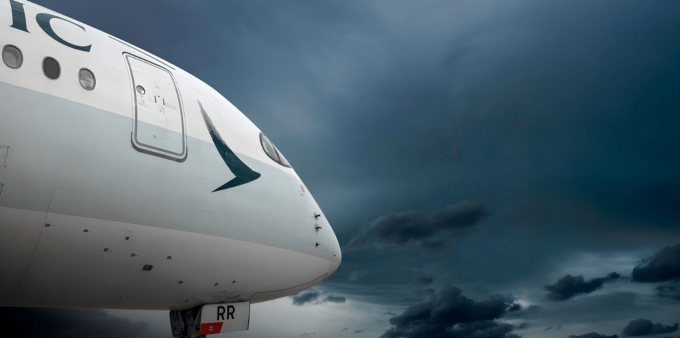
But despite all the travails of the past five years around the world, one carrier in particular has stood out; it had the steepest learning curve, and it took its lessons seriously. Step forward Cathay Pacific.
Cathay’s Covid was second to none in terms of challenges. It faced prolonged border closures, and highly restrictive quarantine rules for crew, which meant the airline had not restored its network well after all the other airlines had started flying again. At one point in early 2022, Cathay was operating at less than 2% of pre-pandemic passenger capacity.
It was the school of hard knocks. But the carrier clearly learned some very valuable lessons. Fast forward to September 2025, and super Typhoon Ragasa. The carrier relocated aircraft in advance of the 500 flight cancellations, and once the airport reopened, it used a slot control system to restart operations. Cathay was back up and running – without appearing to break into a sweat. It even ran a live blog from its Integrated Operations Centre (IOC).
Especially towards the end of Covid, every airline in the world was grateful not to be Cathay. Now, though, with this extraordinary and unique experience under its belt, Cathay has proven that it is well-equipped to weather all storms. And as for the rest – they too are far better at agility, whether facing a virus, or a petulant president.
Check out today’s News in Brief podcast!
For uninterrupted access, sign in or sign up to The Daily News, Premium or The Loadstar Enterprise Plan.

Comment on this article