The Loadstar Explainer Podcast: El Niño and its impact on shipping
In this one-off explainer episode, we’re joined by Mathew Dib, duty director of marine operations ...

KNIN: CONF CALL CLOSING KNIN: PRICING POWER KNIN: MARKET SHARE GAINS IN ROAD KNIN: AI-RELATED COST INFLATION OUTLOOKKNIN: APEX LOGISTICS IPO UPDATEKNIN: QUESTION TIMEKNIN: 'COST REDUCTION PROGRAMME IS ON TRACK'KNIN: CFO REMARKSKNIN: MONETARY IMPACT FROM AI KNIN: AI UPSIDEKNIN: STRONG ROAD UNIT DELIVERY KNIN: AIR LOGISTICS SHINESKNIN: SEA LOGISTICS PERFORMANCE KNIN: CEO REMARKSKNIN: CONF CALL F: NEW PARTNERSHIP DISCLOSEDDSV: LITTLE CHANGE
KNIN: CONF CALL CLOSING KNIN: PRICING POWER KNIN: MARKET SHARE GAINS IN ROAD KNIN: AI-RELATED COST INFLATION OUTLOOKKNIN: APEX LOGISTICS IPO UPDATEKNIN: QUESTION TIMEKNIN: 'COST REDUCTION PROGRAMME IS ON TRACK'KNIN: CFO REMARKSKNIN: MONETARY IMPACT FROM AI KNIN: AI UPSIDEKNIN: STRONG ROAD UNIT DELIVERY KNIN: AIR LOGISTICS SHINESKNIN: SEA LOGISTICS PERFORMANCE KNIN: CEO REMARKSKNIN: CONF CALL F: NEW PARTNERSHIP DISCLOSEDDSV: LITTLE CHANGE
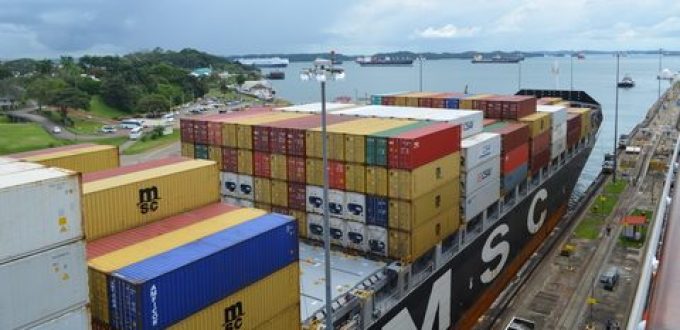
The Panama Canal Authority (ACP) is to reintroduce transit restrictions as it prepares for the annual El Niño weather phenomenon, which this year is predicted to be one of the most severe on record.
Canal administrator Ricaurte Vásquez said yesterday the probability of a severe El Niño had increased significantly, from 25% in April to 81% currently, and as a result, ACP was “ready to implement preventive measures based on lessons learned during the 2023–2024 El Niño event”.
Dr Vásquez warned of “likely capacity restrictions – not only in terms of draught limitations but also through reductions in the number of daily booking slots”.
The last period in which an El Niño-induced drought across Panama was from mid-2023 to mid-2024, and saw canal capacity curtailed by up to 50% at times, with daily transits halved, from the design capacity of 36 a day to 18.
However, Dr Vasquez emphasised that the “timing and scope of any similar restrictions will ultimately depend on market conditions”.
Nonetheless, ACP has already begun capacity restrictions, with the cancellation this week of Period 3 auctions at its Panamax locks.
ACP has a three-tiered slot booking system: Period 1 slots can be booked up to a year in advance; Period 2 slots open 21 days before transit; while Period 3 slots can be booked just 48-96 hours before transit.
Cancelling Period 3 bookings for the old Panamax locks effectively reduces total daily transit capacity from 36 to 34.
Container shipping lines, particularly those on the Asia-US east coast trade, where the Panama Canal is a key artery – have already begun to respond. MSC announced on Monday a $100 per teu Panama Canal surcharge on all shipments transiting the waterway from 18 August, citing “operational constraints and increased costs associated with Panama Canal transit, and in order to maintain the reliability and quality of our services”.
CMA CGM will introduce a similar surcharge for Asia to Caribbean and Latin American destinations on 10 August.
Mathew Dibb, director of the Fleet Weather division at Polestar Global, explained to The Loadstar Podcast how El Niño’s effect in the Pacific has a direct impact on weather in the Atlantic.
“We do tend to notice it’s drier than normal in the Caribbean, and that can have some pretty big impacts – it was in 2023/2024 that El Niño meant there was less rainfall over Gatun Lake, which is the main supply of water for ships transiting the Panama Canal.
“It feeds the water so the vessels can go through the locks. And with less rain, they had to change the amount of frequency of ships that could pass through, as well as restricting draughts.
“Some of the ships couldn’t have so deep a draught, so that changed things – something shipping companies may have to plan for,” he added.
Meanwhile, ACP noted that between October last year and June – the first nine months of its financial year – it had averaged 35 transits a day, with a total of 10,726 transits, a 5.2% increase on the 10,191 recorded during the previous financial period.
“Daily transit auctions remain an important tool that provide customers with an additional opportunity to secure transit reservations when standard booking options are unavailable, or when operational flexibility is required,” the authority said.
“Precautionary measures are under consideration for the first time after nearly two consecutive years in which no draught restrictions were necessary, thanks to an abundant availability of water in the canal’s reservoirs.
“Heavy rainfall throughout 2025 and an unusually wet 2026 dry season allowed the canal to maintain above-normal water storage levels in its lakes,” ACP added.
For uninterrupted access, sign in or sign up to The Daily News, Premium or The Loadstar Enterprise Plan.
Comment on this article