LatAm-North America: Washington's badly timed own goals
Until last week, airlines moving between Latin America and North America were looking forward to ...


MAERSK: NEARING ONE-YEAR HIGHFDX: FEDEX FREIGHT UPSIDEBA: TIME TO DELIVERFDX: EARNINGS RISKDSV: UPSIDEKNX: TIME TO SAY GOODBYEODFL: SET THE BAR HIGHBA: PIPELINEBA: SUPPLY CHAIN TESTAMZN: AI WAVESDHL: THE FRENCH CONNECTIONJBHT: MIND THE SPREADMAERSK: GAUGE THE UPSIDE
MAERSK: NEARING ONE-YEAR HIGHFDX: FEDEX FREIGHT UPSIDEBA: TIME TO DELIVERFDX: EARNINGS RISKDSV: UPSIDEKNX: TIME TO SAY GOODBYEODFL: SET THE BAR HIGHBA: PIPELINEBA: SUPPLY CHAIN TESTAMZN: AI WAVESDHL: THE FRENCH CONNECTIONJBHT: MIND THE SPREADMAERSK: GAUGE THE UPSIDE
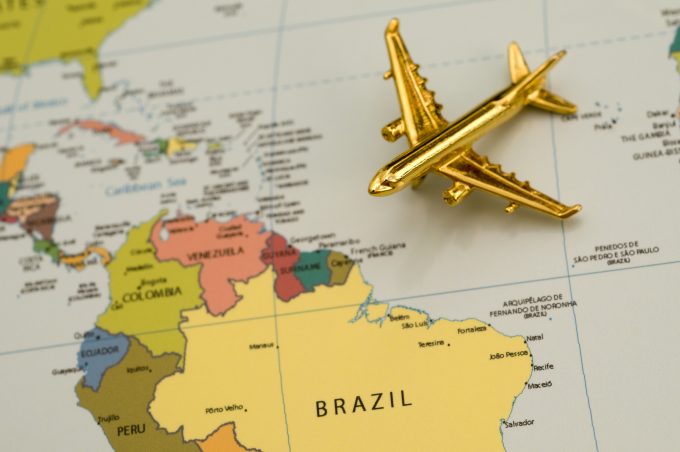
South America is set to be a main attraction amid capacity cuts on the transpacific, but carriers and forwarders “need to know how it will impact the industry”, delegates at IATA’s CNS partnership conference in Miami this week heard.
Peter Cerda, IATA’s regional VP for the Americas, noted that “due to the tariff implementation” there had been lots of discussion in Latin America about “how quickly ecommerce is growing”.
Stephanie Abeler, VP Americas for Lufthansa Cargo, agreed: “We have seen a shift of some tradelanes, which is giving us good opportunities, especially in South American markets we might not have had before.”
However, Peter Penseel, president of Delta Cargo, warned this could present an issue for operators that would be faced with less demand on the transpacific.
“Those main shippers and freight forwarders with freighter capacity, especially out of China and North America, see now a shift towards other parts of the world. If they have capacity on a leg, like Shanghai to Chicago, but then want to change it, probably to South America, that means the capacity is not available in North America, but that aircraft will become empty in North America market,” he explained.
Mr Penseel advised that the move of freighter operators to facilitate new demand in South America would send ripples through the entire air cargo industry.
“You always have to be realistic because freighters need to fly to make money. So, they will end up somewhere in the world. And in the case of those now in South America or in Mexico, all those changes will automatically have an impact on the entire air cargo industry.”
He urged that, as a carrier or forwarder, “you need to make sure that on a daily basis, and probably multiple times a day, that you know where capacity is available and how it will impact the industry”.
He added: “We are spending a lot of time identifying where capacity is needed and also where operators start to operate their freighter capacity, to make sure we are balancing out the demand that others will have in a different part of the world,” he said.
“So, it has a huge impact.”
In particular, South and Latin America-based carriers could suffer from an influx of competition in the market.
Andrés Bianchi, CEO of Latam Cargo, said: “As a Latin American carrier we’re a bit less exposed to the demand shifts, but it seems to me supply shifts are relevant, so we have to be very cognisant of how people are moving their feed around, and how that may impact our operations.”
Indeed, Brandon Fried, executive director of the Air Forwarders Association, told The Loadstar on the sidelines of the event: “Anytime you see more demand, there’s more competition. It’s easy to move a freighter that’s going into the United States and start running it into Buenos Aires or Lima, and that’s not a big deal, but if there’s more investment down there, it’s going to increase prices, it’s going to increase wage pressure.
“They’re going to have all the problems that the US has dealt with for a number of years,” urged Mr Fried.
While Mr Bianchi also expressed concerns over related infrastructure challenges in the region, he was optimisticl about the “opportunities” Latam Cargo could gain from the growth in ecommerce.

For uninterrupted access, sign in or sign up to The Daily News, Premium or The Loadstar Enterprise Plan.

Comment on this article