FedEx-CMA CGM deal hints at new battle for air cargo capacity
When CMA CGM announced its $1.4bn acquisition of FedEx Supply Chain, most attention focused on the contract logistics business ...

KNIN: CONF CALL CLOSING KNIN: PRICING POWER KNIN: MARKET SHARE GAINS IN ROAD KNIN: AI-RELATED COST INFLATION OUTLOOKKNIN: APEX LOGISTICS IPO UPDATEKNIN: QUESTION TIMEKNIN: 'COST REDUCTION PROGRAMME IS ON TRACK'KNIN: CFO REMARKSKNIN: MONETARY IMPACT FROM AI KNIN: AI UPSIDEKNIN: STRONG ROAD UNIT DELIVERY KNIN: AIR LOGISTICS SHINESKNIN: SEA LOGISTICS PERFORMANCE KNIN: CEO REMARKSKNIN: CONF CALL F: NEW PARTNERSHIP DISCLOSEDDSV: LITTLE CHANGE
KNIN: CONF CALL CLOSING KNIN: PRICING POWER KNIN: MARKET SHARE GAINS IN ROAD KNIN: AI-RELATED COST INFLATION OUTLOOKKNIN: APEX LOGISTICS IPO UPDATEKNIN: QUESTION TIMEKNIN: 'COST REDUCTION PROGRAMME IS ON TRACK'KNIN: CFO REMARKSKNIN: MONETARY IMPACT FROM AI KNIN: AI UPSIDEKNIN: STRONG ROAD UNIT DELIVERY KNIN: AIR LOGISTICS SHINESKNIN: SEA LOGISTICS PERFORMANCE KNIN: CEO REMARKSKNIN: CONF CALL F: NEW PARTNERSHIP DISCLOSEDDSV: LITTLE CHANGE
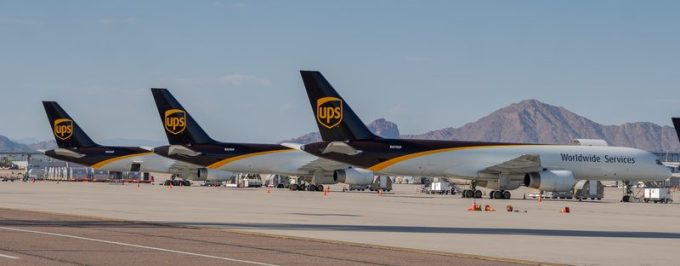
The announcement that UPS is restructuring – cutting tens of thousands of jobs and closing scores of facilities – could come as something of a shock; but it shouldn’t be for air cargo players, according to Stan Wraight, president of consultancy Sasi World.
“This is not a surprise – it’s just the latest example of what has been happening in past years.”
It is not, he argues, the collapse of an integrator, but a forced reset driven by structural shifts that have been building for more than a decade.
UPS has been unusually clear about its rationale. Over the past year, the company has eliminated some 48,000 positions and closed or consolidated close to 90 facilities, reshaping both its workforce and physical footprint. Management insists this is not financial distress, but a strategic decision to prioritise profitability over volume.
The sharp reduction in Amazon traffic, once UPS’s largest customer, has left excess capacity that no longer makes economic sense in a post-pandemic market. Investors, tellingly, have applauded the discipline.
Mr Wraight notes the challenge: “The competition is from alternate shipping options available to consumers (BCO), such as those offered by ecommerce companies’ massive fleets and from very large forwarders that operate their own freighters.”
In those business models, scale and control sit with the shipper, not the carrier. As he explains: “In those business cases, the air portion is considered an expense to be handled, as the money and margin is in the total logistics chain on the ground, not in the flown portion.”
That distinction matters. For integrators like UPS, the real money is made on the ground. As Mr Wraight argues: “This is how UPS, forwarders, other integrators always made their money and profit in the past; the aircraft cost was a ‘cost of doing business’ not a profit centre, they paid whatever was needed for the ‘truck in the air’ to make money on all the other services they provided that are/were the cash-generators.”
The problem now is that the cost of that “truck in the air” has risen sharply, while control of volume has shifted decisively toward BCOs, ecommerce platforms, and mega-forwarders.
For scheduled airlines, Mr Wraight highlights that airlines carry “massive investments and with no control of the market, fixed costs that form 85% of the total, while for integrators the air portion is the reverse, just 15% to 20% of their costs.” This imbalance is changing traditional distribution models.
“This is the fundamental change that is driving traditional distribution channels for scheduled airlines (forwarders) to disappear and be sold, like Panalpina, Schenker, and many more in past years on the forwarding side. The big get bigger, as scale is the only solution available to them.”
Traditional forwarders are disappearing because intermediation without sufficient scale no longer creates economic value; only those able to control capacity, data, and risk can survive, he argues. UPS is restructuring for the same reason: scale that once delivered advantage has, in a margin-constrained market controlled by customers and platforms, become a cost.
UPS is not alone. FedEx is integrating Express and Ground, closing facilities, and rationalising fleets under its Network 2.0 programme; DHL is increasingly selective, defending yield rather than volume and avoiding capital-heavy expansion in low-margin segments. As Mr Wraight notes: “Integrators are cutting costs in the most massive ways possible, and postal authorities as well,” ie, a systemic response to economics that no longer reward a sprawling network.
According to Mr Wraight, this represents an opportunity for airlines rather than a threat. He says: “It’s an opportunity for airlines that has not been there in 40 years, since the integrators took away all their higher-yield business.”
He explains: “The way forward for scheduled airlines, especially passenger combination carriers and major freighter airlines which can offer scale through a compelling network, is to have – as soon as possible – a product portfolio that these new BCOs (shippers/consignees) want.” And he adds that this requires “a realistic business strategy with commercial and operational issues addressed to meet new expectations”.
Some airlines appear to have grasped this urgency. Turkish Airlines is investing billions in cargo terminals, logistics infrastructure, and ecommerce capability, signalling that cargo is no longer ancillary but strategic. Qatar Airways Cargo has partnered directly with Alibaba’s logistics arm, Cainiao, positioning itself closer to the source of cross-border ecommerce flows. Ethiopian Airlines has built a large, integrated cargo and logistics platform with dedicated ecommerce facilities, showing how a scheduled carrier can move decisively up the value chain.
“Those which adapt strategy will survive, profit, and be the carriers of choice for all stakeholders in the supply chain,” said Mr Wraight.
There is, of course, a counter-argument: integrators are not going away. UPS, FedEx, and DHL still dominate time-definite, door-to-door logistics, own the customer interface and control powerful IT platforms.
One could argue that today’s cuts are simply consolidation before renewed strength, and that airlines still lack control of the end-to-end chain where much of the margin sits.
Either way, the old equilibrium has broken. As integrators retreat from marginal volume and simplify networks, space opens elsewhere.
As Mr Wraight concludes: “Those airlines, airports, and ground handling companies that accept change and adapt will see their cargo contribution grow and become more profitable than ever, with significant margins, if done right.”
UPS’s restructuring could mark a reset for the entire air cargo industry.
For uninterrupted access, sign in or sign up to The Daily News, Premium or The Loadstar Enterprise Plan.
Comment on this article