Hormuz 'definitely shut', landbridges under pressure – TIR to the rescue?
With tentative hopes of a reopening of the Hormuz Strait dashed by the wave of ...

VW: THE IMPACT VW: MASSIVE JOB CUTS CONFIRMEDEXPD: BULLISHCHRW: POSITIONING AHEAD OF EARNINGSAMZN: IN THE NUMBERSAMZN: PEOPLE MATTER UNTILVW: THE LAST CUT IS THE DEEPESTJBHT: GEARING UP VW: BUYING TIMER: BIG VOTE OF CONFIDENCEAAPL: BEARISH HEDGEYE AAPL: THE BEAR CASEFDX: LIFE SCIENCES ORG UNVEILEDWTC: UPS AND DOWNSWTC: ASX ANNOUNCEMENT REGARDING DSV PARTNERSHIP VW: D-DAY
VW: THE IMPACT VW: MASSIVE JOB CUTS CONFIRMEDEXPD: BULLISHCHRW: POSITIONING AHEAD OF EARNINGSAMZN: IN THE NUMBERSAMZN: PEOPLE MATTER UNTILVW: THE LAST CUT IS THE DEEPESTJBHT: GEARING UP VW: BUYING TIMER: BIG VOTE OF CONFIDENCEAAPL: BEARISH HEDGEYE AAPL: THE BEAR CASEFDX: LIFE SCIENCES ORG UNVEILEDWTC: UPS AND DOWNSWTC: ASX ANNOUNCEMENT REGARDING DSV PARTNERSHIP VW: D-DAY
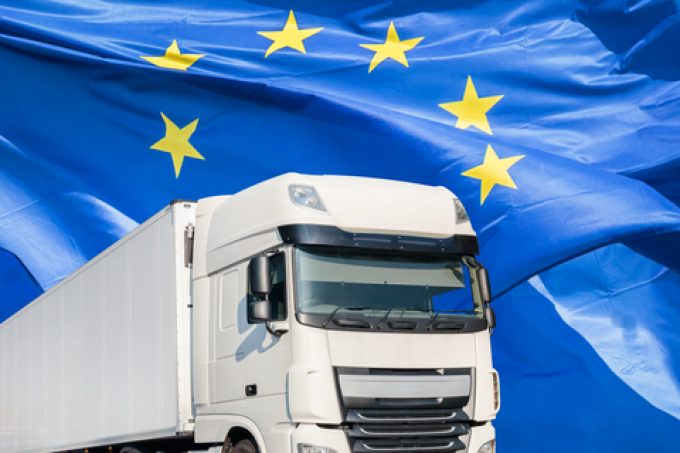
European road freight operators are facing mounting financial strain as surging fuel prices linked to the Middle East conflict ripple across an already fragile market, according to the International Road Transport Union (IRU).
Fuel prices have risen sharply since the outbreak of the conflict, adding to a cost base where energy already represents a significant share. As the IRU noted during an industry webinar today, “fuel represents up to 30% of operating costs… and there is an direct and immediate and significant pressure on the industry”.
The organisation warned that the current situation should not be viewed as a temporary spike. Instead, it marks a more fundamental shift in cost dynamics.
“This is not a short-term fluctuation, it’s a structural shift that you could expect,” it said.
“We are tracking daily fuel prices development. We are tracking the fuel shortages across Europe. We are mapping government measures, country by country. So, in fact, this energy crisis is not just increasing cost, it is increasing volatility and financial pressure across the entire road transport ecosystem.”
This comes at a time when the sector was only beginning to stabilise after several turbulent years. Road freight volumes across Europe showed modest growth of just 0.5% in 2024, with performance uneven across key markets. While some countries recorded gains, others, including Germany and Poland, saw declines, underlining the fragility of the recovery.
At the same time, structural pressures remain unresolved. The industry continues to grapple with persistent driver shortages, slow fleet renewal and rising regulatory costs. New tolling systems and emissions-related measures are expected to push operating costs even higher in the coming years, compounding the current fuel-driven shock.
The macroeconomic backdrop is also deteriorating. Not only are rising fuel costs hitting hauliers first hand, but rising energy costs are feeding into inflation, squeezing consumer purchasing power and weakening demand prospects.
“Our objective is very clear and simple: to help you understand what is happening, what to watch, and what it means in practice for the road freight transport in the month ahead,” said the IRU.
It noted that “it’s not only doom and gloom”.
“As soon as confidence on the consumer side can improve again, people are able to spend more… we have also seen consumer spending power increasing over the last couple of years.
“Oil prices will come down… It’s all about this conflict, and if it’s settled in the next month or couple of months, we could see a brighter picture going forward,” the IRU concluded.
Meanwhile, the Netherlands has implemented a new truck toll as of 1 July 2026, replacing the Eurovignette.
From July, owners will pay per kilometre. This will apply on almost all Dutch highways and on some provincial and municipal roads.
The truck toll applies to Dutch and foreign vehicles in categories N2 and N3 that have a maximum authorised mass exceeding 3,500 kg. Vehicles must be equipped with a working onboard unit (OBU) to pay the toll which records the distance travelled.
The rate per kilometre is based on the maximum authorised mass of the vehicle combination, the CO2 emission class and, in some cases, the Euro emission class.
This is already the case in Germany and Belgium, and many foreign truck owners already have an OBU. According to RDW, most providers will allow for the expansion of the service area into the Netherlands.
It explained: “The toll contributes to making transportation more sustainable and efficient. The cleaner and lighter the vehicle, the lower the amount per kilometre. As a result, the truck toll stimulates investments in clean and efficient vehicles.”
RDW also added that a “large part” of truck toll revenue will go to subsidies for improving the sustainability of the sector.
Check out our recent installment of The Loadstar Snapshot, on DSV and Cargowise:
For uninterrupted access, sign in or sign up to The Daily News, Premium or The Loadstar Enterprise Plan.

Comment on this article
Andrew C
March 31, 2026 at 4:55 pmIt is a really tough environment for carriers right now, especially with fuel costs being such a massive chunk of their operating expenses. When you combine those price spikes with the general volatility in the European market, it’s easy to see why margins are getting squeezed to the breaking point.