Maersk returns West Africa service to the Red Sea as Suez comeback gathers pace
Maersk has announced that it is returning a third service to the Red Sea routing, ...

GM: TRADING UPDATE OUTUPS: REMEMBER THE TAILWINDS PLD: NEW RELEASEPLD: OUCHVW: NEW PARTNERS SOUGHTEXPD: AIRCRAFT ON GROUND SERVICESTSLA: JUST AS VW STRUGGLESBA: NEW BIG ORDERBA: THE ORDERBOOK GROWSPLD: PUSHING FOR A DEAL PLD: TIME TO DEALEXPD: ANOTHER ALL-TIME HIGH CHRW: NEW RECORD DSV: AHEAD OF EARNINGS RELEASE JBHT: NEW HIGHS EVERYWHERE
GM: TRADING UPDATE OUTUPS: REMEMBER THE TAILWINDS PLD: NEW RELEASEPLD: OUCHVW: NEW PARTNERS SOUGHTEXPD: AIRCRAFT ON GROUND SERVICESTSLA: JUST AS VW STRUGGLESBA: NEW BIG ORDERBA: THE ORDERBOOK GROWSPLD: PUSHING FOR A DEAL PLD: TIME TO DEALEXPD: ANOTHER ALL-TIME HIGH CHRW: NEW RECORD DSV: AHEAD OF EARNINGS RELEASE JBHT: NEW HIGHS EVERYWHERE
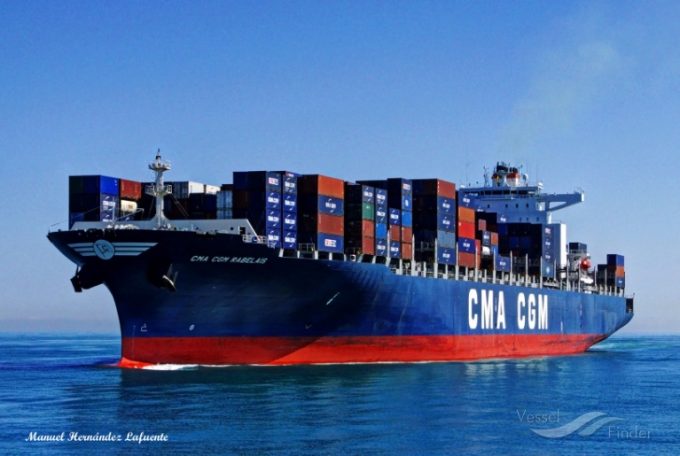
After CMA CGM reported its third-quarter results late on Friday, the winners and losers of the great liner market share game were revealed – apart from MSC, which does not disclose numbers.
Market growth for the third quarter stood at 4.7% over the same period in 2024, according to the latest data from Container Trades Statistics (CTS), a threshold some carriers exceeded, while others were below.
CMA CGM reported that it carried 6.17m teu in the period, representing year-on-year growth of 2.3%, but indicating the French carrier lost market share.
Meanwhile, Gemini Cooperation carriers Maersk and Hapag-Lloyd both gained market share – with Q3 volumes of 6.79m teu (Maersk), up 7% year on year; and 3.4m teu (Hapag), up 6.1%.
However, market share does not always translate into profitability, and the average freight rates enjoyed by the respective carriers differed markedly: the $1,453 per teu earned by CMA CGM was far higher than Maersk’s $1,146, while Hapag-Lloyd’s average rate stood at $1,391 per teu.
That varied average also provides further evidence to Loadstar sources which contend that Maersk has been one the heaviest discounters of Asia-Europe spot rates this year, as it sought to maximise the utilisation of its Geminin services.
This was reflected in the respective EBITDA margins of the lines, with the French carrier leading the way in profitability. Its shipping division reported 24.9%, over five basis points higher than the 19.5% recorded at Maersk Ocean and almost 10 basis points above Hapag Lloyd’s 15.6%.
However, group revenue at CMA CGM for the quarter was just over $14bn, down 11% year on year, while EBITDA was down 40.5%, to just under $3bn. Liner revenues were down 17.4%, to $9bn, while EBITDA from ocean shipping fell 49%, to $2.2bn.
Meanwhile, third-quarter results at Cosco indicate the China state-owned carrier has held onto its position ahead of Maersk as the world’s second-largest carrier, measured by volumes carried – assuming MSC is number one, with some 2m teu more slots, and Maersk had a broadly similar utilisation rate.
Cosco said it carried 6.9m teu in Q3, year-on-year growth of 6.3%, while its average revenue per teu came in at $1,276, indicating that during the quarter it lost marginal amounts of market share, Maersk slightly narrowing the gap. In the second quarter this year, Cosco shipped 6.8m teu compared with Maersk’s 6.46m teu.
For uninterrupted access, sign in or sign up to The Daily News, Premium or The Loadstar Enterprise Plan.
Comment on this article