Fifteen years of Cargolux results reveal air cargo’s uneven new era
Here at The Loadstar, we’ve been watching Cargolux for well over a decade. It has had its ups and downs – from financial stress ...

HLAG: EARNINGS GUIDANCE UPGRADE AAPL: GLOBAL SMARTPHONE SHIPMENTS VW: THE IMPACT VW: MASSIVE JOB CUTS CONFIRMEDEXPD: BULLISHCHRW: POSITIONING AHEAD OF EARNINGSAMZN: IN THE NUMBERSAMZN: PEOPLE MATTER UNTILVW: THE LAST CUT IS THE DEEPESTJBHT: GEARING UP VW: BUYING TIMER: BIG VOTE OF CONFIDENCEAAPL: BEARISH HEDGEYE AAPL: THE BEAR CASEFDX: LIFE SCIENCES ORG UNVEILEDWTC: UPS AND DOWNS
HLAG: EARNINGS GUIDANCE UPGRADE AAPL: GLOBAL SMARTPHONE SHIPMENTS VW: THE IMPACT VW: MASSIVE JOB CUTS CONFIRMEDEXPD: BULLISHCHRW: POSITIONING AHEAD OF EARNINGSAMZN: IN THE NUMBERSAMZN: PEOPLE MATTER UNTILVW: THE LAST CUT IS THE DEEPESTJBHT: GEARING UP VW: BUYING TIMER: BIG VOTE OF CONFIDENCEAAPL: BEARISH HEDGEYE AAPL: THE BEAR CASEFDX: LIFE SCIENCES ORG UNVEILEDWTC: UPS AND DOWNS
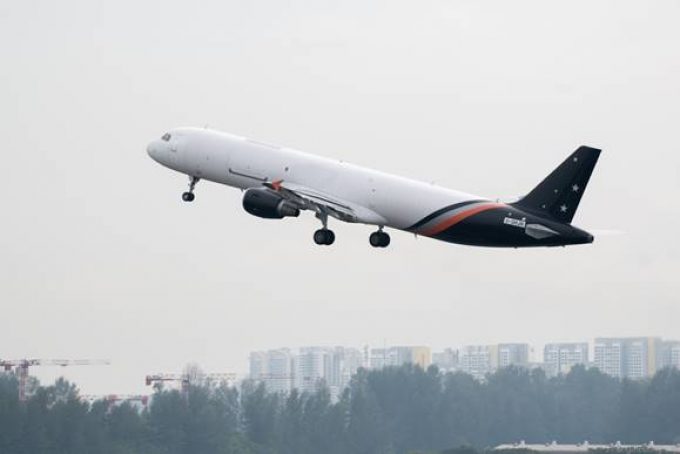
Narrowbody aircraft are on the advance in the transatlantic market. And their proliferation may open the door for more freighter flights, given their lack of cargo capacity.
The latest, and most potent, contender across the Atlantic is the Airbus 321XLR, which entered the market late last year with a range of 4,700 nautical miles –700 nm (15%) further than the A321LR.
Launch carrier Iberia, which took delivery of the first A321XLR at the end of October, has fielded the plane between Madrid and Boston. Aer Lingus followed in April, with its first A321XLR flying four times a week on a Dublin-Nashville route.
Narrowbodies promise passenger airlines shorter turnarounds than widebodies and lower operating costs; they can work routes that don’t generate enough traffic for widebodies and can open up new routes.
As the range of narrowbodies increases, carriers have been eager to field them across the Atlantic. And the A321 is leading the charge.
Discounting the A321-100/200CEO, which is no longer in production and lacks the range for longer distances, there are 1,451 A321NEOs in service (as of llast month), including 136 long-range and nine XLR models, according to Transport Research Advisory analysis of Cirium Fleets data – 5,308 more A321s are on order, including 77 LRs and 472 XLRs.
In terms of cargo capacity, as opposed to passenger numbers, the promise is less enticing. Like A320s and B737s, most A321s load predominantly bulk cargo.
The A321 can take 10 LD-3 containers, but only 17% of the active A321 fleet is equipped with the loading system. Tom Crabtree, MD of Transport Research Advisory, notes that the system is costly and predominantly used by carriers domiciled in markets characterised by tight labour supply and high costs, such as All Nippon Airways, Qantas, Lufthansa, and Finnair.
“Forwarders don’t like these small containers. They prefer to use pallets,” he explained.
Air Canada, which is expecting to get its first A321XLR in the first quarter of next year (two years behind schedule), will be using the LD system, according to Matthieu Casey, MD commercial for cargo.
“We have opted for the containerised version, which gives us more cargo flexibility, regardless of the route,” he added.
“Although too early to say, we are also considering that any widebody service it would potentially replace would provide an opportunity for the widebody to be redeployed on a cargo-friendly route, and thus have a positive impact on cargo as a whole.”
A significant increase in narrowbodies replacing larger planes in the market should reduce capacity overall, raising the question of whether freighters would be required to fill the gap. Obviously this would not play out on routes connecting hubs, but second-tier gateways might work, potentially in conjunction with additional points served.
Mr Casey is aware of this opportunity, but Air Canada has no definite plans at this point..
“Should there be a significant industry impact from multiple airlines deploying narrowbody aircraft on cargo-friendly routes and a capacity crunch, we would of course be eager to evaluate ways to fulfil that demand with our freighters,” he said.
Mr Crabtree added that theoretically a proliferation of narrowbodies opened the door to freighters, but he has doubts about the scope of the inroads that single-aisle passenger planes would make in the transatlantic arena.
For the most part, aircraft like the A321 were used on sectors under 3,000 miles – on transcontinental routes in North America and intra-regionally, such as in China or the Middle East, he noted.
Get up to speed on all things supply chain!
For uninterrupted access, sign in or sign up to The Daily News, Premium or The Loadstar Enterprise Plan.

Comment on this article