Another UAE-Oman multimodal corridor to keep Gulf supply chains moving
Authorities across the Middle East continue to explore integrated trade corridors using multimodal solutions to ...

TFII: EARNINGS BEATCHRW: PUMMELED DSV: LACK OF TRUST WEIGHSDHL: NEW HIGH DHL: E-COMM DEAL SIGNEDF: NEW PROFIT STREAMCHRW: HEALTHY CORRECTIONDSV: TIME TO BUY INWTC: NO LUCKCHRW: 'NUCLEAR VERDICT'DSV: DEEP CUTKNIN: UPGRADEDKNIN: AI BENEFITS
TFII: EARNINGS BEATCHRW: PUMMELED DSV: LACK OF TRUST WEIGHSDHL: NEW HIGH DHL: E-COMM DEAL SIGNEDF: NEW PROFIT STREAMCHRW: HEALTHY CORRECTIONDSV: TIME TO BUY INWTC: NO LUCKCHRW: 'NUCLEAR VERDICT'DSV: DEEP CUTKNIN: UPGRADEDKNIN: AI BENEFITS
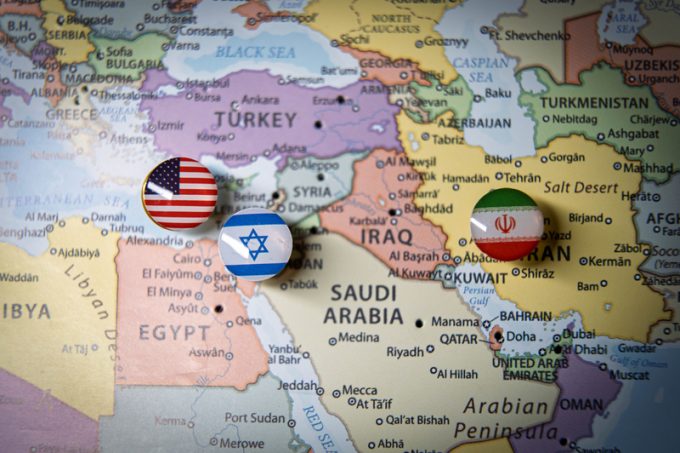
Ocean and air freight across the Middle East has been thrown into turmoil following US and Israeli strikes on Iran and subsequent Iranian retaliation, with airlines grounding flights, ports suspending operations and ocean carriers slapping on emergency surcharges.
Forwarders say the immediate barometer will be air cargo – and the outlook is grim.
“This is going to fuck-up air freight,” one forwarder told The Loadstar. “All Middle East hubs closed means air freight on EK, QR, ET, etc, cannot move to or from anywhere. It does not just affect the Middle East.
“Rates are going skywards for the short term. And then there is the price of oil.”
Across the region, airspace closures and security concerns have led to widespread suspensions.
Emirates SkyCargo has suspended flights until 3pm UAE time today, citing evolving airspace restrictions. It has also placed temporary restrictions on the booking and acceptance of new shipments for 24 hours to stabilise operations and comply with regulatory directives.
Qatar Airways Cargo confirmed a temporary suspension of flights to and from Doha, due to the closure of Qatar airspace. Freighters not scheduled to operate through Doha are continuing, but the carrier warned that once operations resumed, delays were expected. It said it was safeguarding all cargo, including temperature-sensitive shipments, at its hub and outstations.
Cathay Group suspended all Middle East operations on Saturday, including freighters to and from Dubai’s Al Maktoum International Airport, and is rerouting overflights. KLM has halted services to Dubai, Riyadh and Dammam through 5 March, while Turkish Airlines has announced multiple cancellations across the region.
Oman Air Cargo reported limited disruption within the Gulf Cooperation Council due to airspace closures, with Europe and Asia Pacific services operating with rerouting and minor delays. However, it has temporarily restricted the carriage of perishables as a precaution.
Scan Global Logistics said flights and airports across the Middle East had “ground to a halt”, with many airlines imposing full booking stops until further notice. It warned that significant delays were inevitable for shipments already in transit and for upcoming consignments to and from the region.
“Backlogs will take weeks to clear once the airspace reopens,” it added, noting likely knock-on effects on the Asia-Europe trade lane.
Freightos head of research Judah Levine said airport closures across Abu Dhabi, Bahrain, Kuwait and Dubai – alongside suspensions by Emirates, Etihad, Qatar Airways and Flydubai – could have broader implications, given the region’s critical role as a global transfer hub. So far, however, air cargo rates into and out of the Middle East have remained stable.
That may not last.
At sea, attention has turned to the Strait of Hormuz, through which roughly a fifth of global oil supplies pass.
While Iran has reportedly banned US vessels from transiting, it has not formally closed the strait. However, two oil tankers were attacked on Sunday, and the Islamic Revolutionary Guard has warned that transits are “unsafe”.
Major container lines – including Maersk, Hapag-Lloyd, MSC, and CMA CGM – are ceasing services to and diverting vessels from the waterway and the wider region. CMA CGM has introduced a $4,000 per 40ft emergency surcharge for services to affected areas.
DP World has suspended operations at Jebel Ali after an aerial interception caused a fire at the port on Saturday night, further disrupting regional supply chains.
Mr Levine warned that diverting container traffic away from the Persian Gulf would push volumes into alternative gateways, such as Khor Fakkan, Omani ports, and transhipment hubs in Sri Lanka, Malaysia, and Singapore, risking congestion.
Meanwhile, hopes of a sustained return to Red Sea transits have faded again. Following renewed threats from Houthi forces, carriers that had cautiously resumed some sailings through the Suez route are diverting vessels back around the Cape of Good Hope.
Forwarders expect a wave of carrier announcements in the coming days, including war-risk surcharges, bunker and aviation fuel adjustments linked to rising oil prices, emergency routing fees, and other contingency charges.
“The ocean freight closures and avoidance – and carriers just looking for excuses to implement surcharges regardless – and this is the excuse,” said the forwarder. “Hopefully short-term, but it will take a few days on air freight to really filter through and a few weeks on ocean.”
The wider concern is escalation.
“What if a plane is shot down or a vessel sunk? That’s the next chapter,” the forwarder added.
For now, the industry is bracing for immediate air cargo bottlenecks, sharp rate volatility, and spreading disruption well beyond the Middle East, as the world’s most strategically important transport crossroads teeters on the brink.
Check out last week’s supply chain news in today’s News in Brief podcast
This article is © The Loadstar. Reproduction, rewriting, or derivative use requires a license. Contact [email protected] for licensing enquiries.

For uninterrupted access, sign in or sign up to The Daily News, Premium or The Loadstar Enterprise Plan.
Comment on this article