'Collateral damage?' US Customs crackdown alarms importers and brokers
The going is about to get tougher for those importing goods into the US and ...


WTC: 'ONE RECORD'HLAG: EARNINGS GUIDANCE UPGRADE AAPL: GLOBAL SMARTPHONE SHIPMENTS VW: THE IMPACT VW: MASSIVE JOB CUTS CONFIRMEDEXPD: BULLISHCHRW: POSITIONING AHEAD OF EARNINGSAMZN: IN THE NUMBERSAMZN: PEOPLE MATTER UNTILVW: THE LAST CUT IS THE DEEPESTJBHT: GEARING UP VW: BUYING TIMER: BIG VOTE OF CONFIDENCEAAPL: BEARISH HEDGEYE
WTC: 'ONE RECORD'HLAG: EARNINGS GUIDANCE UPGRADE AAPL: GLOBAL SMARTPHONE SHIPMENTS VW: THE IMPACT VW: MASSIVE JOB CUTS CONFIRMEDEXPD: BULLISHCHRW: POSITIONING AHEAD OF EARNINGSAMZN: IN THE NUMBERSAMZN: PEOPLE MATTER UNTILVW: THE LAST CUT IS THE DEEPESTJBHT: GEARING UP VW: BUYING TIMER: BIG VOTE OF CONFIDENCEAAPL: BEARISH HEDGEYE
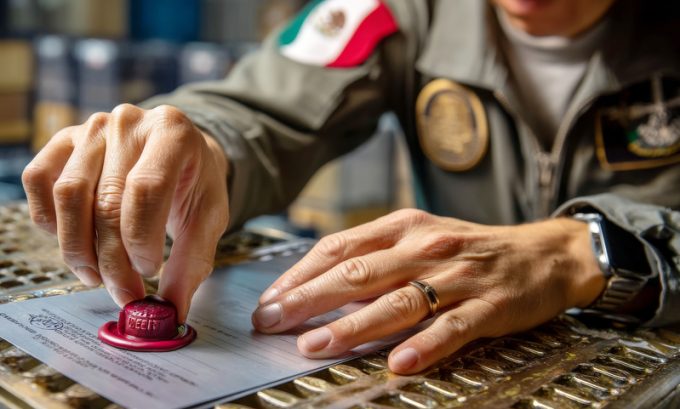
Mexico is on its way to a new customs regime – after its Chamber of Deputies gave its blessing to a broad reform of customs legislation this month, the Senate approved the proposal by a similarly wide margin.
In an effort to combat crime, the reform has three major objectives: it aims to modernise customs processes; strengthen duty collection; and bring increased transparency to cross-border operations.
A key plank in this is to ensure that the National Customs Agency and Tax Administration Service have the necessary legal and operational powers, and part of this is the creation of a Customs Council, an inter-agency body comprising these two agencies plus the Ministry of Finance and Public Credit and Ministry for Anti-Corruption and Good Governance.
Part of the council’s remit will be the oversight of the authorisation, renewal and suspension of customs licences.
Observers and industry bodies agree that crime prevention and duty collection are the primary goals of the reform, with increased efficiency of the customs service and smoother trade flows less prominent objectives.
One particular focus is tighter control of the Strategic Bonded Area Regime through digital control and monitoring requirements, as the government aims to eliminate abuse of the current system, notably the use of bonded facilities to store finished goods for the purpose of tax evasion.
Several industry bodies, including the International Chamber of Commerce Mexico, have expressed concern about excessive measures and fines impacting bona fide businesses. Much of this focuses on over-regulation and the placing of excessive responsibilities on customs agents, arguing that some of the planned obligations exceed their faculties and come at a heightened risk of suspension or cancellation of their licences.
The law requires brokers to maintain files on all importers and exporters, documenting that they are fully identified, have infrastructure and are not affiliated with taxpayers on blacklists for having issued invoices for non-existent transactions.
Moreover, the joint liability of customs brokers for foreign trade transactions in which they are involved is increased. The current limitations and exclusions are eliminated, leaving brokers with full joint liability.
In response to criticism of this aspect, President Sheinbaum said there had been no oversight of customs agents, and that they – as well as customs officials – would simply be held accountable in future for entries they make.
Brokers’ licences will no longer be valid until the broker or company ceases to operate, but will be limited to 20 years, with re-certification mandated every three years.
The push to combat smuggling goes hand in hand with the aim to boost government income from duties. By one estimate, nearly 30% of the nation’s tax revenue stems from import and export duties and other payments collected by customs. The government expects to see MX$3.49bn (US$190m) more revenue from customs modernisation in the coming year.
This should rise substantially after the government passed a new import and export tax law last month, which imposes higher tariffs on 1,371 items from countries with which Mexico does not have trade agreements – a move aimed chiefly at China (bringing Mexico in line with US tariff policy). For the most part, this raises the rates of 10%-20% to between 35% and 50%.
The chamber of commerce and other organisations are concerned that the new tax legislation will undermine Mexico’s attractiveness to draw in foreign investment, particularly in regard to near-shoring, and it could weaken its competitive position against other nations in the Americas vying for near-shoring moves.
In addition, the chamber of commerce has voiced misgivings about increased costs and transit times, warning they “would make import and export operations more expensive, affecting strategic sectors such as the automotive, chemical, pharmaceutical, and hi-tech industries”.
On a positive note, the law envisages a streamlined digital process for e-commerce entering Mexico. To participate, courier and parcel delivery companies must have a risk analysis system to identify compliance with customs rules, provided online, and live access to Customs, and they must retain documentation and information that allows them to identify the value, description, nature and origin of the goods.
For uninterrupted access, sign in or sign up to The Daily News, Premium or The Loadstar Enterprise Plan.

Comment on this article