Maersk and MSC's new plan to qualify to bid for Santos Tecon 10
APM Terminals and MSC-owned terminal operator TiL have reportedly submitted a proposal to Brazil’s competition ...

KNIN: CONF CALL CLOSING KNIN: PRICING POWER KNIN: MARKET SHARE GAINS IN ROAD KNIN: AI-RELATED COST INFLATION OUTLOOKKNIN: APEX LOGISTICS IPO UPDATEKNIN: QUESTION TIMEKNIN: 'COST REDUCTION PROGRAMME IS ON TRACK'KNIN: CFO REMARKSKNIN: MONETARY IMPACT FROM AI KNIN: AI UPSIDEKNIN: STRONG ROAD UNIT DELIVERY KNIN: AIR LOGISTICS SHINESKNIN: SEA LOGISTICS PERFORMANCE KNIN: CEO REMARKSKNIN: CONF CALL F: NEW PARTNERSHIP DISCLOSEDDSV: LITTLE CHANGE
KNIN: CONF CALL CLOSING KNIN: PRICING POWER KNIN: MARKET SHARE GAINS IN ROAD KNIN: AI-RELATED COST INFLATION OUTLOOKKNIN: APEX LOGISTICS IPO UPDATEKNIN: QUESTION TIMEKNIN: 'COST REDUCTION PROGRAMME IS ON TRACK'KNIN: CFO REMARKSKNIN: MONETARY IMPACT FROM AI KNIN: AI UPSIDEKNIN: STRONG ROAD UNIT DELIVERY KNIN: AIR LOGISTICS SHINESKNIN: SEA LOGISTICS PERFORMANCE KNIN: CEO REMARKSKNIN: CONF CALL F: NEW PARTNERSHIP DISCLOSEDDSV: LITTLE CHANGE
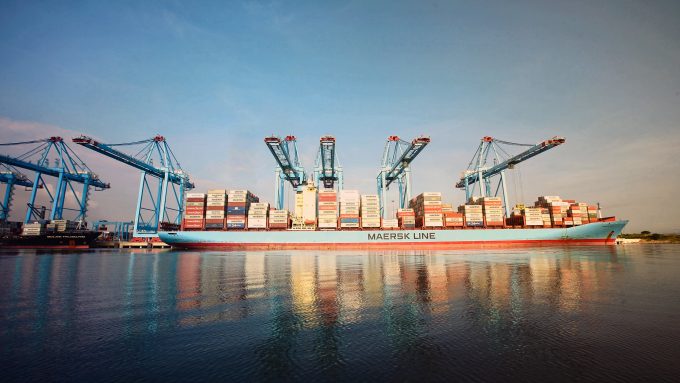
Mexico’s second-largest Pacific container gateway, Lazaro Cardenas, is seeing expansion to bring it closer to its hub ambitions. However, problems with customs clearance threaten to undermine the vision.
Last week the Lazaro Cardenas Port Community held its 14th Business Meeting, an event that highlighted both its ambitions and frustrations. It revealed that over $734m is being invested in the port to boost capacity and improve operations.
The lion’s share of the money goes into container facilities. Having completed the $140m phase two of the expansion of its container terminal, APM Terminals kicked off phase three, which will see $350m spent primarily on expanding the quay and container yard and on technology. According to the operator, the latest phase is starting about eight years earlier than anticipated.
Hutchison Ports is spending $235m, primarily on digitisation, automation, and planning technology at its Specialised Container Terminal I. The port recently completed a cabotage pier and a multipurpose terminal.
These initiatives reflect ambitions for a bigger role for the port. Maersk has signalled plans to turn the gateway into a regional hub with connections to US east coast ports via the Panama Canal, as well as to Central and South America.
However, these plans appear to be on a collision course with operational issues at the port, chiefly problems with customs clearance of transit cargo.
Part of the business meeting turned into an outpouring of frustration over lengthy delays in the process, with operators reporting containers stuck at the port for up to 30 days because of this.
Operators stressed that they had no objection to the inspection per se, but they were upset about the lengthy delays and the lack of transparency that left them guessing how much longer they have to wait for clearance to be completed. Moreover, storage fees kick in after 15 days, piling on costs on top of missed connections.
With some 300 containers stuck in the inspection process, Maersk was among the most vocal critics of the situation and warned that the problem could become an obstacle to its hub plans for Lazaro Cardenas.
An executive of the port administration acknowledged that these lengthy inspections appeared to be an ongoing problem. He stated that the federal government, which oversees the customs department, intended to strengthen customs operations, including an extension of operating hours closer to 24 hours.
Frustration with delays at Lazaro Cardenas last surfaced in September, when truckers blockaded the port in protest over wait times of 36 hours and longer. Their plight was aggravated by a lack of adequate waiting infrastructure, such as toilets and food venues. The protesters pointed to delays at customs as the biggest factor causing delays.
At the national level, there is also frustration over the reformed customs regime that kicked in on 1 January. Customs brokers are upset that the new rules place a larger burden on them and introduced shared liability of brokers and importers, leaving it up to customs which party to sanction for violations.
The reform has also created a conundrum for Strategic Bonded Enclosures, which function similarly to foreign trade zones in other nations. They are now obliged to guarantee contributions through customs guarantee accounts or letters of credit, but there is no functional financial mechanism to do so. Banks cannot use the specified channels for goods that undergo multiple entries and exits of a bonded enclosure.
According to the Association of Strategic Audited Enclosures, this has produced a disconnect between operators, authorities and the financial sector, leaving operators waiting for banks to receive instructions from the authorities how to handle the problem.
For uninterrupted access, sign in or sign up to The Daily News, Premium or The Loadstar Enterprise Plan.
Comment on this article
Kirs Y
April 29, 2026 at 8:15 pmThe Maersk hub angle is what matters once cargo flows downstream. If Lazaro Cardenas becomes a real Pacific transshipment to USEC via Panama, Mexico-origin freight starts showing up in console boxes that historically came out of US west coast ports.
For destination warehousing in North America, 30-day customs holds at origin push downstream chaos: feeder schedules slip, container free time clocks shift, and drayage windows we negotiated three weeks out get blown up. Hub plans only work end-to-end. Pacific-to-Atlantic handoff timing is brittle even when origin clearance behaves.
The 1-Jan reform sounds like it’s adding broker uncertainty on top of an already-fragile flow — that bleeds into the destination calendar whether we’re inside Mexico or not.