Fifteen years of Cargolux results reveal air cargo’s uneven new era
Here at The Loadstar, we’ve been watching Cargolux for well over a decade. It has had its ups and downs – from financial stress ...

VW: THE IMPACT VW: MASSIVE JOB CUTS CONFIRMEDEXPD: BULLISHCHRW: POSITIONING AHEAD OF EARNINGSAMZN: IN THE NUMBERSAMZN: PEOPLE MATTER UNTILVW: THE LAST CUT IS THE DEEPESTJBHT: GEARING UP VW: BUYING TIMER: BIG VOTE OF CONFIDENCEAAPL: BEARISH HEDGEYE AAPL: THE BEAR CASEFDX: LIFE SCIENCES ORG UNVEILEDWTC: UPS AND DOWNSWTC: ASX ANNOUNCEMENT REGARDING DSV PARTNERSHIP VW: D-DAY
VW: THE IMPACT VW: MASSIVE JOB CUTS CONFIRMEDEXPD: BULLISHCHRW: POSITIONING AHEAD OF EARNINGSAMZN: IN THE NUMBERSAMZN: PEOPLE MATTER UNTILVW: THE LAST CUT IS THE DEEPESTJBHT: GEARING UP VW: BUYING TIMER: BIG VOTE OF CONFIDENCEAAPL: BEARISH HEDGEYE AAPL: THE BEAR CASEFDX: LIFE SCIENCES ORG UNVEILEDWTC: UPS AND DOWNSWTC: ASX ANNOUNCEMENT REGARDING DSV PARTNERSHIP VW: D-DAY
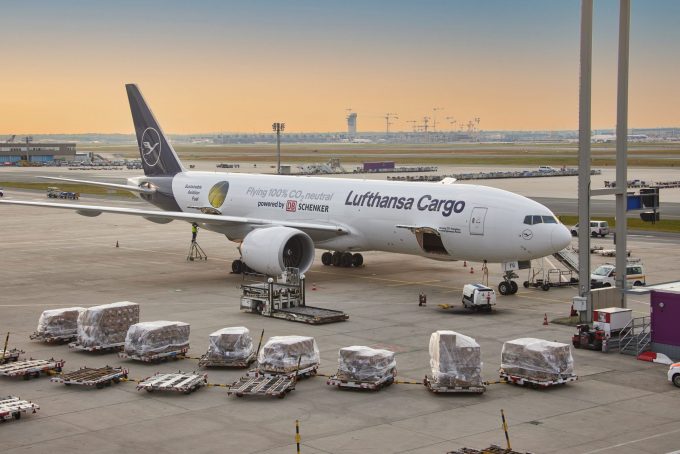
The latest delay in Boeing’s B777-X programme raises question marks over the entry of the freighter version – supposed to roll off the manufacturer’s production line in 2028.
Now, over the coming two years, the prospect of a substantial capacity injection in the large widebody cargo aircraft segment is dim.
Boeing management has confirmed that the first 777-X will not be delivered before 2027, an announcement that marked the latest delay in a programme that targeted its market entry in 2020, after its launch in 2013.
And the delays have been costly: in conjunction with the latest schedule change, Boeing took a charge of $5bn, which raised the company’s charges on the programme above $15bn. Launch customer Lufthansa, which complained about previous delays affecting its objectives for fleet modernisation and fuel efficiency, has not included the new 777 in its fleet plans until 2027.
The plane-maker and customers alike hope there won’t be any more delays. When he announced the change of market entry time, Boeing CEO Kelly Ortberg revealed that the company was behind schedule in the certification process, and that “a mountain of work” had to be done to complete it.
Meanwhile the firm is working to ramp up output of its B737max and B787 types.
One financial analyst wrote after Boeing’s announcement that he expected the B777-9 (the launch type of the 777-X series) to enter service in the second half of 2028.
It remains to be seen in how far this affects the development of the 777-8 freighter type, which was supposed to enter the market in 2027, a year ahead of the Airbus 350F.
“The 777-8F has been rumoured to be late all this calendar year, and the 777-9 certification delay will not help. On the other hand, it may not hurt that much either, as 777-8F development has been formally underway since late 2021/early 2022. Hence, the -8F benefited extensively from the large amount of flight testing which had been performed in the 2020 to early 2022 timeframe,” one industry expert remarked privately.
According to one source, Boeing signalled that it saw the freighter on track to enter the market two years after the first 777-9 passenger jet delivery, which points to a start of commercial service in 2029 for the 777-8F.
This would extend the shortage of large widebody freighters in the market. Owing to growth in traffic and factors like extended stage length of sectors like North America to Asia as a result of a ban on North American aircraft in Russian airspace, widebody freighters have been in high demand.
Boeing has ramped up its output of B777-200Fs this year, but it will stop producing the type in 2027, leaving a gap of up to two years without new large widebody freighter production.
Industry executives like Atlas Air CEO Michael Steen have been warning of a looming freighter shortage; Aengus Kelly, CEO of aircraft leasing firm AerCap, recently said the shortage of large widebody jets was “extraordinarily acute”.
Some relief should come from the introduction of converted 777 freighters. Having finally obtained certification of its 777-300ER conversion programme, Israel Aerospace Industries wasted no time in delivering the first couple and aims to have 11 in service by the end of the year.
Mammoth Freighter, another of four firms tackling B777 conversions, was on track to complete its certification process, but got stopped in its tracks by the US government shutdown. But management and industry observers expect the firm to have its certificate before the end of the year. According to Brian McCarthy, VP sales & marketing, Mammoth has seven aircraft in the works – predominantly B777-200LRs, with one 777-300ER.
Mr McCarthy sees no problems with feedstock for the -200LR version, but getting hold of 777-300ERs for conversion is challenging. Due to strong demand in the passenger sector and no supply of new passenger 777s until the market entry of the 777-9, the type is hotly sought after, as passenger airlines keep extending leases, and have even resorted to upgrading cabins.
As a result, the few available 777-300ERs command stratospheric residual values. Exacerbating the problem is an equally acute shortage of matching aircraft engines, which are also no longer produced.
And this is not likely to change any time soon. Jon Whaley, senior aviation analyst of aviation intelligence and advisory company IBA Group, predicts limited conversion activity in the coming two years.
Towards the end of the decade, conversions will pick up when the influx of B777-9 passenger planes will trigger broader availability of 777-300ERs for conversion, at plane valuations that make sense for all-cargo reconfiguration.
Listen to the latest News in Brief Podcast to get up to speed on the recent supply chain news!
For uninterrupted access, sign in or sign up to The Daily News, Premium or The Loadstar Enterprise Plan.

Comment on this article