TSMC says AI demand can run to 2030 – lifting the outlook for air cargo
The AI infrastructure boom looks set to keep air cargo demand elevated for years, after ...

PLD: TRADING UPDATE ON THE WAY KNIN: UPSIDEJBHT: STRONG TRADING UPDATE DSV: EVERY LITTLE HELPSJBHT: CEO REMARKS WMT: VERTICAL INTEGRATION IN LOGISTICSJBHT: HERE WE GOPG: STEADYEXPD: NEW RECORD BA: DELIVERIESMAERSK: BEAR CAMP MUSINGSCHRW: HIGHER HIGHS ON THE RADAR
PLD: TRADING UPDATE ON THE WAY KNIN: UPSIDEJBHT: STRONG TRADING UPDATE DSV: EVERY LITTLE HELPSJBHT: CEO REMARKS WMT: VERTICAL INTEGRATION IN LOGISTICSJBHT: HERE WE GOPG: STEADYEXPD: NEW RECORD BA: DELIVERIESMAERSK: BEAR CAMP MUSINGSCHRW: HIGHER HIGHS ON THE RADAR
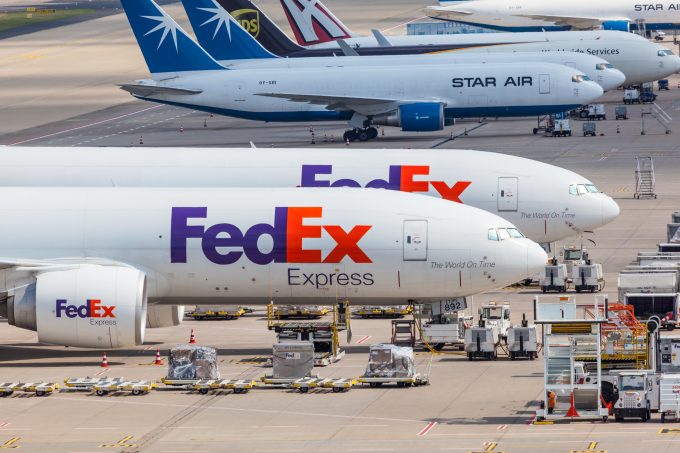
FedEx is pivoting to add capacity to Asia-Europe, after admitting that US tariffs have led to a $1bn “headwind”, including the ending of the de minimis exemption which will cost it $150m per quarter.
But the company is more bullish on the success of a peak season than other operators.
CFO John Dietrick said at its Q1 ‘26 earnings call: “As expected, due to the evolving trade environment in the quarter, we experienced a material headwind on our Asia to US lane, largely from China outbound, driving most of the $150m international export headwind to adjusted operating income.
“We expect adjusted operating income offsets to include a $1bn headwind due to the global trade environment, recognising this number could flex in either direction as the environment evolves.”
He further explained that the $1bn included “lost opportunity”, as well as additional costs for customs clearance and staffing, which amounts to some $300m.
Brie Carere, chief customer officer, added: “So to be really clear, that $1bn of headwind is predominantly an impact of top line revenue reduction because China to the US is a very profitable lane for us.”
So FedEx is looking elsewhere.
CEO Raj Subramaniam explained that FedEx had “reduced our purple tail transpacific Asia outbound capacity by 25% year-over-year. And nearly 10% versus the prior quarter. We also decreased our third-party or white tail capacity by similar percentages.
“At the same time, we shifted capacity to capture profitable revenue on the Asia to Europe lane … Given a significant portion of our de minimis volume exposure previously came from China, we were able to use learnings from our experiences in May to help shippers elsewhere navigate the more recent exemption elimination.”
However, improving profitability in Europe – which has been a struggle since it bought TNT in 2016 – is a “top priority”, although its Q1 was the best new business quarter in the past two years, it said, driven by express parcel growth on intra-Europe and the transatlantic.
Ms Carere explained: “In line with our expectations and consistent with the trends we saw in May, international export volumes declined, particularly on the China to US lane. Knowing our strongest international lane would be under pressure, we pivoted the commercial team, and they have done a tremendous job capturing demand out of Southeast Asia and Europe.
“This provided a partial offset against the headwinds to demand on the China to US export lane. The team has also done a great job maximizing US outbound capacity. We are seeing improving trends in both outbound weight and volume, supported by strong growth in our health care vertical.”
Claiming that FedEx was a “relatively small market share participant” in global airfreight, Ms Carere said the company was focused on ”premium freight”.
“We are growing between Asia and Europe, which is a large lane. We’re being selective there. And then equally important on the Purple tail that we balance capacity, and the team did a really good job from a US perspective. I’ll give the healthcare team a shout out – almost 50% of the weight growth from a US export perspective came from healthcare, airfreight.”
She added that healthcare was “a very sticky revenue. It is high service expectations, very, very customised and it is profitable, but it’s also very sticky”.
The company was relatively bullish on the prospects of the peak season, “based on what we are hearing from our customers”.
“As a reminder, this year’s peak season will last one day longer than last year,” said Ms Carere. “With that in mind, we are expecting a modest increase in peak average daily volume … and mid- to high single-digit increase in year-over-year total peak volume, with growth driven by our larger B2C customers.”
She dismissed the idea that the peak could be weakened by front-loading earlier in the year.
“I will remain optimistic the American consumer from our numbers has been resilient. We do not see any indication in either airfreight or our domestic parcel business that this is pull forward. I will absolutely acknowledge July was quite strong for us, especially the Prime Week… but I don’t necessarily see that as a pull forward.”
She did acknowledge that smaller customers had found the period “stressful”. “It has been really tough on small customers and exporters.”
International export package yield grew 4%, owing to higher fuel surcharges, exchange rate impacts and a reduction in lightweight ecommerce because of the de minimis change.
Ms Carere continued: “We continue to advance our commercial priorities, sharply focused on B2B, small and medium-sized businesses, Europe and of course, global airfreight … This includes strong healthcare-related growth within our global air freight business.”
She pointed to a new healthcare and high-value vertical route between Dublin and Indianapolis which will move goods one day faster. Its new contract with Amazon, meanwhile, which will see larger heavier packages in this “profitable business”, will “complete onboarding” by the third quarter. (FedEx’s fiscal year-end will change from May 31 to December 31 this year.)
Meanwhile despite numerous acknowledgements of FedEx‘s “world class team” , including “pride” in its air sector, an ongoing tussle with its pilots’ union – which could add to the “headwinds” – was not mentioned at all.
In June, the Air Line Pilots Association (ALPA) said it had lost confidence in Mr Dietrich, owing to his cost-cutting, lack of transparency, and labour relations: “From his previous tenure at Atlas Air to his current role at FedEx, he’s shown a preference for aggressive, litigation-heavy approaches over collaboration, eroding trust with pilots and frontline employees.”
Pilots protested yesterday outside the offices of FedEx’s largest institutional investors, urging them to demand that FedEx management resolve the contract dispute that has been going on since 2021.
Mediated negotiations took place in June this year, but appear to have halted again.
Other Q1 news from FedEx noted its “meaningful progress on preparing for the spin-off of FedEx Freight”, headwinds from the loss of the post office contract, and the appointment of Vishal Talwar, as chief digital and information officer and president of FedEx Dataworks.
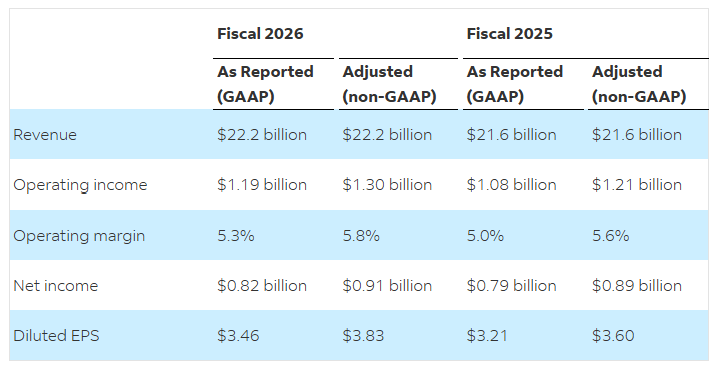
You can see all the FedEx results here, but the best coverage is on Loadstar Premium today.
For uninterrupted access, sign in or sign up to The Daily News, Premium or The Loadstar Enterprise Plan.

Comment on this article