Monsoon storms bring added disruption to India's west coast ports
Monsoon storms along India’s west coast have exacerbated supply chain disruption for containerised freight moving ...

PLD: TRADING UPDATE ON THE WAY KNIN: UPSIDEJBHT: STRONG TRADING UPDATE DSV: EVERY LITTLE HELPSJBHT: CEO REMARKS WMT: VERTICAL INTEGRATION IN LOGISTICSJBHT: HERE WE GOPG: STEADYEXPD: NEW RECORD BA: DELIVERIESMAERSK: BEAR CAMP MUSINGS
PLD: TRADING UPDATE ON THE WAY KNIN: UPSIDEJBHT: STRONG TRADING UPDATE DSV: EVERY LITTLE HELPSJBHT: CEO REMARKS WMT: VERTICAL INTEGRATION IN LOGISTICSJBHT: HERE WE GOPG: STEADYEXPD: NEW RECORD BA: DELIVERIESMAERSK: BEAR CAMP MUSINGS
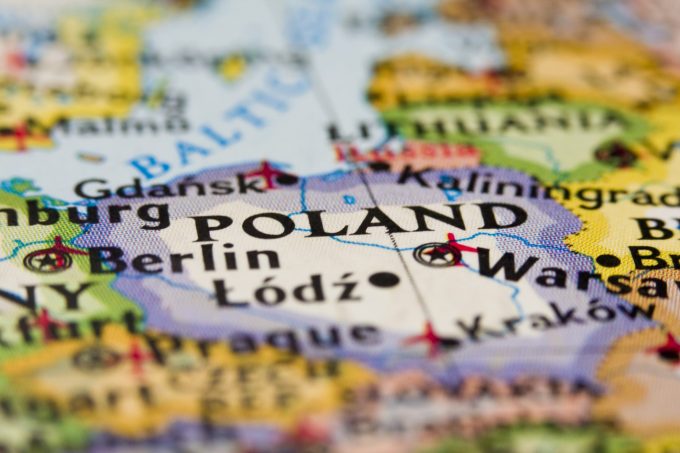
Poland’s rapid emergence as one of Europe’s largest logistics hubs is cementing its position as a key gateway for international ecommerce, according to LOT Polish Airlines cargo director Michał Grochowski.
While Chinese online retailers have dominated headlines in recent years, Mr Grochowski argues Poland’s appeal extends far beyond consumer demand, with investment in warehousing and logistics infrastructure attracting global ecommerce players from multiple markets.
“Poland is very, very important on the European map today,” he told The Loadstar. “It’s not only because of the consumption.”
Instead, he said, Poland’s strength lay in its logistics ecosystem.
“We have extremely good education for logistics, but it’s very specified logistics, warehousing logistics,” he explained. “Anyone who does business locally, and ecommerce is one of them, can find big support, with infrastructure for distribution and all these things around.”
As a result, he believes Poland has become a more attractive location for fulfilment operations than some of Western Europe’s traditional logistics centres.
“Poland is much more welcome for them than, for example, Germany,” he said. “Poland is probably the biggest warehouse facility in Europe today.”
Indeed, a recent Maersk report on changing supply chains suggested efforts to “reduce geopolitical exposure” were influencing where production happens.
“Companies and governments are reassessing the risks of highly concentrated global supply chains, which may accelerate regional production and nearshoring,” it said.
“Central and Eastern European countries could attract increased manufacturing and infrastructure investment due to proximity, political stability and EU integration, following the emergence of Turkey, Morocco, and Egypt as nearshoring centres in recent years.”
The Danish carrier added that investment in transport and logistics infrastructure along NATO’s Eastern flank may strengthen connectivity across Europe.
It noted that, in the longer-term, the reconstruction of Ukraine could further stimulate infrastructure development and industrial activity across the region, “creating new logistics corridors and production hubs”.
Mr Grochowski explained that, contrary to the common perception that cross-border ecommerce is driven almost exclusively by Chinese marketplaces, some of the LOT’s strongest growth came from other regions.
“We have extremely good ecommerce from Korea, surprisingly from the United States, and also from Canada.”
He added that while low-value Chinese goods continued to generate substantial volumes across Europe, many international shipments carried by LOT consisted of higher-value consumer products, “textiles, shoes, things like this”, he said.
Meanwhile, Polish intermodal operator, and part of PSA International, Loconi Intermodal today announced a new intermodal terminal in Zbąszynek, expected to be operational in the first quarter of 2028.
The facility will be equipped with four handling tracks, a storage yard with a capacity of 4,500 teu, and low-emission equipment, including two electric rubber-tyred gantry cranes.
“The investment in Zbąszynek reflects both the sustained growth in maritime cargo flows through Polish ports and the increasing importance of efficient hinterland connections,” said Niels Jakobsgaard Andersen, CEO of Loconi Intermodal.
“This new intermodal terminal will strengthen our ability to manage rising volumes, enhance cross-border connectivity… and support customers’ transition to a more sustainable and reliable supply chain solution,” he added.
The company noted that this would enable “more flexible freight flows” across Central and Eastern Europe while easing congestion on critical routes.
For uninterrupted access, sign in or sign up to The Daily News, Premium or The Loadstar Enterprise Plan.

Comment on this article