Middle East premium fades – but AI boom keeps air freight rates aloft
Air freight markets appear to be settling, with capacity largely returned to the Gulf, fuel ...


PG: BORING DOES ITEXPD: NEW RECORD BA: DELIVERIESMAERSK: BEAR CAMP MUSINGSCHRW: HIGHER HIGHS ON THE RADARWTC: 'ONE RECORD'HLAG: EARNINGS GUIDANCE UPGRADE AAPL: GLOBAL SMARTPHONE SHIPMENTS VW: THE IMPACT VW: MASSIVE JOB CUTS CONFIRMEDEXPD: BULLISHCHRW: POSITIONING AHEAD OF EARNINGSAMZN: IN THE NUMBERSAMZN: PEOPLE MATTER UNTIL
PG: BORING DOES ITEXPD: NEW RECORD BA: DELIVERIESMAERSK: BEAR CAMP MUSINGSCHRW: HIGHER HIGHS ON THE RADARWTC: 'ONE RECORD'HLAG: EARNINGS GUIDANCE UPGRADE AAPL: GLOBAL SMARTPHONE SHIPMENTS VW: THE IMPACT VW: MASSIVE JOB CUTS CONFIRMEDEXPD: BULLISHCHRW: POSITIONING AHEAD OF EARNINGSAMZN: IN THE NUMBERSAMZN: PEOPLE MATTER UNTIL
A fundamental change in the way ocean freight is being bought in the export trades out of China has meant many of the largest global forwarders have missed out on the country’s extraordinary container volume growth this year.
According to Container Trades Statistics (CTS), figures for the first nine months of this year show a global growth rate of 4.7% compared with the first nine months of 2024.
However, in their respective third-quarter interim results, the three largest forwarders – DSV, Kuehne + Nagle and DHL Global Forwarding (DHLGF) – all posted volume growth rates several basis points below the CTS level, suggesting they had lost market share.
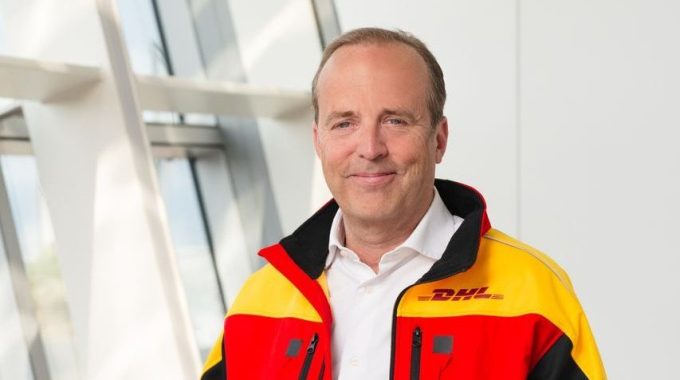
In an exclusive interview with The Loadstar, the newly installed DHLGF chief executive, Oscar de Bok, suggested that many of the larger Chinese exporters were contracting directly with shipping lines, as well as employing domestic forwarders.
“There might be an element of the share of the smaller Chinese forwarders that we actually don’t look at. That might be an element, but that’s guesswork,” he said.
However, he dismissed the threat from the logistics departments set up by state-owned Middle Eastern port groups, which are aggressively looking to build up their forwarding arms.
“That’s what they say, but not something I have seen in our numbers,” he said, adding a flat “no” when asked if DHLGF was losing business to them.
“But of course they are investing – they are building up an organisation – although they are not necessarily working under the same reasonings as the traditional top three. Are they profitable? What’s the return on capital?
“They may be ‘buying’ market share, but we’ve all seen that before in the forwarding market over the years, and anybody that has done that has an expiry date,” he added.
And he takes a similar view of container lines investing in their own forwarding departments.
“That’s always been a thing, you know, big forwarders against carriers, it happens every five years.
“If you look over the past years, this is not a new thing. When I started my career with a freight forwarder in the Netherlands there was also the thing where the lines would sell directly to shippers, but it never really took off in the way they wanted it to.
“So, I’m not too worried about that part,” he said, adding that DHLGF saw more opportunity with small- and medium-enterprise (SME) ocean freight shippers that traditionally delivered higher margins to freight forwarders.
“The focus is far more on capturing the opportunity of digitalisation that can combine the traditional forwarding with using data and AI in a way that you can be both competitive and also agile – then it’s easier to pick up the middle-sized and smaller customers.
“Our strategy looks at the growth of middle-sized customers, because there’s a bigger value-add we can provide to those, and we kept customers around that part because that’s where the value sits,” he said.
This strategy appeared to be reflected in his outlook for ocean freight in 2026, particularly as so much uncertainty remains around the subject of tariffs.
“You can only hope that’s going to be better next year, but I’m not sure. Because, when will be the end of tariff negotiations?
“Volume is a bit of guesswork, right? We have an expectation of a slightly more stable trading environment, which is a statement in itself, but we are forecasting minor growth, compared with this year.
“We have a very conservative way of looking at the volume of the market, and even then there’s obviously an asterisk below that says it depends on whatever surprises we’re going to face; because one of the things of this year was that there was no peak season. Why? Because we had several peak seasons – it was all over the shop.
“If you take the full year, we probably had at least some kind of a boost, but not in the period where we should have had it, or where we used to have it,” he said.
For uninterrupted access, sign in or sign up to The Daily News, Premium or The Loadstar Enterprise Plan.

Comment on this article