China-EU agreement on EVs will complicate our job, say importers
China and the EU may be inching closer to resolving their dispute over the sale ...

WTC: 'ONE RECORD'HLAG: EARNINGS GUIDANCE UPGRADE AAPL: GLOBAL SMARTPHONE SHIPMENTS VW: THE IMPACT VW: MASSIVE JOB CUTS CONFIRMEDEXPD: BULLISHCHRW: POSITIONING AHEAD OF EARNINGSAMZN: IN THE NUMBERSAMZN: PEOPLE MATTER UNTILVW: THE LAST CUT IS THE DEEPESTJBHT: GEARING UP VW: BUYING TIMER: BIG VOTE OF CONFIDENCEAAPL: BEARISH HEDGEYE AAPL: THE BEAR CASE
WTC: 'ONE RECORD'HLAG: EARNINGS GUIDANCE UPGRADE AAPL: GLOBAL SMARTPHONE SHIPMENTS VW: THE IMPACT VW: MASSIVE JOB CUTS CONFIRMEDEXPD: BULLISHCHRW: POSITIONING AHEAD OF EARNINGSAMZN: IN THE NUMBERSAMZN: PEOPLE MATTER UNTILVW: THE LAST CUT IS THE DEEPESTJBHT: GEARING UP VW: BUYING TIMER: BIG VOTE OF CONFIDENCEAAPL: BEARISH HEDGEYE AAPL: THE BEAR CASE
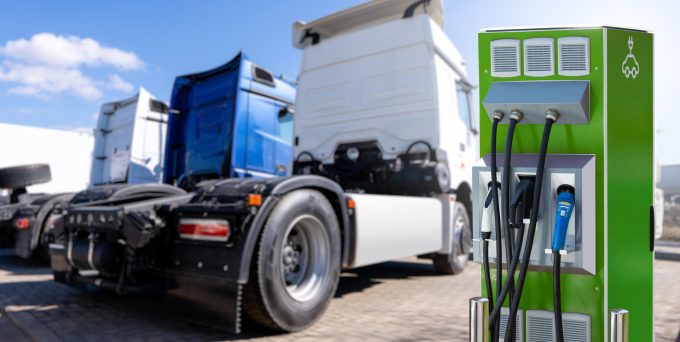
Lobby group Transport and Environment (T&E) has urged EU member states to agree weight allowances for zero-emission vehicles (ZEVs), to make them competitive with diesel trucks and support their adoption.
The EC Weights and Dimensions (W&D) directive sets vehicle weight and length limits and is “critical to support the industrial transition to ZEVs”, according to T&E.
The current WD directive allows ZEVs to weigh up to two tonnes more than diesel trucks that share the same driving axle limit, which T&E suggests “can lead to payload losses… thereby penalising ZEVs”.
It explained that ZEVs could reach the 11.5-tonne driving axle limit before reaching their allowed truck weight of 42 tonnes – 40 tonnes for diesels – as battery packs are typically mounted along the chassis, adding extra weight to the axle.
“As a result, part of the two-tonne allowance remains unusable, placing ZEVs at a payload disadvantage compared with diesel trucks,” T&E explained.
The EC proposed a review of the W&D directive in July 2023, to increase permissible weight to 44 tonnes and increase the driving axle weight limit from 11.5 to 12.5 tonnes, but member states are yet to reach an agreement.
This, according to T&E, is because “high axle weights can have an adverse impact on road infrastructure”, and the tonne increase in axle weight is “one of the most contested elements in the political discussions”.
T&E proposed five recommendations, backed by research from consultancies Apollo Vehicle Safety and Research Driven Solutions. They include: reducing the proposed ZEV allowance from four to three tonnes for five-axle combinations; maintaining the proposed ZEV allowance of four tonnes for six-axle combinations; and reducing the proposed driving axle limit from 12.5 to 11.75 tonnes, to “ensure a level playing field with diesel trucks and minimise road infrastructure costs for member states”.
It wants member states adopt a position “as soon as possible”. Indeed, Bernardo Galantini, T&E’s freight and climate officer, urged that a delay in reaching an agreement would threaten the road freight sector’s transition to ZEVs.
He said: “This law is key to creating the conditions for zero-emission trucks to compete with diesel rigs and accelerate the shift of the road freight sector to clean vehicles.
“Reducing the proposed weight increase… is the right way to transport more cargo, lower costs, and reduce road wear”.
The final T&E recommendation was to remove the EC’s proposal to restrict ZEVs to ‘a limited share’ of the TEN-T core network because of their weight, which would effectively “ban them from the majority of Europe’s roads”.
Mr Galantini added: “These [TEN-T] restrictions are not necessary, and [are] even harmful to the transition of Europe’s commercial vehicle industry… we urge member states to remove them.”
For uninterrupted access, sign in or sign up to The Daily News, Premium or The Loadstar Enterprise Plan.

Comment on this article