Air Canada and Avianca set course for network alignment
Air Canada (AC) and Avianca are looking to develop a strategic partnership to leverage their ...

WTC: 'ONE RECORD'HLAG: EARNINGS GUIDANCE UPGRADE AAPL: GLOBAL SMARTPHONE SHIPMENTS VW: THE IMPACT VW: MASSIVE JOB CUTS CONFIRMEDEXPD: BULLISHCHRW: POSITIONING AHEAD OF EARNINGSAMZN: IN THE NUMBERSAMZN: PEOPLE MATTER UNTILVW: THE LAST CUT IS THE DEEPESTJBHT: GEARING UP VW: BUYING TIMER: BIG VOTE OF CONFIDENCEAAPL: BEARISH HEDGEYE
WTC: 'ONE RECORD'HLAG: EARNINGS GUIDANCE UPGRADE AAPL: GLOBAL SMARTPHONE SHIPMENTS VW: THE IMPACT VW: MASSIVE JOB CUTS CONFIRMEDEXPD: BULLISHCHRW: POSITIONING AHEAD OF EARNINGSAMZN: IN THE NUMBERSAMZN: PEOPLE MATTER UNTILVW: THE LAST CUT IS THE DEEPESTJBHT: GEARING UP VW: BUYING TIMER: BIG VOTE OF CONFIDENCEAAPL: BEARISH HEDGEYE
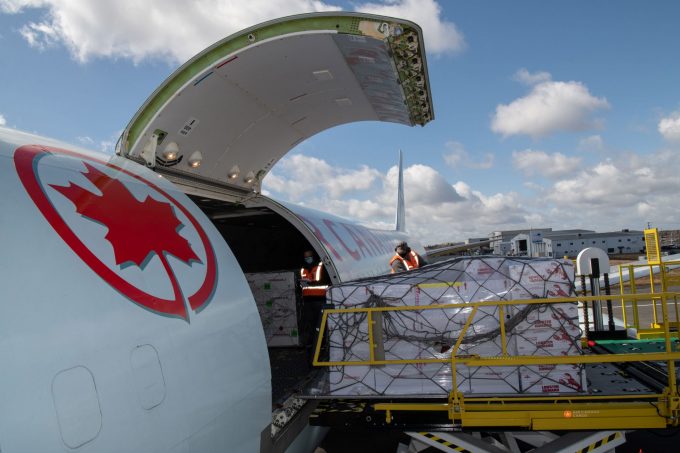
The Canadian government has signed agreements with the United Arab Emirates (UAE) and Saudi Arabia to expand flight connections to the Middle East and beyond.
The new aviation bilaterals offer the respective carriers unlimited market access to freighters and fifth freedom rights for cargo, as well as more passenger flights. However, a lack of aircraft stymies capacity growth in the near future.
The UAE agreement adds 14 passenger frequencies a week to each side to 35 flights each, while the ceiling for freighter flights of four weekly frequencies has been removed to allow unlimited operations, plus fifth-freedom rights for all-cargo services.
Similarly, the bilateral with Saudi Arabia permits unlimited freighter operations and fifth-freedom cargo rights, while the number of available passenger flights to each side rises from four to 14 a week.
These agreements reflect Ottawa’s desire to diversify economic as well a travel ties away from a traditionally heavy reliance on the US market.
According to the government, Saudi Arabia and the UAE are two of Canada’s largest and fastest-growing air transport markets in the Middle East. In 2024, two-way merchandise trade between Canada and Saudi Arabia was valued at approximately $4.1bn (with $2bn worth of exports from Canada), while trade with the UAE amounted to $3.4bn (with $2.6bn in exports).
In addition, the bilaterals – especially the UAE agreement – offer Canadian exporters increased connectivity to markets in the Middle East and South Asia.
Years ago. Air Canada (AC) was opposed to giving Middle Eastern carriers access to its home market, but over time collaboration with Emirates developed that led to a strategic alliance, complete with codesharing and mutual acceptance of each other’s loyalty programmes in 2022. Last November, the pair extended their partnership to 2031 and pledged further moves to strengthen it.
In cargo, the two carriers have been working together since the early 1990s, a collaboration centred on interline traffic. Unlike most such deals, which are typically confined to general cargo, this extends to pharmaceutical traffic. Started last year on specific lanes, the plan is to build this up to more routes, said Matt Casey, AC’s MD commercial, cargo.
He is looking forward to taking advantage of the additional capacity allowed under the new bilateral, but at this point AC has no plans to step up flying to the Middle East, due a lack of aircraft. and, for the same reason, it has no plans to open flights to Saudi Arabia, where there is no formal partnership in cargo between AC and Saudia, besides a standard interline arrangement.
Airlines from the UAE and Saudi Arabia have not disclosed any expansion plans to Canada so far. Emirates and Etihad fly daily to Toronto with A380 aircraft, and Emirates has a daily B777 service to Montreal. AC flies daily from Toronto to Dubai with B787 aircraft but suspended its Vancouver-Dubai flight last year.
Stan Wraight, president and CEO of SASI World, doubts the Middle Eastern carriers will ramp up passenger services to Toronto, but are more likely to target western Canada with new services.
Nor does he expect any of the Middle Eastern airlines to deploy freighters to Canada in the near future.
One possible connection for freighters would be Air Canada’s reach to Latin America, which has seen strong growth in inbound airfreight over the past year.
A good chunk of this has been traffic from Asia-Pacific moving either via US transit points or across the Atlantic. However, AC has scant elbow room to boost freighter capacity to Latin America beyond seasonal tweaks at this point, Mr Casey said.
Like many of the new trade relations Ottawa has been working on, airfreight traffic to and from the Middle East will take some time to build up, but the liberalisation of cargo traffic rights shows a desire to build trade, as well as passenger flows.
For uninterrupted access, sign in or sign up to The Daily News, Premium or The Loadstar Enterprise Plan.

Comment on this article