Air Canada Cargo's four-year journey to a new management system
Air Canada Cargo’s decision to replace its cargo management system may have been announced this ...

WTC: 'ONE RECORD'HLAG: EARNINGS GUIDANCE UPGRADE AAPL: GLOBAL SMARTPHONE SHIPMENTS VW: THE IMPACT VW: MASSIVE JOB CUTS CONFIRMEDEXPD: BULLISHCHRW: POSITIONING AHEAD OF EARNINGSAMZN: IN THE NUMBERSAMZN: PEOPLE MATTER UNTILVW: THE LAST CUT IS THE DEEPESTJBHT: GEARING UP VW: BUYING TIMER: BIG VOTE OF CONFIDENCEAAPL: BEARISH HEDGEYE
WTC: 'ONE RECORD'HLAG: EARNINGS GUIDANCE UPGRADE AAPL: GLOBAL SMARTPHONE SHIPMENTS VW: THE IMPACT VW: MASSIVE JOB CUTS CONFIRMEDEXPD: BULLISHCHRW: POSITIONING AHEAD OF EARNINGSAMZN: IN THE NUMBERSAMZN: PEOPLE MATTER UNTILVW: THE LAST CUT IS THE DEEPESTJBHT: GEARING UP VW: BUYING TIMER: BIG VOTE OF CONFIDENCEAAPL: BEARISH HEDGEYE
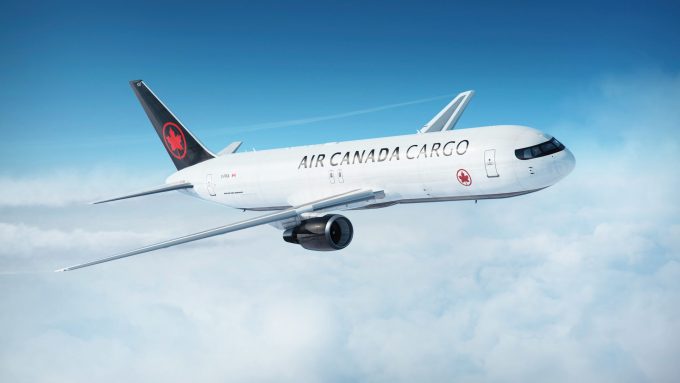
Air Canada (AC) and Avianca are looking to develop a strategic partnership to leverage their combined networks, both for cargo and passenger operations.
For the North American carrier this augurs better access to South American markets, while Avianca is looking to more avenues to link its markets with Europe and Asia.
The Canadian airline and Abra Group, which controls both Avianca and GOL, have signed a joint business agreement to pursue commercial integration. The primary focus is on the passenger business, but both sides stressed their ambitions for collaboration in cargo, unlike typical partnership agreements between passenger airlines.
“Building from a highly complementary presence across the Americas, this memorandum of understanding between our world-class airlines creates a pathway to further bolster our partnership, improve customer experience, and enhance global connectivity,” said Mark Galardo, EVP, CCO, and president of cargo at Air Canada.
On the cargo side, the pair have an interline agreement – one of many for both carriers. Matthieu Casey, AC’s MD commercial, cargo, described their current arrangement as good, but added that it had not been “as active as it could have been”.
“This agreement puts more focus on the possibilities this relationship can offer,” he said.
Avianca has, arguably, been the more proactive of the two in its pursuit of airline partnerships. An agreement with Turkish Airlines in late 2025 introduced a B777 freighter from Istanbul via Liege to Miami, where it connects with Avianca for onward service to South America. The Latin carrier uses the flight’s eastbound capacity across the Atlantic to serve European markets;
In a similar vein, Avianca uses the northbound lift on Amazon’s freighter flights from Miami to Bogota and Quito.
For AC Cargo, Latin America has been a growing market for its intercontinental flows across the Pacific and the Atlantic. Given the limitations of its domestic market, the airline has a long-established focus on intercontinental volumes transiting Canada to and from points in the Americas, primarily in the US. With the uncertainty over Canada-US trade, other points in the Americas have become more of a target for AC’s intercontinental flows.
Mr Casey emphasised the complementary networks of the two carriers, rather than individual markets and routes. For AC, the partnership is about creating a more extensive Latin America network to offer clients, he said.
Miami, Bogota, and San Jose are the three natural major connection points for the pair to exchange traffic, he said, adding that both carriers operate passenger service as well as freighters to Miami.
At this point, the partnership focuses on their bellyhold capacity, so talks about linking freighters should enter the alliance further down the road. Specifically for cargo, the agreement mentions the alignment of ramp services at airports and the integration of belly cargo flows.
Not surprisingly, there has been no reference in the agreement to GOL, given its focus on domestic operations within Brazil with narrowbody aircraft. On the other hand, the low-cost carrier runs a domestic cargo network with B737 freighters, and it started widebody passenger flights this month with a leased A330 between Rio de Janeiro and New York.
The partnership agreement allows for revenue sharing and deeper commercial integration, but this will have to wait until a binding agreement the partners favour obtains regulatory approval. According to the partnership announcement, commercial integration would include expanded codeshare arrangements.
Again, this will have to wait, at least on the cargo side.
“It’s too early to talk about codeshare,” Mr Casey said.
For uninterrupted access, sign in or sign up to The Daily News, Premium or The Loadstar Enterprise Plan.

Comment on this article