Air Canada and Avianca set course for network alignment
Air Canada (AC) and Avianca are looking to develop a strategic partnership to leverage their ...

GM: TRADING UPDATE OUTUPS: REMEMBER THE TAILWINDS PLD: NEW RELEASEPLD: OUCHVW: NEW PARTNERS SOUGHTEXPD: AIRCRAFT ON GROUND SERVICESTSLA: JUST AS VW STRUGGLESBA: NEW BIG ORDERBA: THE ORDERBOOK GROWSPLD: PUSHING FOR A DEAL PLD: TIME TO DEALEXPD: ANOTHER ALL-TIME HIGH CHRW: NEW RECORD DSV: AHEAD OF EARNINGS RELEASE JBHT: NEW HIGHS EVERYWHERE
GM: TRADING UPDATE OUTUPS: REMEMBER THE TAILWINDS PLD: NEW RELEASEPLD: OUCHVW: NEW PARTNERS SOUGHTEXPD: AIRCRAFT ON GROUND SERVICESTSLA: JUST AS VW STRUGGLESBA: NEW BIG ORDERBA: THE ORDERBOOK GROWSPLD: PUSHING FOR A DEAL PLD: TIME TO DEALEXPD: ANOTHER ALL-TIME HIGH CHRW: NEW RECORD DSV: AHEAD OF EARNINGS RELEASE JBHT: NEW HIGHS EVERYWHERE
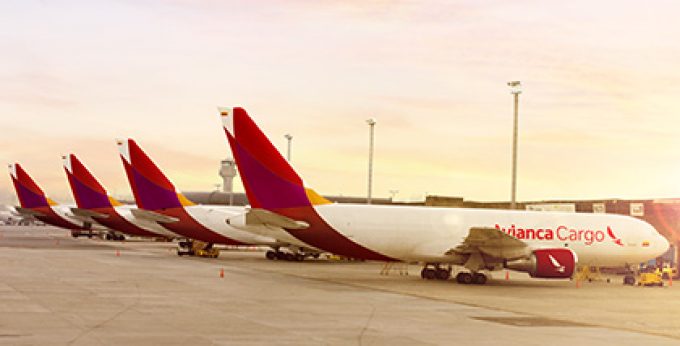
Avianca Cargo is boosting its capacity and reach through a mix of internal and external expansion: it is adding two A330 freighters to its fleet and leveraging outbound capacity of other carriers’ freighters to South America.
The two aircraft have been delivered and are being readied for operations. Avianca Cargo CEO Diogo Elias said one should enter service before the end of the month, the second late next month. The airline has another A330F on order, due late next year.
Only one of the new additions is going to fly in the Colombia-based airline’s core network. The first to take to the skies has gone to Mexican partner carrier, AeroUnion, rebranded as Avianca Cargo Mexico last month; the second of Avianca’s A330Fs fielded in Mexico, connecting its domestic network with the US west coast and Central America.
The change in name reflects a stronger brand identity across the two airlines; it does not change any system or operational parameters, Mr Elias explained. They already use the same IT platform, operating system, product portfolio and maintenance set-up, and are closely aligned on the commercial side, as agreed under the partnership deal signed in 2023.
Neither of the aircraft additions expands the Avianca network at this point. They are deployed to reinforce existing routes – in Avianca’s case, primarily the major trunk routes to Miami and the southern cone of Latin America.
The airline has been expanding its capacity and reach over the past 11 months through harnessing lift on other carriers, most recently with Amazon, which started flights between Miami and Bogota in April, as it launched its Prime offering in Colombia.
“They were looking for a partner for the backhaul,” Mr Elias said. “It was a very close fit in terms of willingness to do business with.”
Avianca buys Amazon’s capacity on the northbound sector, which began with daily B767F flights and was subsequently upped to 11 a week as Amazon added four more frequencies in June.
“We have the whole capacity,” Mr Elias confirmed.
Notwithstanding the difference in aircraft – Amazon’s B767Fs versus Avianca’s A330Fs and passenger aircraft on the Bogota-Miami sector – there is no operational distinction in terms of cargo loaded on the northbound flights, regardless if it terminates in Miami or connects to the international departures of Avianca’s interline partners.
Not only does this arrangement give the Latin American carrier more lift to sell out of Colombia and greater schedule flexibility, but it also allows the airline to shift some of its Bogota-Miami freighter flights to other markets.
“We increased our presence in the longhaul market – in Chile, Brazil and Argentina – after Mother’s Day,” Mr Elias said.
“We’re looking for more opportunities on both sides,” he added.
Leveraging third-party capacity has become a significant plank in his strategy, and e-commerce is a promising vehicle on this front. In April Avianca began a collaboration with a Chinese operator using B777Fs leased from Ethiopian Airlines to haul e-commerce from China to Quito twice a week. As with Amazon, Avianca uses the flights’ full outbound lift from Quito to fly flowers (and fruit) to Maastricht for onward trucking to Amsterdam.
This has given the airline the ability to enter the European flower market, which it could not serve adequately with its passenger flights to Madrid, Barcelona, London and Paris.
While Avianca’s freighters remain confined to the Americas, the airline established a transatlantic freighter link in November with alliance partner Turkish Airlines, when that carrier launched a freighter flight from Istanbul via Liege to Miami. Not only does this connect with Avianca’s network through Florida, but also gives the Latin American airlines transatlantic capacity to offer European destinations.
At this point, e-commerce is still going strong in South America, so there may be room for more alignments.
Meanwhile, rival LATAM Cargo is also stepping up capacity to the US (and beyond to Asia). The airline is increasing capacity to Los Angeles this month to five weekly flights, inaugurating a new route from Bogota and increasing the frequency on the Quito-LA sector.
For uninterrupted access, sign in or sign up to The Daily News, Premium or The Loadstar Enterprise Plan.
Comment on this article