Hydrogen-van plan scrapped – sustainable trucking takes another hit
Sustainable trucking is in disarray. High costs, insufficient investment and lack of a clear infrastructure ...

PLD: STRONG DELIVERYJBHT: FAIR-VALUE CONSENSUS ESTIMATE AT ALL-TIME HIGH KNIN: AI TECH ADVANTAGEPLD: TRADING UPDATE ON THE WAY KNIN: UPSIDEJBHT: STRONG TRADING UPDATE DSV: EVERY LITTLE HELPSJBHT: CEO REMARKS WMT: VERTICAL INTEGRATION IN LOGISTICSJBHT: HERE WE GO
PLD: STRONG DELIVERYJBHT: FAIR-VALUE CONSENSUS ESTIMATE AT ALL-TIME HIGH KNIN: AI TECH ADVANTAGEPLD: TRADING UPDATE ON THE WAY KNIN: UPSIDEJBHT: STRONG TRADING UPDATE DSV: EVERY LITTLE HELPSJBHT: CEO REMARKS WMT: VERTICAL INTEGRATION IN LOGISTICSJBHT: HERE WE GO
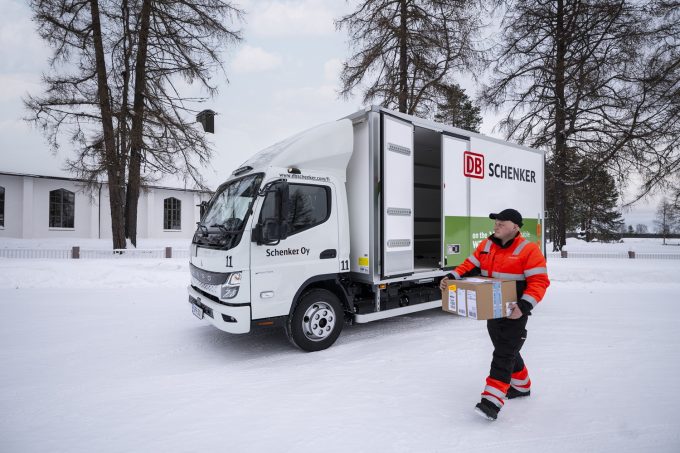
McKinsey analysis has identified a 30% disparity in the total cost of ownership (TCO) of electric trucks, compared with conventional internal combustion engine (ICE) models.
And this is likely to be holding back the electrification of long-haul trucks.
Earlier this month, Milence, a JV between Daimler Truck, Traton Group and Volvo, opened at Immingham, UK, with eight charging bays for all-electric HGVs. Milence also has plans for a charging hub at Panattoni Park in Aylesford, Kent. At the beginning of the year, Amazon placed a major order for Volvo EV trucks.
But some 300,000 truck chargers will be needed, at a cost of some €7.22bn, by 2030, the EU says.
Within Europe, though, there has been no growth in the rate of EV truck adoption since 2023, according to registration data. Some 2.2% of new HGV registrations were for electric vehicles from Q1-Q3 of 2024; 2.2% were recorded in the same period in 2023. The share in Germany, Europe’s biggest market, increased by 56.8%, but this was easily offset by a 58.4% decrease in France.
There is little reason to believe that the US will fare better.
EV subsidy provisions were rolled back by the new administration in a day-one executive order, leaving only the fossil fuel industry to benefit from direct and indirect subsidies, to the tune of $760bn annually, according to IMF data. These subsidies help hold prices at the pump down at a level of just over half what Europeans pay.
The market for light-duty vehicles, such as delivery vans, is much closer to parity between ICEs and ZEVs. This would account for the greater degree of uptake in that segment. In the UK, uptake of new electric vans accelerated marginally last year, up 3% versus 2023, though the overall market share is still low, at just 6.3%.
Despite a reduced maintenance requirement and much cheaper fuel costs, McKinsey finds that it is still around 30% more expensive to buy and operate an EV truck. And savings at the pumps are handily offset by the prohibitively high outlay for batteries with sufficient capacity.
“For fleet operators aiming for TCO parity, the up-front vehicle price tag is a recurring obstacle,” wrote the study’s authors. “In the US today, battery-EV trucks can cost between 50% and 250% more than ICE alternatives.”
Aiming for a domestic scaling of battery production could be responsible for substantial reductions in the cost of an EV truck, the researchers assert. Thanks to scaled and efficient production of batteries in China, truck OEMs there are able to spend 25% less on sourcing batteries for their vehicles than US manufacturers do.
But another development is taking China by storm: battery-swapping.
The Loadstar previously covered this promising emergent market at the beginning of this year: a small Australian company called Janus Electric was converting diesel-powered trucks into all-electric ones with hot-swapping capability.
In China though, adoption of battery-swapping technology is more developed. The country’s largest vehicle battery manufacturer, Contemporary Amperex Technology (CATL) – a business partner of Daimler Truck, Volkswagen Commercial Vehicles, and Volvo – is building a battery-swapping network which would see ‘batteries-as-a-service’ (BaaS) replace the conventional ownership model for battery-electric vehicles.
Last September, Tectrans, CATL’s commercial vehicle battery brand, unveiled its new Tectrans-T swappable heavy vehicle battery at the IAA Mobility trade show in Germany.
McKinsey research released in the same month highlighted the potential of BaaS, suggesting that the European truck market, too, should consider it. Like China’s, the sector is “dominated by a few large OEMs”, which could readily standardise battery packs between them, making it “easier… to attain critical vehicle volume to make battery swapping attractive for all players along the value chain, and gain regulatory support”.
It advised: “US and European OEMs may think proactively about battery swap strategies and financing needs, either jointly or individually, to ensure they’re prepared. Otherwise, they might risk missing out on the potential next big thing.”
So far, though, European truckmakers have expressed little interest.
For uninterrupted access, sign in or sign up to The Daily News, Premium or The Loadstar Enterprise Plan.

Comment on this article