korean air
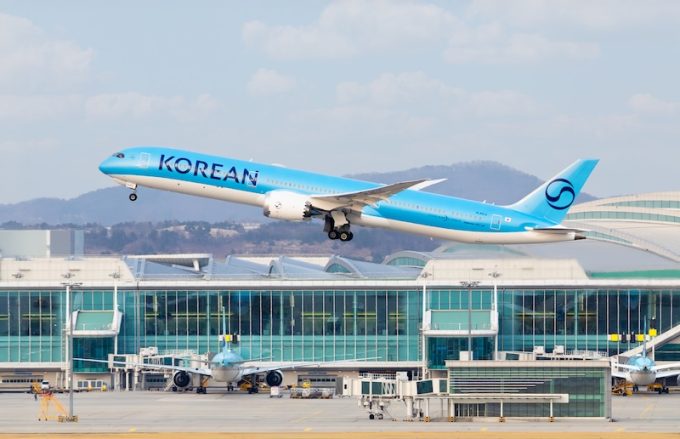
Korean Air

As airfreight begins what looks set to be a muted peak, all eyes are on those companies reporting results to see how 2025 has fared so far – and what annual profits could be. 

Larger forwarders like DSV and Kuehne + Nagel are set to report Q3 results tomorrow, giving the market some idea of how airfreight has really fared this year. In the meantime, we have some details from Korean Air, which reported yesterday. And the cargo news wasn’t great. 

Revenue from cargo was down 4.7% in Q3, over a year earlier. Capacity, measured by ACTK, was down 0.9%, year on year, while demand, measured by CTK, was down 2.1%. Yields were down 2.7%, while load factors fell 0.9 percentage points. 

Korean Air Cargo

Source: Korean Air

In the first nine months, cargo revenues fell 1.2%; ACTKs fell 2.3%, CTKs were down 4.3%, and load factors fell 1.5 percentage points. The only thing to rise was yield, up 3.2%. 

More interesting perhaps was the geographical spread – revenues to Europe were down 11% and to the Americas were down 8% – but the latter region still accounted for over half of the carrier’s cargo turnover. Growth was highest, albeit from a low base, in South-east Asia (up 10%), Japan (+9%) and Oceania, (+28%). 

Korean Air Cargo

Source: Korean Air

The carrier said: “Air cargo growth has slowed due to weakening ecommerce demand and increased tariff risks,” adding that IATA August figures showed capacity was up 5.5%, while demand was up 5.1%. 

It said it was looking to “secure stable revenue by flexible routes, in response to tariffs and demand fluctuations across countries – attracting front-loading demand and seasonal/project demand”. 

The carrier warned: “Market uncertainty continues, with expectation of increased demand and various risk factors – expected ecommerce recovery and year-end peak season vs demand pressure, due to trade conflicts. 

“[There is a] need for responding to changes in the market environment resulted by US-China tariff negotiations, securing stable profitability through flexible supply and geographical diversification.” 

It added that it would “proactively adjust routes by monitoring geopolitical risks and trade conflict trends, broaden sales regions in response to demand fluctuations, meet holiday shopping demands and target high-value cargo, operate charters in holiday seasons, such as Black Friday and Christmas, and ship AI-related items and semiconductor equipment”. 

Meanwhile, United Airlines, which filed its Q3 on 15 October, fared better, with cargo revenues up 3.2% year on year, and up 5.5% in the nine-month period. Cargo revenue ton miles were up 1% in Q3, and up 1.5% in the nine months.

But with cargo only accounting for about 3% of total revenues, United did not address it at all in its earnings call or release. 

Cargo went even better for Delta, which reported its Q3 on 9 October. Cargo revenues were up 19%, year on year, which it said was largely driven by the transpacific, and up 14% in the first nine months, YoY. But with cargo accounting for just 1.5% of its revenues, it also failed to get a mention in the earnings call. 

What does this mean for the coming earnings season for forwarders?

Analysts are cutting expectations. BofA Securities has cut about 1.5% from DSV’s expected Q3 operating profit; HSBC predicts Kuehne + Nagel’s operating profit will drop by one-third, and that DHL will fall 4%. Maersk, however, is expected to report a strong Q3. 

It’s going to be an interesting rest-of-year. 

Comment on this article


You must be logged in to post a comment.