Delta Cargo’s Peter Penseel on money, mindset and why freighters are no silver bullet
When Peter Penseel joined Delta as president of cargo, he walked into an airline with ...

PLD: PROPOSAL DETAILSPLD: FINAL OFFERDSV: ROAD CEO MATTERSDSV: VOLUME PROGRESSION IN SEA FREIGHT DSV: TIME TO INCREASE THE VOLUMES IN SEA FREIGHTDSV: HEADCOUNT DISCREPANCIESDSV: TRASHEDDSV: IT IS A MATTER OF TRUSTDSV: FREE CASH FLOW QUESTIONEDDSV: QUESTION TIMEDSV: CEO ON SCHENKER INTEGRATIONDSV: CFO PREPARED REMARKSDSV: CEO PREPARED REMARKSDSV: CONF CALL FWRD: SHOOTING UPKNX: TRADING UPDATE ON THE WAY GM: TRADING UPDATE OUTUPS: REMEMBER THE TAILWINDS
PLD: PROPOSAL DETAILSPLD: FINAL OFFERDSV: ROAD CEO MATTERSDSV: VOLUME PROGRESSION IN SEA FREIGHT DSV: TIME TO INCREASE THE VOLUMES IN SEA FREIGHTDSV: HEADCOUNT DISCREPANCIESDSV: TRASHEDDSV: IT IS A MATTER OF TRUSTDSV: FREE CASH FLOW QUESTIONEDDSV: QUESTION TIMEDSV: CEO ON SCHENKER INTEGRATIONDSV: CFO PREPARED REMARKSDSV: CEO PREPARED REMARKSDSV: CONF CALL FWRD: SHOOTING UPKNX: TRADING UPDATE ON THE WAY GM: TRADING UPDATE OUTUPS: REMEMBER THE TAILWINDS
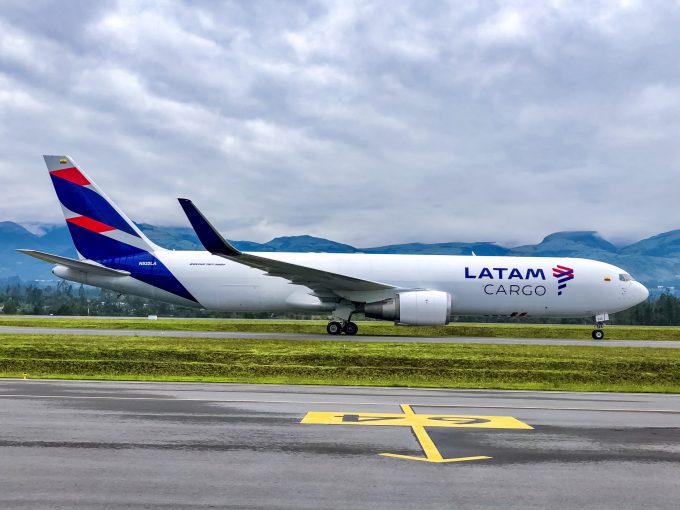
LATAM Airlines is continuing its transatlantic expansion at the end of this month with the launch of flights from Sao Paulo to Amsterdam. The passenger service, which fields B787-9 aircraft, kicks off on 30 March with four weekly flights and will rise to six flights a week by 18 April.
In June a second new transatlantic passenger service, also using B787-9s, will connect Sao Paulo with Brussels. This route will be served three days a week.
For the airline’s cargo division, the Brussels service supplements LATAM’s freighter flights to the Belgian capital.
Last year the carrier boosted its transatlantic capacity by 25%, ramping up its freighter flights on the sector from 12 to 15 weekly frequencies.
Growth out of Europe has been healthy, contributing to 7% growth in imports, according to LATAM Cargo CEO Andrés Bianchi. As yields into Latin America are usually higher than on outbound cargo, this has boosted the airline’s results.
Cargo revenues rose 3.4% last year to nearly $1.7bn on a 2.1% increase in capacity. This accounted for 11.4% of the airline’s revenues and contributed to a 49.4% surge in overall net profit to $1.46bn.
Cargo growth continued this year with cargo ton-kilometres rising 5.7% in February.
Mr Bianchi expects LATAM’s cargo business to climb 5-7% this year. This will be driven by growth in the passenger network. Having increased its freighter fleet within three years from nine to 20 B767 cargo aircraft, LATAM Cargo currently has no outstanding orders for freighters,
For now fleet expansion is on hold to allow the cargo division’s commercial teams to consolidate, Mr Bianchi said. At the same time, the organisation gets breathing room to move ahead with a broad transformation of practices and processes. The undertaking stretches from interaction with customers over asset utilisation to deploying tools that help staff in their decision making.
“We’re basically transforming the whole company. This is a two-year, three-year transformation in which we’re changing the way we work to enable us to better use technology on a day-to-day basis,” he said. “This is a comprehensive effort. It’s not one area, it’s everything.”
Results so far have been promising. Changing the interaction with customers through technology and establishing more touch points is reducing friction by 95% or more, Mr Bianchi said.
So far the initiative has not touched LATAM’s product portfolio. “We may launch a couple of things complementing the product portfolio within the next six months,” he said.
The full product portfolio is in play in the joint venture with Delta Cargo. Essentially today this comprises of co-operation on capacity and collaboration of the pair’s commercial teams.
“It has been a fairly successful experiment although it is not operating at its full potential,” Mr Bianchi commented. The main constraints have been in technology integration and certain operational processes in some hubs.
“We’ve learned a lot and we are hopeful that we’re going to get to the full integration very soon,” he concluded.
Down the road LATAM Cargo has capacity to add more freighters to its network. Those would be B767s, which have become the type of choice after the airline dropped plans for B777s, which are less well suited to the Latin American market, according to Mr Bianchi.
“We do have access to 767s that we have in Peru on the passenger side. We could eventually convert those once the 787s that will replace them arrive,” he said.
This could bring another boost in LATAM’s transatlantic freighter activities. The European Commission issued a statement on Monday that the free trade agreement between the EU and the Mercosur trade bloc will apply on a provisional basis from 1 May, adding that Argentina, Brazil and Uruguay have already completed their ratification process and Paraguay is expected to send its notification soon.
Industry executives, including Mr Bianchi, expect it will take some time before the agreement yields substantial growth in traffic but regard it as a promising development for the longer term.
For uninterrupted access, sign in or sign up to The Daily News, Premium or The Loadstar Enterprise Plan.
Comment on this article