TSMC says AI demand can run to 2030 – lifting the outlook for air cargo
The AI infrastructure boom looks set to keep air cargo demand elevated for years, after ...

PLD: PROPOSAL DETAILSPLD: FINAL OFFERDSV: ROAD CEO MATTERSDSV: VOLUME PROGRESSION IN SEA FREIGHT DSV: TIME TO INCREASE THE VOLUMES IN SEA FREIGHTDSV: HEADCOUNT DISCREPANCIESDSV: TRASHEDDSV: IT IS A MATTER OF TRUSTDSV: FREE CASH FLOW QUESTIONEDDSV: QUESTION TIMEDSV: CEO ON SCHENKER INTEGRATIONDSV: CFO PREPARED REMARKSDSV: CEO PREPARED REMARKSDSV: CONF CALL FWRD: SHOOTING UPKNX: TRADING UPDATE ON THE WAY GM: TRADING UPDATE OUTUPS: REMEMBER THE TAILWINDS
PLD: PROPOSAL DETAILSPLD: FINAL OFFERDSV: ROAD CEO MATTERSDSV: VOLUME PROGRESSION IN SEA FREIGHT DSV: TIME TO INCREASE THE VOLUMES IN SEA FREIGHTDSV: HEADCOUNT DISCREPANCIESDSV: TRASHEDDSV: IT IS A MATTER OF TRUSTDSV: FREE CASH FLOW QUESTIONEDDSV: QUESTION TIMEDSV: CEO ON SCHENKER INTEGRATIONDSV: CFO PREPARED REMARKSDSV: CEO PREPARED REMARKSDSV: CONF CALL FWRD: SHOOTING UPKNX: TRADING UPDATE ON THE WAY GM: TRADING UPDATE OUTUPS: REMEMBER THE TAILWINDS
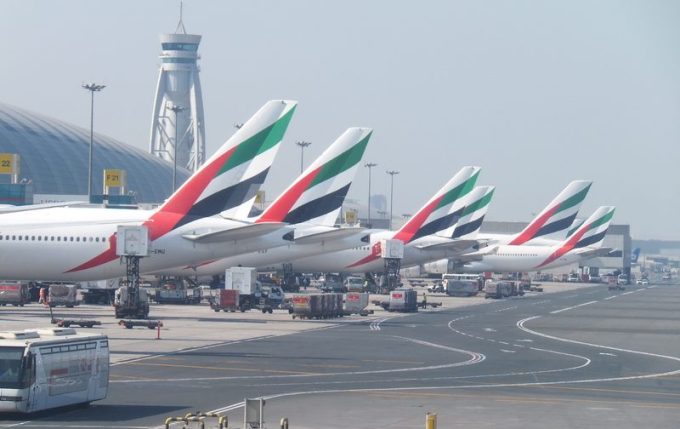
Air cargo capacity across one of the world’s most critical trade corridors has slumped sharply, as Middle East airspace closures ripple through global networks, with new data showing a structural shift in how Asia-Europe freight is being flown.
According to consultancy Aevean, capacity on the Asia–Middle East–Europe corridor fell 26% in available cargo tonne km (ACTK) over the weekend, versus the prior weekend), as extensive Gulf airspace closures took hold.

At the same time, direct Asia–Europe cargo capacity rose 13%–14%, reflecting airlines rerouting aircraft and bypassing traditional Gulf stopovers.
The figures include freighters and widebody passenger aircraft operating international sectors, but exclude North America and Latin America flows.
The scale of the shock becomes clearer when viewed against structural dependency.
In Q4 25, roughly 50% of China/Hong Kong–Europe capacity was operated direct, the other 50% relying on en-route stops in the Middle East or Central Asia.

That means half the corridor normally depends on intermediate stopovers, many of them in Gulf hubs such as Doha, Dubai, and Abu Dhabi.
With Qatar, UAE, Kuwait, Bahrain, Iraq, Iran, and Israel airspace closed – as well as avoidance of neighbouring corridors – that dependency has been abruptly exposed.
A look at freighter operations between China/Hong Kong and Europe shows how quickly networks are adapting.

Between 21 February and 28 February:
In practical terms, aircraft that would typically route via Dubai, Doha, or Abu Dhabi are now flying direct long-haul sectors where possible, or diverting to alternative technical stops in Central Asia.
The redeployment is visible in the increased use of airports such as Almaty and Tbilisi, while Gulf tech-stop activity has collapsed.
Separate Rotate Live Capacity data show global widebody passenger and freighter capacity has fallen 11%–12% over the past 24–48 hours, compared with a week earlier, with the Middle East region down more than 60%.
India and South Asia have also recorded declines exceeding 60%, underscoring the region’s reliance on Gulf connectivity.
On a broader week-on-week measure, global capacity contraction has reached as much as 18%, according to industry sources.
Rotate data also show that Gulf carriers alone account for roughly 13% of global international widebody and freighter capacity, highlighting the scale of capacity directly at risk.
The impact on India is particularly acute.
With Gulf hubs offline, belly cargo flows between India and Europe, and onward to North America, have been heavily constrained. Air India and Air India Express have faced flight disruptions and diversions, with aircraft observed stranded in Doha during the peak of closures.
India–Europe and India–North America routings are being lengthened, while alternative Gulf gateways, such as Muscat, have rapidly filled with diversions, leaving little immediate spare capacity.
Forwarders report carriers are already restricting bookings and requesting cargo for affected destinations be held at origin.
Initial estimates suggest a 7–10 day backlog could form, even if airspace reopens quickly – several weeks potentially required to fully normalise flows.
“Carriers are asking to pick up cargo to the affected area that is on hand and have also restricted their bookings,” said one forwarder. “The first indications are that there will be a 7–10 day backlog.”
Another was blunter: “This is going to super fuck-up air freight… rates are going to go skywards for the short term.”
So far, air cargo pricing indices have not yet reflected a sharp spike – yet.
The operational shock is being compounded by fuel market volatility.
Brent crude rose nearly 10%, to around $80 per barrel on Monday, while European gasoil futures spiked as much as 17% intraday.

Bloomberg reports indicate that around 20% of global jet fuel flows through the Strait of Hormuz, and premiums for near-term jet fuel deliveries doubled over the weekend. Saudi Arabia’s Ras Tanura refinery, capable of processing 550,000 barrels a day, reportedly halted operations following a drone strike.
Longer routings, increased block times, and potential payload restrictions mean any sustained fuel price increase will directly raise airline operating costs.
CH Robinson warned that secondary impacts were already emerging in South-east Asia, India, and at Chinese hubs, particularly as freight bound for North America is rerouted over the Pacific.
At the same time, expected conversions from ocean to air freight, if Strait of Hormuz disruption intensifies, could further tighten capacity and trigger additional volatility across major markets.
For now, the immediate effect is clear: a corridor that normally relies on Gulf connectivity for half its capacity has seen a quarter of its lift evaporate in days, while the rest of the network scrambles to reconfigure around a conflict zone.
The question now is not only how long closures persist, but how violently capacity, rates and fuel costs react when Gulf hubs eventually restart.
Airline disruptions: cargo carriers suspend, reroute and embargo
The operational fallout across airlines has been swift and extensive, with major cargo operators suspending services, avoiding airspace and imposing embargoes.
Qatar Airways / Qatar Airways Cargo
Emirates / Emirates SkyCargo
Etihad Cargo
Lufthansa Cargo
Turkish Airlines / Turkish Cargo
Air India / Air India Express
Cathay Pacific Cargo
KLM Cargo
Gulf Air / Kuwait Airways / El Al
Oman Air Cargo
With Gulf carriers representing roughly 13% of global international widebody and freighter capacity, the shutdown of their hubs has triggered one of the most abrupt air cargo network realignments since the pandemic – and the longer it persists, the greater the structural and pricing consequences are likely to be.
Catch up with last week’s supply chain news:
For uninterrupted access, sign in or sign up to The Daily News, Premium or The Loadstar Enterprise Plan.
Comment on this article
Edwin Gold
March 03, 2026 at 7:43 pmstart looking at sea-air routing via Canada (Vancouver) if you need to or want to avoid transiting via US Westcoast ports…