AI the right direction for forwarders to take, 'but pace yourselves'
While the deployment of AI within the freight forwarding industry is the “right evolution”, it ...


VW: THE IMPACT VW: MASSIVE JOB CUTS CONFIRMEDEXPD: BULLISHCHRW: POSITIONING AHEAD OF EARNINGSAMZN: IN THE NUMBERSAMZN: PEOPLE MATTER UNTILVW: THE LAST CUT IS THE DEEPESTJBHT: GEARING UP VW: BUYING TIMER: BIG VOTE OF CONFIDENCEAAPL: BEARISH HEDGEYE AAPL: THE BEAR CASEFDX: LIFE SCIENCES ORG UNVEILEDWTC: UPS AND DOWNSWTC: ASX ANNOUNCEMENT REGARDING DSV PARTNERSHIP VW: D-DAY
VW: THE IMPACT VW: MASSIVE JOB CUTS CONFIRMEDEXPD: BULLISHCHRW: POSITIONING AHEAD OF EARNINGSAMZN: IN THE NUMBERSAMZN: PEOPLE MATTER UNTILVW: THE LAST CUT IS THE DEEPESTJBHT: GEARING UP VW: BUYING TIMER: BIG VOTE OF CONFIDENCEAAPL: BEARISH HEDGEYE AAPL: THE BEAR CASEFDX: LIFE SCIENCES ORG UNVEILEDWTC: UPS AND DOWNSWTC: ASX ANNOUNCEMENT REGARDING DSV PARTNERSHIP VW: D-DAY
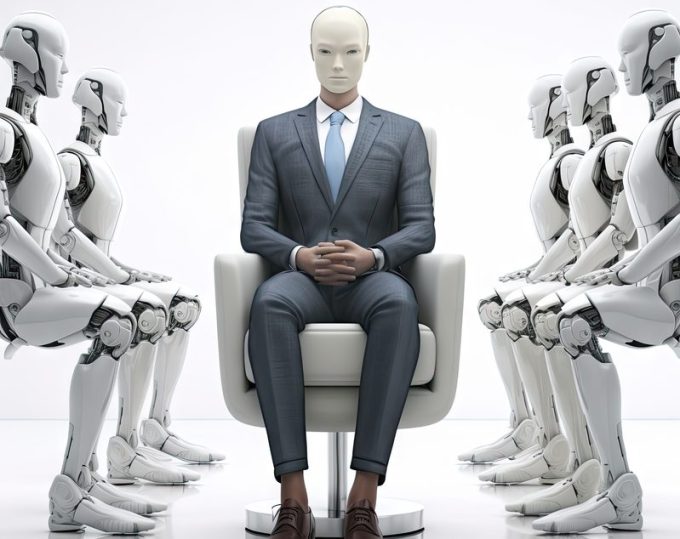
AI is not coming for your job. But it is coming for unfilled roles – or perhaps your children’s future jobs.
Logistics businesses are increasingly using AI across their operations. But instead of reducing the number of jobs, AI is in fact halting the growth in staff numbers. The number of vacancies is staying flat.
In common with most forwarders, Flexport has, during a couple of points in its history, had to make a round of redundancies – but it has been due to costs rather than people being replaced by technology.
“AI is making us more and more efficient,” explained Sanne Manders, president.
“Last year we grew our business quite a bit – but while keeping our headcount flat. And now we’re seeing that AI is helping us to not backfill anymore. Our staff numbers have stayed flat, while we are also doing new things.”
As such, AI is expected to be the answer to the lack of a skilled workforce coming through the ranks.
“AI will fulfil the need for some labour – and, given the shortage of skilled workers, this is a must,” said Dachser CEO Burkhard Eling.
“We not only increase productivity, we also solve the problem of the future, because we will not get the workforce then that we need today. We need to have more optimised processes, different ways of supporting our people. It’s about doing more with the same number of people.”
At Geodis, AI is freeing-up managers to focus on customer service.
“The idea is definitely to release the workload of each of our operators when it comes to data management and data crunching,” said Henri Le Gouis, head of global forwarding.
“We want to keep our skilled people focused on managing disruptions in the digital chain, and in solutions, which for me is key to bringing the best service to our customers.
“We move as much physical cargo as data. Our business is really a combination of both. So when it comes to data, technology has a great role to play, of course.“
Geodis has used technology to deliver on-time reports, he explained, and is moving on to alert management.
“The last stage will be predictive management, which is a different story. In prediction, we have unpredictable events to integrate also, and that’s something maybe AI is less familiar with. So we have to explore; we are just investigating, but for sure it will have a role to play.”
Dachser has focused its technological development on connecting with the customer, with track and trace, bookings, order tracking, documentation and so on.
“The second part is the whole topic about how to use AI digitalisation to optimise our own processes,” said Mr Eling.
It has begun “at full speed” in Dachser’s warehouses.
“I think we can tackle roughly 10 to 15 warehouses with this new technology every year. What we are developing is, more or less, a little version of it for our customers, so they can use it at their ramp, and can use the same technology at their end.
“We have some promising first projects where, for example, we optimise our customer service – always a big thing for us. Being a quality provider, customer service must be really good. This is the first topic that we are tackling when it comes to developing AI-based solutions.”
Flexport, which is now building applications (“the fun stuff”) on top of its ‘backbone’ of data, still employs some 400 engineers, which it says is 21% of its total workforce.
“That doesn’t change, but we do see that our people can do much more with technology,” said Mr Manders.
“I expect we can absorb a lot of growth with the existing headcount.”
For uninterrupted access, sign in or sign up to The Daily News, Premium or The Loadstar Enterprise Plan.

Comment on this article