Middle East premium fades – but AI boom keeps air freight rates aloft
Air freight markets appear to be settling, with capacity largely returned to the Gulf, fuel ...

WTC: 'ONE RECORD'HLAG: EARNINGS GUIDANCE UPGRADE AAPL: GLOBAL SMARTPHONE SHIPMENTS VW: THE IMPACT VW: MASSIVE JOB CUTS CONFIRMEDEXPD: BULLISHCHRW: POSITIONING AHEAD OF EARNINGSAMZN: IN THE NUMBERSAMZN: PEOPLE MATTER UNTILVW: THE LAST CUT IS THE DEEPESTJBHT: GEARING UP VW: BUYING TIMER: BIG VOTE OF CONFIDENCEAAPL: BEARISH HEDGEYE AAPL: THE BEAR CASE
WTC: 'ONE RECORD'HLAG: EARNINGS GUIDANCE UPGRADE AAPL: GLOBAL SMARTPHONE SHIPMENTS VW: THE IMPACT VW: MASSIVE JOB CUTS CONFIRMEDEXPD: BULLISHCHRW: POSITIONING AHEAD OF EARNINGSAMZN: IN THE NUMBERSAMZN: PEOPLE MATTER UNTILVW: THE LAST CUT IS THE DEEPESTJBHT: GEARING UP VW: BUYING TIMER: BIG VOTE OF CONFIDENCEAAPL: BEARISH HEDGEYE AAPL: THE BEAR CASE
Despite geopolitical turbulence, the to-ings and fro-ings of the air cargo market over the past 20 years have been remarkably similar: sometimes there’s not enough capacity; sometimes there is too much.
And digitisation has been slow; sustainability even more so.
But something has happened: a gradual but firm industry step-change which is as significant as anything which has gone before – and spanning sustainability and technology, it could be transformative for airlines.
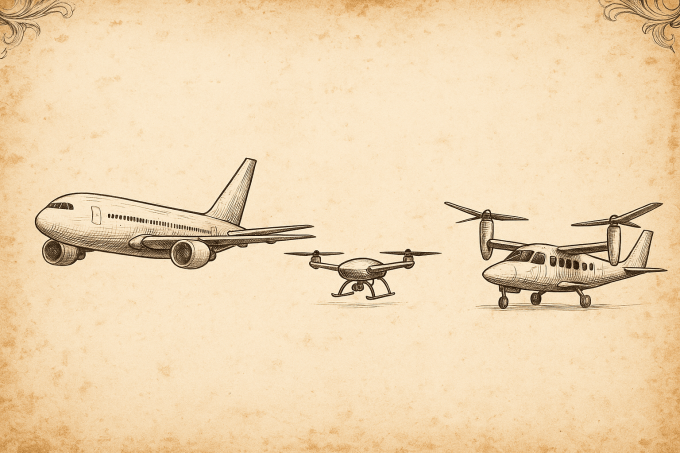
Step forward middle- or last-mile electric aircraft and drones, with the technology to ensure integrated services.
Two launches have been announced this month alone – suggesting that impetus in the market is strengthening.
The first announcement was Etihad’s partnership with Lodd Autonomous to explore the integration of next-generation Hili hybrid VTOL aircraft into UAE operations.
“This collaboration will complement conventional fleets with agile, short-range capacity that enhances operational resilience and service speed, while ensuring lower emissions and more sustainable logistics.”
The unmanned Hili is capable of carrying 250kgs for about 700 km, with an eye to point-to-point UAE-wide transfers.
As part of the trial, Etihad Cargo will explore the operational and commercial potential of integrating Hili aircraft into its future fleet.
Some airlines, have of course been eyeing the drone business for many years – Africa’s Astral Aviation being the poster boy. Air Canada has a drone partner; UPS Flight Forward is a revenue-generating drone airline; FedEx and Emirates have all done trials; Qatar has a drone interline agreement; and ANA and Japan AirLines are both running projects. Most of these are for last-mile deliveries to hard-to-reach places.
But, as Etihad Cargo chief Stanislas Brun has said, the Lodd partnership is “revolutionary”, allowing the carrier to pick up and drop off cargo the same day, sustainably, across the UAE.
“Or it could fly to Oman, or Qatar,” he said.
There is a little way to go, not least on the regulatory side, as the drone is unmanned. But there are other sustainable, piloted options for middle-mile too. And this new layer between traditional aircraft and drones cements this step-change in the industry.
The e-Smart Logistics group, which first shored up its technology to enable integrated ecommerce shipments, has placed itself firmly in this space – and, crucially, committed to buying the aircraft.
The idea is to help airlines provide a rival integrated ecommerce product, wrestling business away from the likes of FedEx and UPS. The group has ordered five electric aircraft from Beta Technologies, with 15 options. Beta has attracted interest from numerous companies like UPS and Amazon for its CTOL aircraft, with its range of 250 nautical miles and payload of 560kg.
Of course, for this new layer in aviation to become industry-wide, some challenges need to be addressed, particularly in the unmanned aircraft sector.
But it could be the start of airlines rethinking their networks: hub and spoke could see the addition of micro-spokes and dynamic routing for smaller shipments, which is particularly suited to ecommerce and healthcare. Volumes are, of course, tiny in the general scheme of things, and complexity and cost are concerns, along with airspace integration.
But now, airlines (or others) have a tool that that does jobs aviation couldn’t do economically or sustainably before, with an option for a more granular network.
It is, finally, a significant game-changer in the not-so-fast-paced world of air cargo.
For uninterrupted access, sign in or sign up to The Daily News, Premium or The Loadstar Enterprise Plan.
Comment on this article