Delayed 'Fortnight Brace' effect – spot rate decline coming
How sticky can it get?


PLD: TRADING UPDATE ON THE WAY KNIN: UPSIDEJBHT: STRONG TRADING UPDATE DSV: EVERY LITTLE HELPSJBHT: CEO REMARKS WMT: VERTICAL INTEGRATION IN LOGISTICSJBHT: HERE WE GOPG: STEADYEXPD: NEW RECORD BA: DELIVERIESMAERSK: BEAR CAMP MUSINGS
PLD: TRADING UPDATE ON THE WAY KNIN: UPSIDEJBHT: STRONG TRADING UPDATE DSV: EVERY LITTLE HELPSJBHT: CEO REMARKS WMT: VERTICAL INTEGRATION IN LOGISTICSJBHT: HERE WE GOPG: STEADYEXPD: NEW RECORD BA: DELIVERIESMAERSK: BEAR CAMP MUSINGS
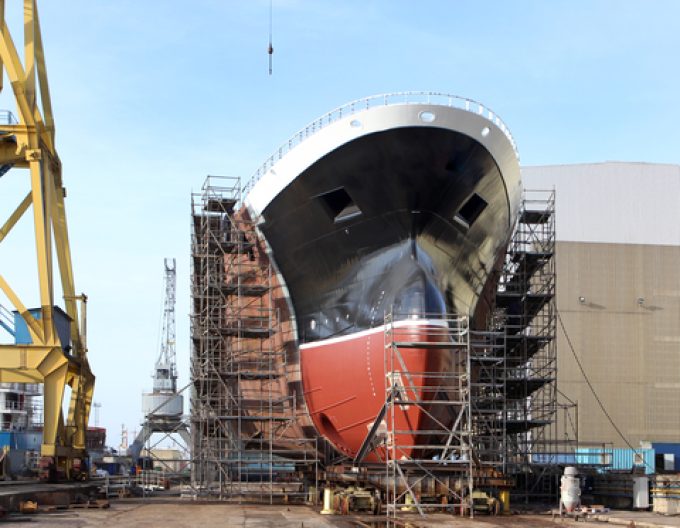
With shipyards so full that the average time between a carrier placing an order and the vessel hitting the water is now around four years, there are concerns that container shipping is facing a period of sustained overcapacity.
These fears have grown in recent weeks, prompted by a prolonged decline in spot rates across most of the major trades. This is despite the fact that demand appears to have held up well, in spite of all the geopolitical shocks.
The most recent data from Container Trade Statistics shows year-to-date traffic to be 4.5% ahead of last year.
But despite healthy demand, rates continue to decline, Alphaliner writes in a research note today.
“On Friday, the Shanghai Containerized Freight Index (SCFI) was down 7%, adding to a 14% contraction observed a week earlier.
“After continuously falling since the middle of June, the SCFI is now at its lowest point in two years, and half its level of a year ago, with most major tradelanes significantly impacted,” it says.
Research by Sea-Intelligence indicates that the structural demand-supply balance is only set to worsen over the next two years, as significant numbers of new vessels are delivered.
However, it noted that the overcapacity would not be as severe as seen in the immediate aftermath of the 2008 global financial crisis, when ultra-large container vessels (ULCVs) making their operational debut coincided with a sudden drop in demand. The circa-10% decline in volumes seen then remains the steepest drop the industry has ever seen and it plunged carriers into a ruinous freight rate war.

Source: Sea Intelligence Consulting
“With the underlying assumptions and projections, this leads to an outlook where overcapacity will peak in 2027,” the analysts writes. “The magnitude of the overcapacity is the same as seen in 2016, which is a year best remembered for the apex of a strong price war between the carriers.
“It can also be seen that the projected overcapacity is nowhere near as bad as in the financial crisis, back in 2009. But it is worse than what we saw in 2023, prior to the advent of the Red Sea crisis,” it concludes.
Several key variables remain, however, which could change the supply-demand balance: the degree of vessel scrapping over the next few years; how slowly carriers run vessels, particularly on backhaul voyages; how long the Red Sea crisis persists; and the impact of port congestion at the various global hotspots.
Sea-Intelligence said its calculations were based on assumptions that the Red Sea crisis would continue until at least the middle of next year, and that at least 13% of the current operating fleet – comprising vessels over 20 years old and nearing the end of service life – would be scrapped between now and 2029.
“It might be reasonable to expect this to be scrapped, in an environment where the market tips into overcapacity,” it adds.
Meanwhile, data from liner analyst MSI shows the vast majority of current orders are for larger vessel types, while it is smaller vessels which are the most advanced in age.


Source: MSI
The other tactic carriers can resort to is idling ships – either in short-term “hot” lay-up, or longer-term “cold” lay-up; both were extensively employed after 2010, and today Alphaliner suggests some lines are already testing this option, reporting that the idle fleet today is at its highest level for a year.
“The number of idle ships rose slightly in mid-September, after carriers recorded an additional 60,000 teu as commercially inoperative against a backdrop of falling rates.
“While still a small amount globally, the increase took idle tonnage to its highest level, as a proportion of the total container fleet, in a year, at 0.8%.
“This figure was last reached in October 2024, before falling to a low of 0.4% in June of this year, as tonnage availability remained tight,” it notes.
For uninterrupted access, sign in or sign up to The Daily News, Premium or The Loadstar Enterprise Plan.

Comment on this article