Air freight contracts a challenge for shippers and forwarders in a tightening market
Annual air freight contracts are becoming increasingly difficult to sustain as market conditions shift decisively ...

WTC: NO LUCKCHRW: 'NUCLEAR VERDICT'DSV: DEEP CUTKNIN: UPGRADEDKNIN: AI BENEFITSKNIN: NOT WORTH ITPLD: DEAL TIMEKNIN: CONF CALL CLOSING KNIN: PRICING POWER KNIN: MARKET SHARE GAINS IN ROAD KNIN: AI-RELATED COST INFLATION OUTLOOKKNIN: APEX LOGISTICS IPO UPDATEKNIN: QUESTION TIMEKNIN: 'COST REDUCTION PROGRAMME IS ON TRACK'KNIN: CFO REMARKSKNIN: MONETARY IMPACT FROM AI KNIN: AI UPSIDEKNIN: STRONG ROAD UNIT DELIVERY KNIN: AIR LOGISTICS SHINES
WTC: NO LUCKCHRW: 'NUCLEAR VERDICT'DSV: DEEP CUTKNIN: UPGRADEDKNIN: AI BENEFITSKNIN: NOT WORTH ITPLD: DEAL TIMEKNIN: CONF CALL CLOSING KNIN: PRICING POWER KNIN: MARKET SHARE GAINS IN ROAD KNIN: AI-RELATED COST INFLATION OUTLOOKKNIN: APEX LOGISTICS IPO UPDATEKNIN: QUESTION TIMEKNIN: 'COST REDUCTION PROGRAMME IS ON TRACK'KNIN: CFO REMARKSKNIN: MONETARY IMPACT FROM AI KNIN: AI UPSIDEKNIN: STRONG ROAD UNIT DELIVERY KNIN: AIR LOGISTICS SHINES
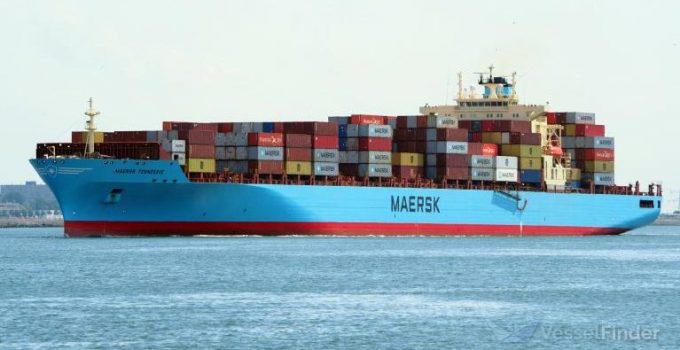
An embarrassing misstep? An attempted railroading? Perhaps not. Last week bore witness to the Maersk-Suez Canal Authority (SCA) fiasco, in which the latter appeared to be dictating the former’s resumption of Red Sea transits, only for the carrier to hit the brakes.
But for Xeneta chief analyst Peter Sand and product marketing manager Destine Ozuygur, the issue may well have been one of misreporting, or perhaps misrepresentation, by the press of what exactly the SCA was attempting to say.
“I believe the SCA may have been thinking out loud about what preferred option, which is to see all carriers resume Suez Canal transits asap, because Egypt is losing a lot of money from the spat at the southern end of Red Sea,” Mr Sand told The Loadstar.
“And what Maersk was doing was talking about what would be needed for it to return. Safety of crew, safety for ships, and safety for cargo. In other words, it will not transit through a war-risk area as defined by the Joint War Committee (JWC).”
For context, during a press conference attended by Maersk CEO Vincent Clerc to announce a deepening of their partnership with the carrier, the SCA appeared to claim that Maersk would be resuming Suez’s transits from “early next December”.
Reports sprang up claiming that this was the carrier’s policy, which in turn prompted a hastily written statement from Maersk’s PR team that a December return had not, in fact, been agreed and that it had no firm date for resuming transits.
That latter point was pressed by The Loadstar as the SCA’s comments were themselves a tad confusing, given that “next December” appeared to be referring to December 2026, even if the reports circulating suggested they were due to commence this year.
The carrier’s spokesperson said either way it did not matter as the carrier had no date lined up, and that any process for resuming canal transits would be a protracted affair, likely requiring a series of test runs to see if, indeed, the waterway was safe to again transit.
Ms Ozuygur told The Loadstar there was perhaps as much lost in specificity as was lost in translation, claiming that for her it was “a matter of how you define ‘return’”, noting that when this came to carrier/port politics, there was “always nuance to take into consideration”.
“I read it as Maersk gradually testing the waters with a few voyages, beginning in December – could very well be a single voyage – from which it would assess impacts on premiums, reliability, what shippers are willing to pay, and, of course, the ceasefire holding,” she said.
“Technically, this is a ‘return’ (if not a full commitment) in the sense that it has been notably absent from canal transits; but it is true that a lot of folks will jump on this word to interpret return as it changing rotations, sending multiple vessels immediately, etc.”
On the topic of the Israel-Hamas ceasefire and what it means for the Houthi campaign, the JWC remains sceptical about how much the Yemeni militia will reign in attacks and how long the ceasefire will hold, noting the truce “does not include Israeli-linked vessels”.
It added that while the threat to commercial shipping was “on hold” for now, “hostilities could resume if the ceasefire fails. Houthi forces seek recognition of their regime whilst also trying to change Israeli policy in Gaza”.
Consequently, Mr Sand said, the insurance premium remained high, and with Xeneta data failing to show any huge change in planned transits for December compared with the rest of the year, it seemed fair to suggest the caution was shared across the industry.
“If we look at it, the situation is better now, than a few months ago, but the top 10 carriers continue to transit on a case by case basis (few in numbers), albeit under naval protection, and not as a part of a fixed and announced scheme,” he continued.
“But is it already safe enough for a return? That’s the question various stakeholders assess differently. As is clear from the back and forth about what was actually the conclusions of the meeting between SCA and Maersk.”
One thing Mr Sand was keen to note, however, was that the meeting between the carrier and the SCA was “positive”, even if he saw it as being unlikely to change plans the carrier already had in place.
And, having previously told The Loadstar there may be no full return next year, Mr Sand himself has changed his position, believing it possible to see a full return in the second half of 2026, dependent on wider regional security issues.
“No carrier wants to reset their network for resumed Red Sea transits only to go back to Cape of Good Hope [detours] after a few weeks or months, because it wasn’t safe to resume transits after all. Carriers prefer to hesitate rather than jumping the gun – SCA sees it with a different pair of eyes.”
For uninterrupted access, sign in or sign up to The Daily News, Premium or The Loadstar Enterprise Plan.
Comment on this article