CMA CGM favourite to acquire stake in top French rail freight player
CMA CGM appears poised to expand its footprint in rail freight with the acquisition of ...

TFII: EARNINGS BEATCHRW: PUMMELED DSV: LACK OF TRUST WEIGHSDHL: NEW HIGH DHL: E-COMM DEAL SIGNEDF: NEW PROFIT STREAMCHRW: HEALTHY CORRECTIONDSV: TIME TO BUY INWTC: NO LUCKCHRW: 'NUCLEAR VERDICT'DSV: DEEP CUTKNIN: UPGRADEDKNIN: AI BENEFITSKNIN: NOT WORTH IT
TFII: EARNINGS BEATCHRW: PUMMELED DSV: LACK OF TRUST WEIGHSDHL: NEW HIGH DHL: E-COMM DEAL SIGNEDF: NEW PROFIT STREAMCHRW: HEALTHY CORRECTIONDSV: TIME TO BUY INWTC: NO LUCKCHRW: 'NUCLEAR VERDICT'DSV: DEEP CUTKNIN: UPGRADEDKNIN: AI BENEFITSKNIN: NOT WORTH IT
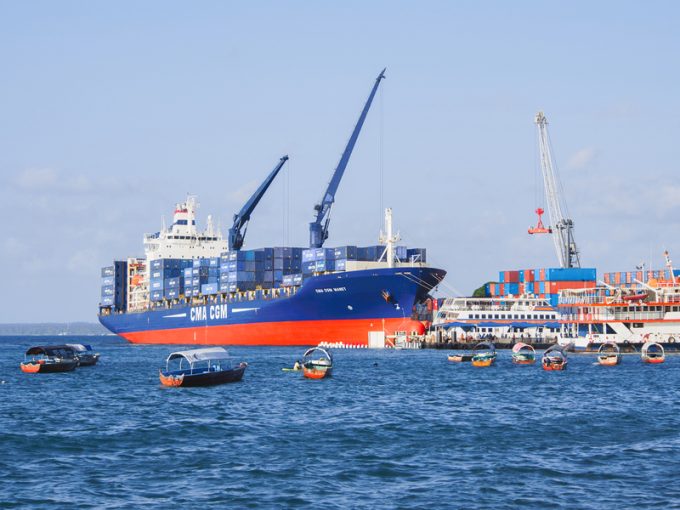
Zanzibar appears to be eyeing the container transhipment game with plans to develop an integrated seaport and free zone at Mangapwani, hoping to restore the maritime status of Tanzania’s semi-autonomous island.
Minister for trade and industrial development Shariff Ali Shariff said the plans would simultaneously facilitate smoother movement of goods and boost export and import volumes.
“The initiatives are aimed at positioning Zanzibar as a competitive player in global markets,” added Mr Ali Shariff, with the free port designation expected to entice “substantial” foreign investment into a port with significant scope for growth.
Its potential lies in its proximity to key East African markets, and is based on the belief it is capable of supporting larger cargo-handling infrastructure, logistics parks, warehousing, and associated industrial facilities than the island’s existing gateways.
Precise details have not been revealed but the estimated development cost has been reported at $500m-$600m and would allow it to not only compete with neighbouring Dar es Salaam, Djibouti, and Mombasa, but also cater for Indian Ocean transhipment volumes.
It is that last point that commentators have suggested could prove a significant draw for foreign investors, as terminal operators and carriers are looking to expand their physical footprints; APM Terminals, DP World, and AD Ports seen as possible bidders.
Of these, Maersk’s box terminal operator has purportedly been on the hunt for a new foothold in Africa after losing out on the concession to operate the Pier 2 terminal in Durban and has some expertise in Zanzibar, operating one of the three container services to the island.
According to Xeneta’s eeSea liner database, Maersk charters slots from local carrier Coastal International’s Zanzibar Kisiwa Express, which runs on a fortnightly Mombasa-Zanzibar rotation deploying one geared 323 teu vessel.
Two other feeder services also call at Zanzibar, CMA CGM’s IOFEED2, which also operates a Mombasa-Zanzibar shuttle with one 618 teu vessel, and United Africa Feeder Line’s ZEX string.
The size of these vessels indicate existing volumes alone will not be sufficient to draw major investment, but if the Zanzibar government can pitch the semi-autonomous region’s transhipment case strongly enough, possible port investors may be willing to take a punt.
Currently, East Africa’s transhipment volumes are largely handled by Durban or Mauritius’s Port Louis, which handles some 450,000 teu annually, and has capacity for up to 1m teu, and has acted as a “pressure release valve” for regional trade flows when congestion mounts in Durban.
As a result, it is unlikely to be an attractive proposition for common-user terminal operators such as PSA or ICTSI, most likely leaving carriers such as Maersk and CMA CGM as the most likely interested parties.
However, the regional government’s ambitions to develop an adjacent free trade zone could also lure firms such as DP World and AD Ports into the mix, where similar business models have underscored their home port developments.
For uninterrupted access, sign in or sign up to The Daily News, Premium or The Loadstar Enterprise Plan.
Comment on this article