Ocean spots and demand hold steady, but waves may be building
Container freight spot rates on the transpacific and Asia-Europe trades showed moderate gains this week, ...


VW: THE IMPACT VW: MASSIVE JOB CUTS CONFIRMEDEXPD: BULLISHCHRW: POSITIONING AHEAD OF EARNINGSAMZN: IN THE NUMBERSAMZN: PEOPLE MATTER UNTILVW: THE LAST CUT IS THE DEEPESTJBHT: GEARING UP VW: BUYING TIMER: BIG VOTE OF CONFIDENCEAAPL: BEARISH HEDGEYE AAPL: THE BEAR CASEFDX: LIFE SCIENCES ORG UNVEILEDWTC: UPS AND DOWNSWTC: ASX ANNOUNCEMENT REGARDING DSV PARTNERSHIP VW: D-DAY
VW: THE IMPACT VW: MASSIVE JOB CUTS CONFIRMEDEXPD: BULLISHCHRW: POSITIONING AHEAD OF EARNINGSAMZN: IN THE NUMBERSAMZN: PEOPLE MATTER UNTILVW: THE LAST CUT IS THE DEEPESTJBHT: GEARING UP VW: BUYING TIMER: BIG VOTE OF CONFIDENCEAAPL: BEARISH HEDGEYE AAPL: THE BEAR CASEFDX: LIFE SCIENCES ORG UNVEILEDWTC: UPS AND DOWNSWTC: ASX ANNOUNCEMENT REGARDING DSV PARTNERSHIP VW: D-DAY

A growing divergence between quoted and paid freight rates is exposing what Sea-Intelligence has termed “Phantom GRIs”, highlighting a “marked difference in commercial behaviour between the Transpacific and the Asia-Europe trade”.
As maritime analyst Sea-Intelligence highlighted in its recent update, “the market is quite used to the situation where carriers announce either FAK rate increases, increases in existing surcharges, or introduction of new surcharges”.
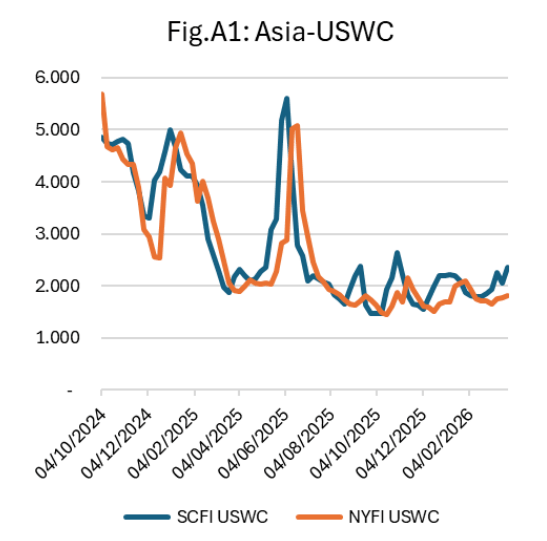
However, the contrast between the Shanghai Containerized Freight Index (SCFI), which reflects quoted rates, and the Ningbo Freight Index (NYFI), which tracks “the spot rates on cargo which has actually been loaded onboard”, revealed a recurring pattern on the Transpacific trades, where “quoted spot rates spike, but the spikes are not subsequently reflected in the actual paid rates”.
Graph: Sea-Intelligence
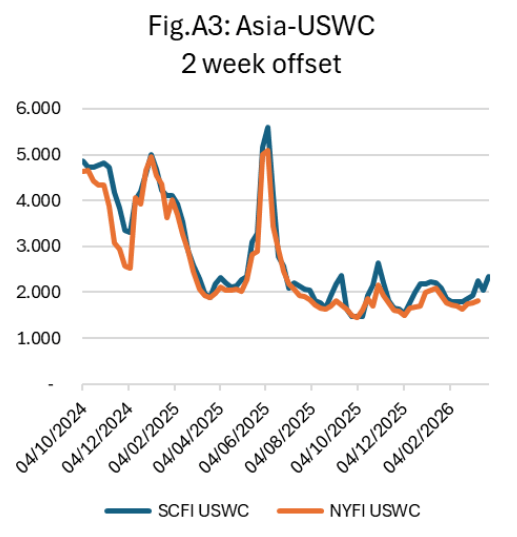
Sea-Intelligence identified a consistent two-week lag between quoted and realised rates, reflecting the operational timeline from booking to loading.
It explained: “From the time where a spot rate is quoted and booked upon, it takes time before the empty container is picked up, gated into the terminal, and eventually loaded onto the vessel.
“Any changes between the two indices will clearly show that the market has ‘changed its mind’, from the time of quoting until actual execution”.
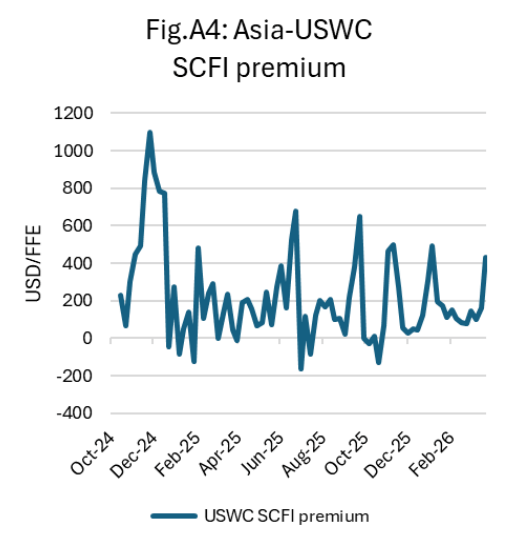
Once adjusted for this lag, it highlighted that periodic spikes in the SCFI are not matched by corresponding increases in the NYFI, exposing the so-called “Phantom GRIs”.
“These are the short sharp spikes, which arise when the SCFI suddenly increase rapidly, but two weeks later this increase (or part of it) is not reflected in the spot rates actually being paid,” Sea-Intelligence said.
On the Asia-US West Coast trade, six such Phantom GRIs were recorded in 2025-26, each in the range of $400-$600 per feu.
Graph: Sea-Intelligence
Graph: Sea-Intelligence
But Sea-intelligence found that the phenomenon is even more pronounced on the Asia-US East Coast route. Here, seven Phantom GRIs were identified over the same period, with higher volatility of $500-$800 per feu.
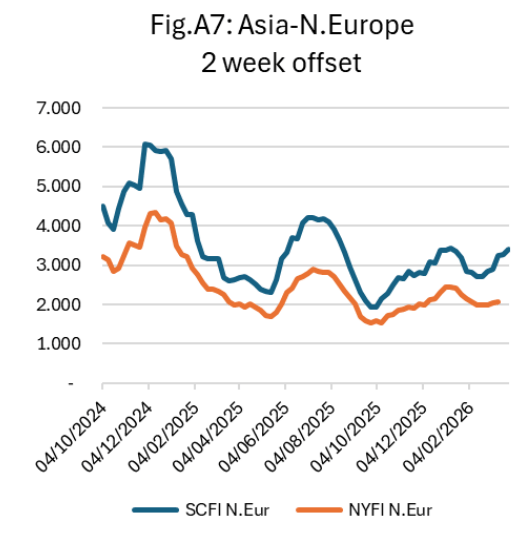
By contrast, the Asia-North Europe trade shows a “markedly different” pattern. While a similar two-week lag exists, the expected short-term spikes are absent.
“This pattern deviates strongly from the Transpacific, insofar that we do not see any sudden Phantom GRIs in this trade.”
Instead, Sea-Intelligence deduced that Asia-Europe appears characterised by more sustained divergences between quoted and paid rates, rather than sharp, transient mismatches.
Graph: Sea-Intelligence
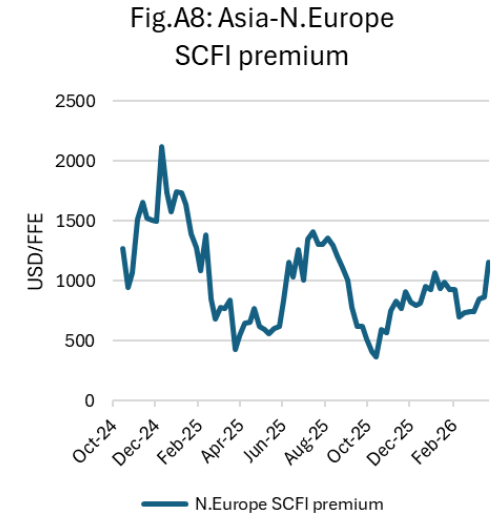
Graph: Sea-Intelligence
For shippers, this signals fundamentally different market dynamics. On the Transpacific, rate volatility at the quotation stage does not necessarily translate into higher transport costs, suggesting greater flexibility – or opportunism – in booking and allocation behaviour. This may reflect shippers renegotiating or abandoning bookings, or carriers prioritising higher-paying cargo.
In contrast, the relative stability between quoted and realised rates on Asia-Europe suggests firmer adherence to agreed pricing, even if longer-term gaps persist.
The findings underline how supply-demand dynamics alone do not fully explain rate movements. Instead, behavioural factors, such as how shippers respond to quotes and how carriers manage allocations, are playing a critical role in shaping outcomes.
For uninterrupted access, sign in or sign up to The Daily News, Premium or The Loadstar Enterprise Plan.

Comment on this article