Fuel crisis drives hefty CMA CGM surcharges on India-Africa cargo
The increasing volatility of fuel prices is adding to logistics cost pressures for Indian exporters/importers. The ...


AMZN: BIG DEBT FUNDING ON ITS WAYDHL: 'STELLAR EXPRESS'DHL: UPDATEDHL: STRONG PRELIMINARY UPDATE CHRW: STILL VERY BEARISH PLD: 'MOST PREFERRED'ZIM: DEAL OR NO DEALWTC: MOMENTUMDAC: PAYOUTMAERSK: RETURN TO SUEZCHRW: ANOTHER NOTE OF CAUTION MAERSK: EVERY BOOST HELPS
AMZN: BIG DEBT FUNDING ON ITS WAYDHL: 'STELLAR EXPRESS'DHL: UPDATEDHL: STRONG PRELIMINARY UPDATE CHRW: STILL VERY BEARISH PLD: 'MOST PREFERRED'ZIM: DEAL OR NO DEALWTC: MOMENTUMDAC: PAYOUTMAERSK: RETURN TO SUEZCHRW: ANOTHER NOTE OF CAUTION MAERSK: EVERY BOOST HELPS
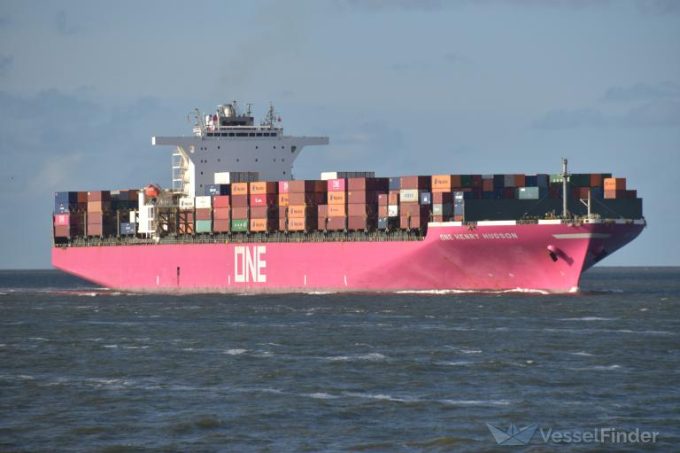
A fire aboard the ONE Henry Hudson, now moored outside the port of Los Angeles, marks it as the seventh containership to catch light in the past five months.
The US Coast Guard last night confirmed the fire had been brought under control, after it broke out while the ship was docked on Friday. The cause of the blaze remains unknown and there were no casualties, despite reports of a later explosion on board.
USCG incident commander Jarrod DeWitz said: “We worked closely with our local partners to keep crews safe, move the vessel offshore, and prevent any disruption to the port. We will continue to collaborate until the vessel is fully stable and no longer poses a risk.”
After fire was reported across ‘multiple sub-levels’ of the vessel, a multi-agency task force helped to move the ONE Henry Hudson four miles out after the fire had been “isolated to a single cargo hold”, with a fire boat at the scene.
The carrier said: “ONE is deeply concerned by this incident and is closely monitoring the situation. We thank first-responders onsite and remain fully committed to supporting incident management and subsequent investigations.”
One voice that has been starkly absent has been that of the Trump administration, with Port of LA executive director Gene Seroka telling reporters he had been trying to arrange meetings with cabinet officials and US trade representative Jamieson Greer “since the inauguration”.
Now, with the fire, Mr Seroka said the administration’s help was vital in helping to speed up the process of putting the fire out and making the vessel safe so that assessments could be made on how much cargo had been lost.
He added: “I’ve been doing this job for 12 years. US companies need to know the status of their freight. We are working as fast as we can, but we need the federal government to step in and move this along faster.”
Official confirmation of the cause will take time but multiple reports are citing LA Fire Department claims of an explosion around 90 minutes after the blaze began and suggestions it was most likely an electrical fire.
“A concern is to what degree this [incident] includes potentially hazardous materials and/or lithium-ion batteries”, commented Vespucci Maritime CEO Lars Jensen, reflecting suggested causes for the Wan Hai 503 and Marie Maersk fires this year.
Insurance giant Allianz’s Safety and Shipping Review 2025 noted that demand for lithium-ion batteries was bringing new and increased risks for cargo vessel operators, having previously noted that these vessels were not designed to carry these batteries.
“Electrification of the global economy is spurring lithium-ion battery demand, with the market projected to hit $322bn by 2030, more than double its value in 2024, driven by electric vehicles and renewable energy transitions,” the report claimed.
“However, such growth poses risks for shipping and supply chains… maritime concerns are rising, with incidents on vessels at sea and at US and Canadian ports. While inherently more stable they still pose great risk of fire, and they are able to store huge amounts of energy.”
The report noted that the spike in demand for lithium-ion batteries had coincided with a “decade-high” number of ship fires across all vessel types, with box, cargo, and ro-ro ships making up around 30% (69 ships) of the total fires that broke out last year.
This year box ship fires include the Wan Hai 503, Marie Maersk, Maersk Elsa, Interasia Tenacity, Wan Hai 613, and Zim Coloradom following last year’s Maersk Frankfurt, MSC Capetown III, and YM Mobility at Ningbo.
Get up to speed on all things supply chain!
This article is © The Loadstar. Reproduction, rewriting, or derivative use requires a license. Contact [email protected] for licensing enquiries.
For uninterrupted access, sign in or sign up to The Daily News, Premium or The Loadstar Enterprise Plan.
Comment on this article