Chinese exports continue to drive trade and support intra-Asia rates
Intra-Asia rates continue to be held up by Chinese exports. While a correction in Shanghai-South-east Asia ...

WTC: 'ONE RECORD'HLAG: EARNINGS GUIDANCE UPGRADE AAPL: GLOBAL SMARTPHONE SHIPMENTS VW: THE IMPACT VW: MASSIVE JOB CUTS CONFIRMEDEXPD: BULLISHCHRW: POSITIONING AHEAD OF EARNINGSAMZN: IN THE NUMBERSAMZN: PEOPLE MATTER UNTILVW: THE LAST CUT IS THE DEEPESTJBHT: GEARING UP VW: BUYING TIMER: BIG VOTE OF CONFIDENCEAAPL: BEARISH HEDGEYE
WTC: 'ONE RECORD'HLAG: EARNINGS GUIDANCE UPGRADE AAPL: GLOBAL SMARTPHONE SHIPMENTS VW: THE IMPACT VW: MASSIVE JOB CUTS CONFIRMEDEXPD: BULLISHCHRW: POSITIONING AHEAD OF EARNINGSAMZN: IN THE NUMBERSAMZN: PEOPLE MATTER UNTILVW: THE LAST CUT IS THE DEEPESTJBHT: GEARING UP VW: BUYING TIMER: BIG VOTE OF CONFIDENCEAAPL: BEARISH HEDGEYE
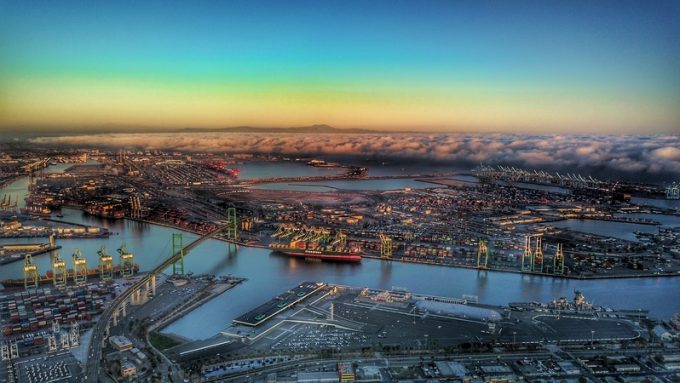
Propelled by an 18% jump in box traffic in March, the port of Los Angeles enjoyed a strong April – and part of its gain may be US east coast ports’ loss.
“April came in strong, our best month of 2026 and the highest since last August. We handled 891,000 container units. That is up more than 5.5% from a year ago and 18% over the previous month,” reported CEO Gene Seroka.
The growth was driven by loaded imports, which soared 21% over the March tally, to 459,825 teu, up 1.5% year on year. Empty boxes increased 10%, to 303,310 teu, while loaded exports dipped 0.5%, to 127,726 teu.
Mr Seroka noted that year-on-year growth was from an elevated base, as the port’s imports in April 2025 had been boosted by front-loading.
He pointed to the retail sector as the primary engine of growth this year.
“What’s driving this? Generally speaking, the American consumer, still resilient, still spending,” he said. “With US manufacturing holding steady, we’re also seeing a consistent flow of parts and components.”
The port’s tally for the first four months of the year added up to 3,279,704 teu, 2% ahead of its five-year average for that period.
The picture is markedly darker on the US east coast. According to Descartes, the port of New York & New Jersey suffered an 18.4% slump in box traffic from March to April, while Norfolk (down 18.2%), Charleston (-16%) and Savannah (-11.9%) also recorded double-digit drops.
Container volumes at the top ten US ports were down 1.4% from March, Descartes noted in its latest Global Shipping Report. It pointed out that west coast ports’ market share accounted for 44.6% of total imports, up from 38.3% in March, whereas east and Gulf coast ports’ share sank to 39.2%, from 44.3% in March.
“These significant swings likely reflect rebalancing of import routing rather than a sudden change of underlying demand,” Descartes commented. It noted that China traffic to US east coast ports had surged in March, while west coast ports had registered decline in that tradelane.
Judah Levine, head of research at Freightos, reckons the shift was produced by a combination of factors.
The conflict in the Middle East could have prompted shippers to opt for the faster Asia-US route, in anticipation that oil/bunker prices were going to go higher or become disruptive via fuel shortages as the war stretched on, or because of higher fuel surcharges on routes to US east coast than west coast routes, he suggested.
“Also, Chinese New Year was later than usual this year, so it could be that April was boosted by post-holiday backlog goods, some of which also went by the quicker route and arrived in April instead of March, because of the later holiday start,” he noted.
Moreover, some cargo owners have shifted from direct airfreight, Asia-Europe, to a sea-air routing via the US west coast.
Comparisons may be skewed by the fact that this year volumes reaching US east coast gateways in March were unusually elevated because bad weather in February pushed some of that month’s volume into March, Mr Levine pointed out.
Looking ahead, the latest Global Port Tracker report from the US National Retail Federation (NRF) and Hackett Associates predicts year-on-year increases for May and June – but “only because of the sharp fall-off in imports after ‘Liberation Day’ tariffs were announced in April 2025”.
“With inflation rising and consumer confidence falling amid global economic uncertainty driven by the conflict in Iran, an overall trend of lower imports is expected to continue after that,” commented NRF VP for supply chain and customs policy Jonathan Gold.
“Containerised imports in the first quarter were down year on year, and forward demand is weakening,” added Hackett Associates founder Ben Hackett. “Stalling re-stocking efforts and rising geopolitical tensions are increasingly clouding the outlook.”
Mr Seroka noted the impact of fuel prices as a question mark looming over the coming months. Overall, he expressed cautious optimism.
“I have not got any data suggesting we’re going to hit a rough spot,” he said.
Despite headwinds, US GDP expanded 2% in the first quarter, he said.
“Inflation, although high, is still not runaway. Consumers are still spending at near-record pace, and importers keep active,” he said. “The next import wave will be back-to-school products, followed by early holiday inventory.”
For uninterrupted access, sign in or sign up to The Daily News, Premium or The Loadstar Enterprise Plan.

Comment on this article