Transpacific the top earner as a strong Q2 boosts OOCL revenue
OOCL’s second-quarter trading update has reinforced signs of a stronger-than-expected container shipping market, the carrier ...


WTC: 'ONE RECORD'HLAG: EARNINGS GUIDANCE UPGRADE AAPL: GLOBAL SMARTPHONE SHIPMENTS VW: THE IMPACT VW: MASSIVE JOB CUTS CONFIRMEDEXPD: BULLISHCHRW: POSITIONING AHEAD OF EARNINGSAMZN: IN THE NUMBERSAMZN: PEOPLE MATTER UNTILVW: THE LAST CUT IS THE DEEPESTJBHT: GEARING UP VW: BUYING TIMER: BIG VOTE OF CONFIDENCEAAPL: BEARISH HEDGEYE
WTC: 'ONE RECORD'HLAG: EARNINGS GUIDANCE UPGRADE AAPL: GLOBAL SMARTPHONE SHIPMENTS VW: THE IMPACT VW: MASSIVE JOB CUTS CONFIRMEDEXPD: BULLISHCHRW: POSITIONING AHEAD OF EARNINGSAMZN: IN THE NUMBERSAMZN: PEOPLE MATTER UNTILVW: THE LAST CUT IS THE DEEPESTJBHT: GEARING UP VW: BUYING TIMER: BIG VOTE OF CONFIDENCEAAPL: BEARISH HEDGEYE
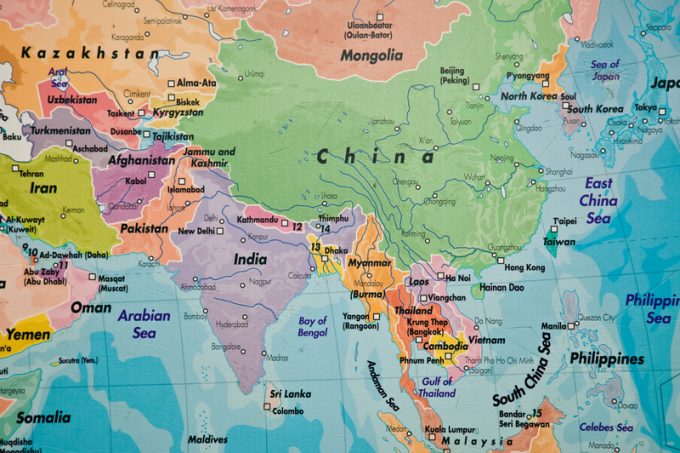
Maersk is boasting the largest slot increase on a trade set to become more lucrative amid the growing global trade war.
Market analyst Alphaliner revealed, in its August review of the intra-Asia trade excluding domestic lanes, that the Danish carrier had increased its operated slots in the region by the greatest number over the past year.
It added 100,000 teu, to reach 298,134 teu across the trade.
According to Alphaliner, intra-Asia regional trade is a “very competitive market”, with some 69 active players and overall tonnage of 2.4m teu.
The region has seen 13% growth year-on-year growth and has been a large beneficiary of the growing trade war.
As companies adopt a “China plus one” manufacturing strategy, diversifying production into countries such as Vietnam, India, Indonesia, and Thailand, trade flows are reshaping and demand for regional shipping services is increasing.
Loadstar Premium reported last week that intra-Asia carriers would have “the last laugh”, as ocean freight demand looked likely to decline in H2.
It noted that for H1, the carriers most exposed to the intra-Asia trade did the best in terms of margins, and actual intra-Asia rates paid for the year to date, as derived from Container Trade Statistics, which includes shipments under contract, show rates have been consistently 15%-25% higher year on year compared with H1 24.
Maersk’s addition of more than 50% the capacity it had on the trade last year has almost closed the gap with the market-leading carrier in the region, Chinese line Cosco.
Cosco deploys 300,491 teu slots in the trade, alongside more than 200,000 teu slots in the Chinese domestic market.
Maersk’s Gemini partner, Hapag-Lloyd, also almost doubled its August 2024 capacity on intra-Asia routes, up by 97% in August 2025.
“The main driver for the substantial growth of both carriers is the formation of the Gemini Cooperation, which saw the lines operate significantly more regional shuttles in Asia to cater to its ‘hub and spoke’ concept,” explained Alphaliner.
In August, Gemini’s operated ships averaged 2,981 teu for Maersk and 2,909 teu for its German counterpart. This is almost comparable with MSC’s 3,021 teu average, according to Alphaliner. MSC’s capacity on the trade remained stable, with less than a 1% increase.
Even so, the world’s largest carrier has maintained its fifth place with 163,123 teu slots on the trade. And while Maersk posted the largest addition of operated slots, Singapore-based PIL holds the top spot in terms of percentage increase.
PIL more than doubled its operated slots, to 26,008 teu, a 116% increase in capacity from August 2024, moving up into the top 20 carriers on the trade, at number 19.
Hapag-Lloyd’s gains also bumped it into the top 20, and now sits at 16.
For uninterrupted access, sign in or sign up to The Daily News, Premium or The Loadstar Enterprise Plan.

Comment on this article