Scott Elliott confirmed as Maersk Asia-Pacific regional CEO
AP Møller-Maersk has promoted Scott Elliott (above) to the position of regional president for Asia ...

MATX: SMASHING RECORDSDHL: NEW HIGHSPLD: PAY UPCHRW: WAITING FOR THE NEXT EARNINGS BEATMAERSK: DEAL TIME FOR THE OWNERSDHL: ASSET POWERCAT: TIME TO SELLMAERSK: UPGRADEMAERSK: ANOTHER UPGRADE HITS THE WIRES
MATX: SMASHING RECORDSDHL: NEW HIGHSPLD: PAY UPCHRW: WAITING FOR THE NEXT EARNINGS BEATMAERSK: DEAL TIME FOR THE OWNERSDHL: ASSET POWERCAT: TIME TO SELLMAERSK: UPGRADEMAERSK: ANOTHER UPGRADE HITS THE WIRES
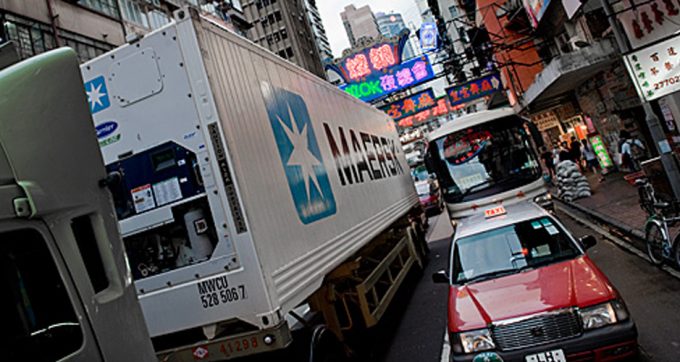
Maersk is looking to build an “Amazon for logistics” with its integrator strategy, supported by in-house software developments.
During an event marking the launch of its latest dual-fuel vessel, Adrian Maersk, regional business development manager Martijn van Heezik said the Danish carrier now had more than 5,000 people in its software team.
“The idea is that we want to develop as much of the software in-house as we can – where it makes sense to do so,” he explained.
Maersk North Europe MD Ole Trumpfheller said he believed Maersk was now best understood as an integrator rather than a carrier, with its ambition to become a major player in the integrated logistics scene – but he admitted it was “not quite DHL yet”.
His appointment last May from DB Schenker, twinned with the recent approval of ex-Ceva Logistics CEO Xavier Urbain’s appointment to Maersk parent APMM’s board brings a high level of logistics expertise to help it meet its goals.
Bringing more software development in-house would increase the level of autonomy and control the company has over its assets, considered key to upping the level of efficiency, and Mr van Heezik noted that progress was being made on this front. The team was moving to stitch the more than 20 platforms it offers together, he noted, claiming that this linked approach would allow for faster roll-outs and greater visibility.
This, he added, was particularly important for, for example, customers opening a new warehouse and needing support.
“If you have a platform for warehouses, you can very quickly roll this out to suit the customer’s needs.
“Then you have a platform for logistics, for transport, for warehousing – you have it all: the ‘Amazon of logistics’,” said Mr van Heezik.
This article is © The Loadstar. Reproduction, rewriting, or derivative use requires a license. Contact [email protected] for licensing enquiries.
For uninterrupted access, sign in or sign up to The Daily News, Premium or The Loadstar Enterprise Plan.
Comment on this article